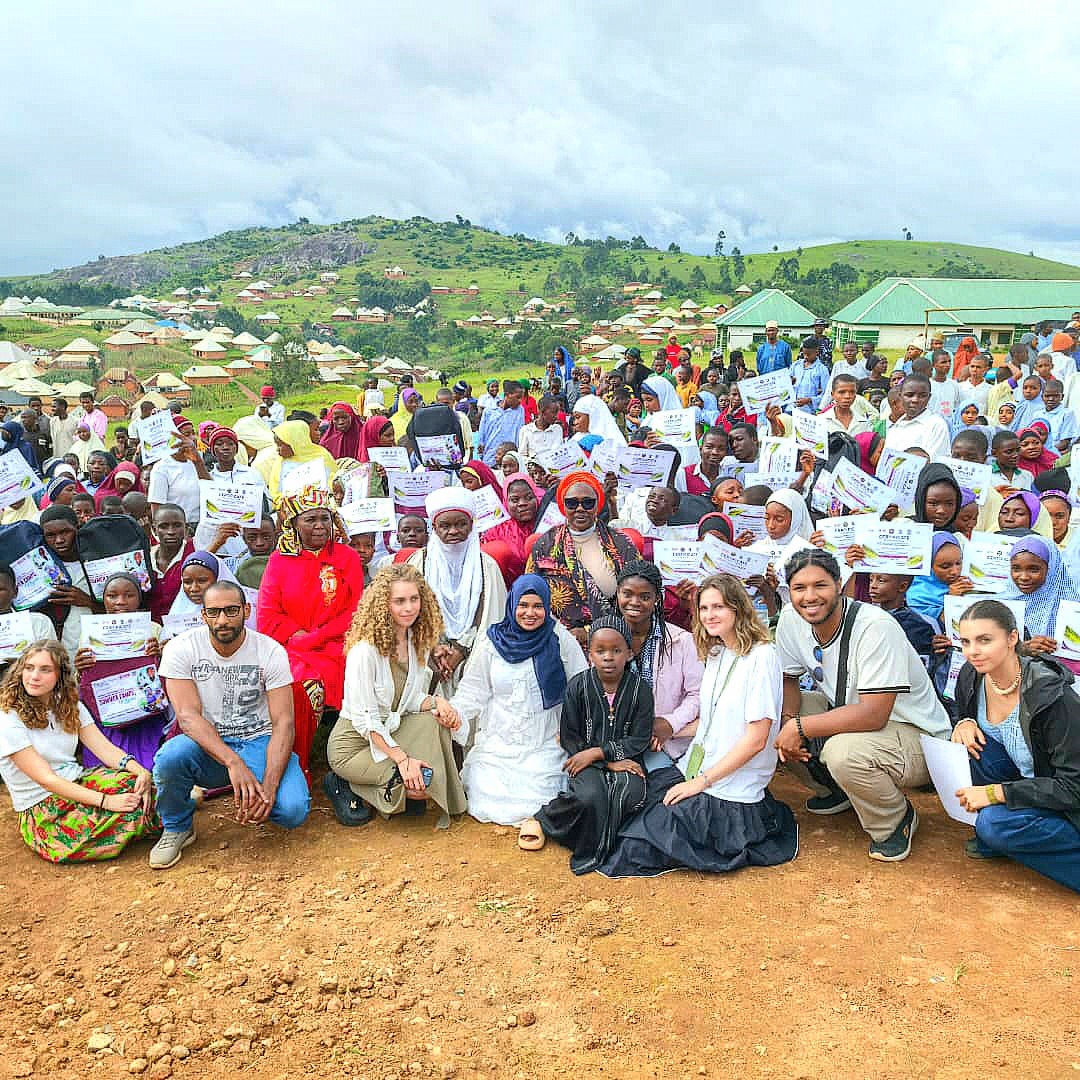
Taraba State is set to expand experiential Science, Technology, Engineering, Arts and Mathematics (STEAM) education across its three senatorial zones, following the success of a four-week summer programme that reached more than 1,200 underserved children on the Mambilla Plateau.
Governor Agbu Kefas, who commended the initiative, has approved full government funding for the expansion of the STEAM programme across the state, beginning with Kashinbila in 2027.
The Governor also directed the Commissioner for Education (Nursery and Primary Education) to work with the Sarauniya Aishatu Baju (SAB) Foundation and other partners to broaden innovative learning opportunities for children across the state.
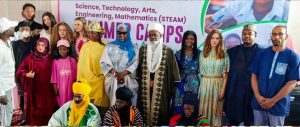
The four-week programme, held on the Mambilla Plateau, was implemented through a collaboration involving the Peace Institute, Wellesley College and Harvard University in the United States, the Sarauniya Aishatu Baju (SAB) Foundation and the Taraba State Government.
The development signals a significant shift in the state’s approach to basic education, with the Taraba State Government moving to extend practical, creativity-driven learning to more communities after the 2026 STEAM Summer Camp exposed children to hands-on approaches to science, technology, engineering, arts and mathematics.
Led by Professor Hauwa Ibrahim, President of the Peace Institute and affiliated with Wellesley College and Harvard University, the programme brought together eight tutors from three countries to engage children in practical learning activities, using materials, problems and challenges drawn largely from their communities.
Rather than concentrating on classroom theory, the camp strengthened the children’s confidence, creativity, critical thinking and problem-solving abilities, while helping them understand how knowledge across different disciplines could be applied to real-life challenges.
In an exclusive interview with Voice of Nigeria, Professor Ibrahim said the programme was intended to help children recognise their abilities and develop the confidence to pursue their aspirations.
“The STEAM Camps were thought of as inclusive activities during children’s July/August holidays to spend time with friends, classmates, families, teachers, and their communities to have fun. Importantly, the pupils believe in themselves and their abilities to be anything and reach their highest potential.”
The impact, she said, extended beyond the participating children to teachers, traditional institutions, families and communities, with communities continuing to request learning resources after the camp.
“With over 1500 pupils we interacted with and the school teachers, the head/emirs of the communities and their families, the impact is beyond exceptional; one can cut it in their air. Over two weeks after the camps, the impact still lingers through daily communications, and the communities want more information and resources to continue the spirit of the STEAM Camps one way or another.”
The programme also provided participants with daily meals, school bags, exercise books, writing materials and STEAM learning kits to enable them to continue learning beyond the camp.
More than 1,200 children, including children living with disabilities, participated in the programme, underscoring its emphasis on widening access to practical and inclusive learning.
For SAB Foundation Founder and President, AIG Dr Aishatu Abubakar Baju, the practical dimension of the programme was central to its value, particularly its focus on equipping children to apply learning to challenges within their communities.
“The programme was designed not only to teach science, technology, engineering, arts, and mathematics, but also to foster creativity, critical thinking, leadership, cultural awareness, sustainability, and community engagement. We wanted our children to understand that education extends beyond the classroom and can be applied to solving real-life challenges within their communities.”
The latest development places Taraba among states seeking to broaden access to practical and innovation-focused learning, particularly for children in underserved communities.
For the state, the proposed expansion means that what began as a four-week intervention on the Mambilla Plateau could evolve into a wider education model, giving more children opportunities to develop the creative, analytical and practical skills needed to participate in an increasingly technology-driven economy.