The United Nations has called for inclusive agricultural policies and increased investment in women farmers to remove structural barriers limiting their access to land, finance, technology and markets.
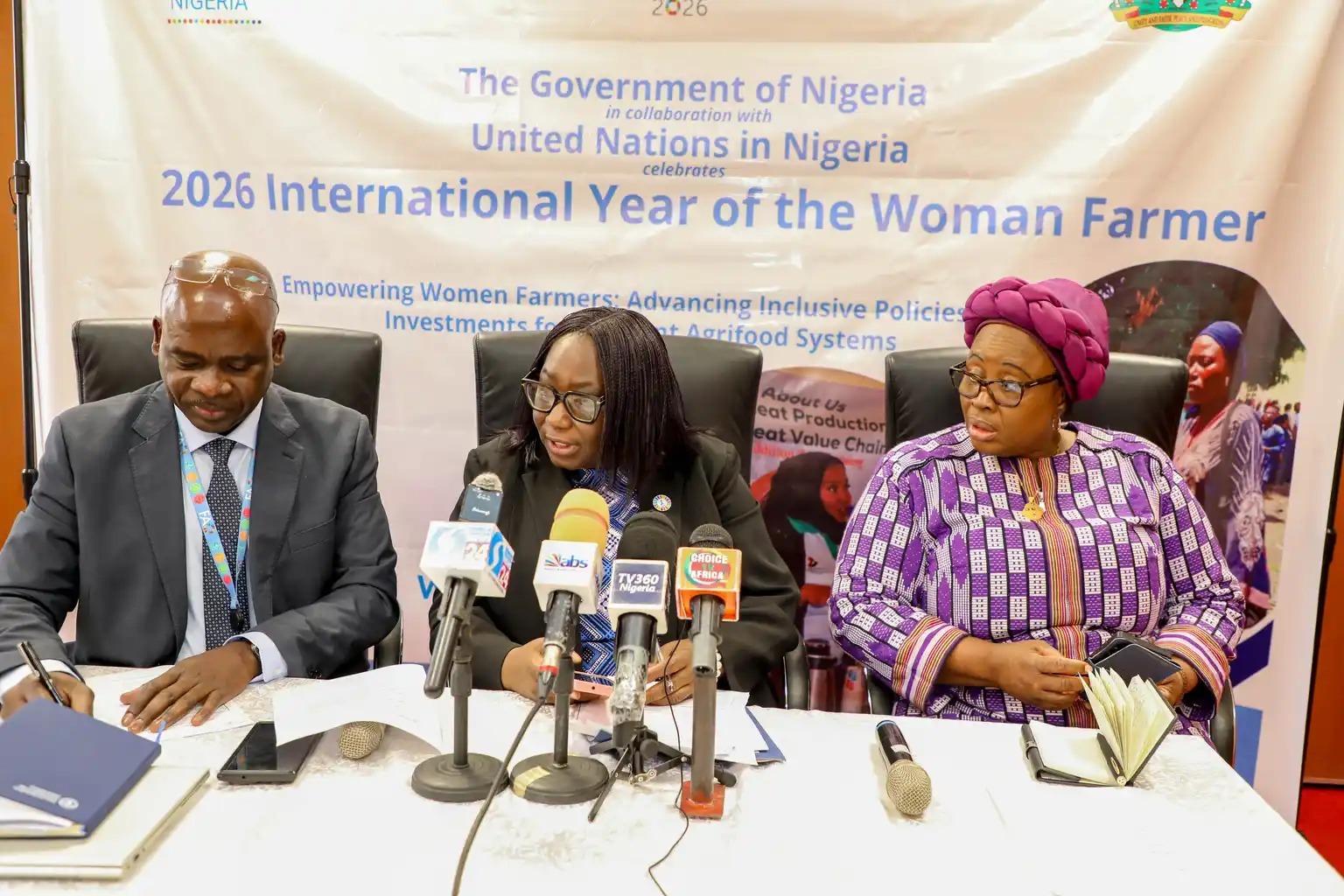
The call was made at a press conference, to commemorate the International Year of the Woman Farmer 2026, with the theme, “Empowering Women Farmers: Advancing Inclusive Policies and Investments for Resilient Agrifood Systems.”
Speaking, the UN Women Country Representative to Nigeria and ECOWAS, Ms Beatrice Eyong, said women account for about 70 percent of those involved in food crop production, processing and commercialisation.
According to her, women face challenges as farmers, she noted that addressing the challenges was critical to building resilient agrifood systems and strengthening Nigeria’s food security.
UN Women Representative, also stressed that despite women’s significant contribution to agriculture, they continued to face structural constraints that prevented them from achieving their full potential.
“Though they form 70 per cent of those who provide labour, they have structural constraints, obstacles that make them not to perform the way they should have performed,” Eyong said.
Access to Funds
She identified lack of access to land, finance, technology, extension services and markets as some of the major challenges confronting women farmers, adding that climate change was further making access to productive land increasingly difficult.
Eyong, who was an agronomist before becoming a gender specialist, also called for agricultural interventions to take into account the unpaid domestic responsibilities carried by women.
She noted that many women farmers had to combine agricultural activities with fetching water, gathering firewood, preparing food and caring for their families.
“Each time you add anything in the village or in the community for women, you have added more work. Interventions targeted at women farmers should reduce their workload rather than create additional burdens”, she said.
She added that UN Women was supporting initiatives such as climate-smart agriculture, digital technology and household biogas to increase women’s productivity while reducing the burden of unpaid domestic work.
Central Force
The Food and Agriculture Organisation (FAO) Representative in Nigeria and ECOWAS, Dr Hussein Gadain, said women farmers remained central to Nigeria’s food systems, stressing that greater investment in them would produce wider benefits for food security and economic development.
“Our message is clear: women farmers are indispensable to agri-food systems,” Gadain said.
He said empowering women farmers should go beyond the provision of agricultural inputs, noting that they also needed improved access to land, finance, technology, markets and decision-making opportunities.
“Investing in women farmers is one of the smartest investments any country can make,” he said.
Gadain also urged the media to help change the narrative around women in agriculture by documenting their achievements and highlighting the barriers limiting their productivity.
Also speaking, the Country Director for Nigeria, UN and the International Fund for Agricultural Development (IFAD), Ms Dede Ahoefa Ekoue, shared a personal experience of growing up as the grandchild of a landless woman farmer.
Ekoue said her grandmother’s experience demonstrated the consequences of denying women access to land and other productive resources.
“My grandmother used to farm the land of someone and she was paid with food and it depends on what the person wants to give,” she said.
She warned that the lack of productive assets could have consequences that extended beyond individual farmers and their families, stressing that investment in women was necessary to break cycles of poverty.
Ekoue disclosed that UN and IFAD interventions in Nigeria were supporting women and other smallholder farmers with access to productive assets, finance, technology, markets and climate-resilient agricultural practices.
“About $47 million had been allocated under an investment programme in Nigeria, with women accounting for between 48 and 50 per cent of the beneficiaries”.
She added that more than 221 market, processing and storage facilities were constructed or rehabilitated in 2025,.
“More than 80,000 women became members of supported rural producer organisations. More than 20,000 farmers had also received ICT-related training, while about 7,000 hectares of land had been facilitated for women and youths, she added.
The stakeholders called for stronger collaboration among governments, development partners, financial institutions and the private sector to ensure that women farmers had the resources and opportunities needed to contribute fully to Nigeria’s agricultural transformation.
They also urged policymakers to move away from treating women merely as beneficiaries of agricultural programmes and instead recognise them as entrepreneurs, investors, innovators and leaders within the food system.