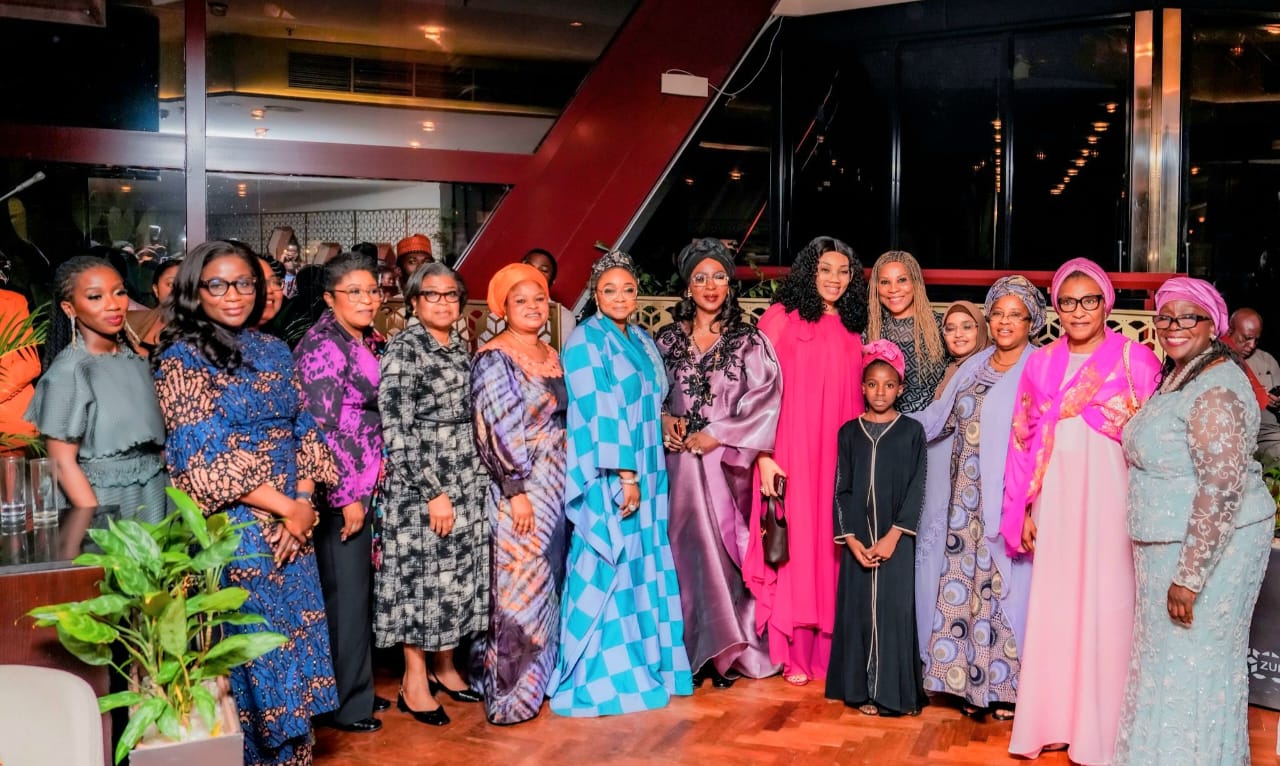
The United Nations Assistant Secretary-General and UNDP Regional Director for Africa, Ms Ahunna Eziakonwa, and the Minister of Women Affairs and Social Development, Hajiya Imaan Sulaiman-Ibrahim, have called for sustained and deliberate investment in women’s political participation, leadership development and economic empowerment as a pathway to stronger governance and inclusive growth.
The call was made at the Women Leaders Networking Meeting held in Abuja under the theme “Women Leading Africa’s Next Chapter”, convened by UNDP Nigeria and co-hosted by the Federal Ministries of Women Affairs and Foreign Affairs in honour of Ms Ahunna Eziakonwa.
Ms. Eziakonwa said Africa’s development trajectory depends on unlocking the full potential of women in leadership and governance, stressing that inclusive leadership remains central to stronger governance and sustainable development across the continent.
“Africa does not lack women ready to lead. What we must do is continue investing in the institutions, networks and opportunities that allow them to do so,” she said.
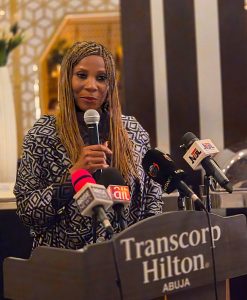
She further stressed that Africa’s transformation must be driven by Africans themselves, on their own terms, through stronger investment in people, institutions and leadership systems, particularly those that enable women to thrive.
“The question before us is no longer whether women should participate in Africa’s development; they already do. The more important question is whether Africa is creating the conditions that allow women to lead transformation at the scale our future demands, because the future we seek cannot be built by drawing on only half of our leadership capacity,” she said.
Ms Eziakonwa noted that women remain a critical but underutilised development asset, stressing that Africa’s future would be shaped by the quality and inclusiveness of leadership being built today.
“Africa stands at an important moment in its history, and the quality of leadership we cultivate today will determine the future our continent builds tomorrow. The future we seek cannot be built by drawing on only half of our leadership capacity,” she stated.
On Nigeria’s national discourse on women’s political participation, she said inclusive leadership must be treated as a development necessity.
“These conversations deserve our encouragement because they reflect a broader recognition that inclusive leadership is not simply a question of fairness. It is a strategic investment in stronger institutions, better governance and more sustainable development,” she said.
She disclosed that the UNDP, in partnership with the African Union Commission and the African Women Leaders Network, has launched the African Facility for Women in Political Leadership, which has received more than 1,300 applications from 41 African countries.
On economic inclusion, she highlighted the African Continental Free Trade Area (AfCFTA) as a platform for expanding opportunities for women-led enterprises and strengthening regional value chains.
She added that Africa’s next development phase requires interconnected systems where leadership, innovation, investment and partnerships reinforce each other.
“The true measure of progress will not be how many remarkable women we can name, but whether remarkable women become entirely unremarkable because leadership has become genuinely inclusive,” she said.
In her remarks, the Minister of Women Affairs and Social Development, Hajiya Imaan Sulaiman-Ibrahim, said Nigeria’s development ambitions require the full participation of women in leadership and decision-making, describing women as central to national transformation.
“Achieving these goals requires the deliberate, full, and unyielding participation of our nation’s greatest asset: our women,” she said.
She stressed that closing gender gaps should be viewed as both an economic and governance imperative.
“We must firmly shift the narrative: closing gender gaps is not an act of charity; it is a strategic economic necessity and just common sense,” she said.
She noted that initiatives such as the Nigeria for Women SCALE-UP Programme, with investments in women’s empowerment exceeding 540 million dollars and discussions ongoing to scale funding beyond two billion dollars, and the Power of 10 Million Women demonstrate the power of collective action.
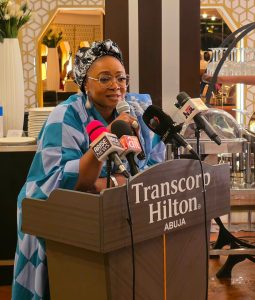
She also linked development challenges to the need for strengthened families and communities.
“Nobody dropped from the trees. Imagine if Nigerian families were strong. There would be no bandits, there would be no out-of-school children and there would be no children suffering from malnutrition,” she said.
The meeting attended by women leaders from government, diplomacy, business, academia, civil society and development institutions ended with renewed commitments to strengthen partnerships, expand mentorship opportunities and build institutional frameworks that position women’s leadership as a central pillar of Africa’s development agenda.