The Nigerian President Bola Tinubu has called for increased financial support for developing countries to enable them to tackle climate change without compromising their development goals.
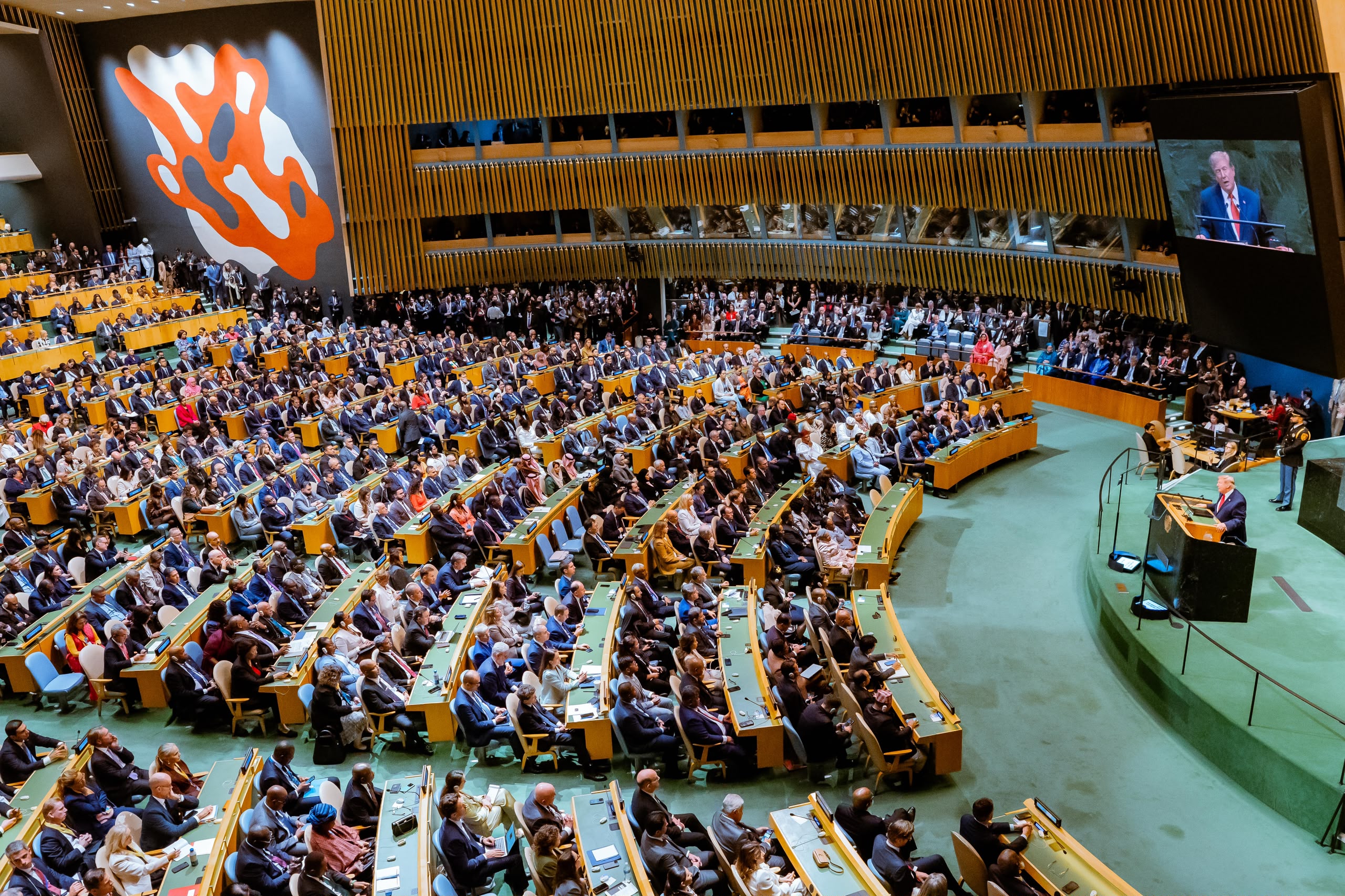
President Tinubu made the call in his address to World leaders during the general debate of the 81st United Nations General Assembly.
He said developing countries were already burdened by debt servicing, making increased support from development partners and advanced nations critical to their climate action efforts.
The President said; “Under our Energy Transition Plan, we are working towards net-zero emissions by 2060 while expanding access to affordable, reliable and sustainable energy.
“This effort combines renewable energy, clean cooking and gas as a transitional fuel with climate-smart agriculture and nature-based solutions.
“Finance must be governed by equity and shared responsibility rather than charity, with international commitments translated into accessible, predictable and adequately funded mechanisms, enabling developing countries to pursue climate action without compromising development objectives.”
“One of the greatest obstacles to sustainable development is inadequate financing. Many developing countries devote substantial resources to debt servicing at the expense of education, healthcare and infrastructure. Nigeria therefore calls for reform of the international financial architecture, wider access to concessional financing and debt sustainability frameworks that recognise developmental needs. We also support innovative financing through private capital, blended finance, South-South cooperation and strategic partnerships for sustainable development, climate adaptation and resilient infrastructure,” he said.
African Free Trade Zone
Looking inward, President Tinubu said the African Free Trade zone can also help shore up finances for the development of the continent.
“Nigeria further recognises the African Continental Free Trade Area as one of the continent’s most transformative opportunities. It can strengthen regional value chains, expand intra-African trade, promote industrialisation and attract investment. Africa must move beyond its historical role as an exporter of raw materials towards greater value addition, manufacturing, technological innovation and knowledge-driven growth. Our abundant natural resources must become engines of shared prosperity rather than sources of perpetual dependency,” the President stated.