
The United Nations Office on Drugs and Crime (UNODC) has called for stronger partnerships, evidence-based interventions and innovative strategies to tackle the increasingly complex global drug problem.
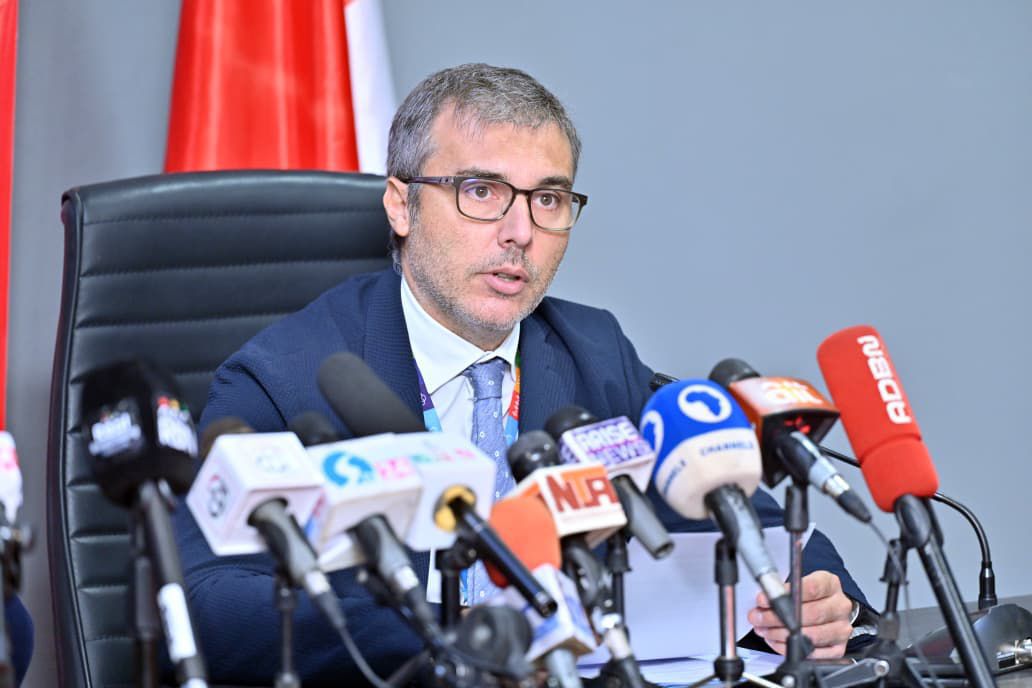
The Deputy Representative of UNODC in Nigeria, Danilo Campisi, made the call on Friday in Abuja during a news conference to launch activities marking the 2026 World Drug Day.
Speaking on the theme, “The World Drug Problem: Persistent Issues, New Challenges, Innovative Responses,” Campisi said the global drug problem remained a major public health, security and development challenge despite decades of interventions.
He warned that emerging threats such as synthetic drugs and digital drug markets were complicating efforts to curb substance abuse.
ALSO READ: Group Seeks Broader Health Insurance Coverage
According to him, the theme reflects the changing and increasingly complex nature of drug-related challenges confronting countries around the world, including Nigeria.
Campisi identified the continued prevalence of drug use among young people as one of the most persistent concerns, noting that substances such as cannabis, tramadol and other opioids remained widely available.
“Many young people are still exposed to drugs at an early age. These are not just statistics; they represent real lives, real futures and real families affected,” the Deputy Representative of UNODC warned.
He also highlighted significant treatment gaps, stating that many people living with drug use disorders were unable to access treatment because of stigma, cost, limited services and poor integration of treatment into primary healthcare systems.
Campisi disclosed that Nigeria was meeting barely two per cent of the treatment needs of the estimated three million people living with symptoms of drug dependence.
The Deputy Representative of UNODC identified stigma and criminalisation as major barriers to recovery, stressing that drug dependence was still widely viewed as a moral failing rather than a health condition.
“Such perceptions discourage affected individuals from seeking help and contribute to discrimination against people with drug use disorders,” he stressed.
The UNODC official also said prevention efforts remained weak and fragmented, with school and community-based programmes yet to achieve the scale required to effectively reach vulnerable populations.
He noted that women who use drugs faced additional challenges, including stigma, lack of gender-sensitive treatment services and greater vulnerability to violence and exploitation. He added that women remained underrepresented in treatment programmes despite these realities.
On emerging threats, Campisi warned about the growing prevalence of synthetic drugs, including methamphetamine and synthetic opioids, across the globe and in West Africa.
According to him, such substances are easier to produce, harder to detect and often more dangerous than traditional drugs.
He also expressed concern over increasing cases of poly-drug use, where individuals combined multiple substances such as cannabis, alcohol and pharmaceutical products, thereby increasing health risks and complicating treatment outcomes.
Campisi further warned that digital technologies had transformed drug distribution channels, enabling young people to access illicit substances through online platforms and social media.
Despite the challenges, he said there was hope through innovative and evidence-based interventions being implemented globally and in Nigeria.
He advocated a public health approach to drug use, stressing that drug use disorders should be treated as chronic health conditions rather than criminal issues.
According to him, integrating treatment services into primary healthcare systems would make them more accessible and sustainable.
Campisi cited the Alternative to Incarceration Programme implemented through collaboration among UNODC, the National Drug Law Enforcement Agency (NDLEA) and the Kaduna State Substance Abuse and Mental Health Services Agency as a practical example.
“The programme diverts individuals charged with minor drug-related offences away from the criminal justice system and links them to treatment and support services,” he explained.
He also advocated community-based treatment and rehabilitation models that bring services closer to affected populations.
Campisi underscored the importance of multi-sectoral collaboration, saying no single institution could effectively address the drug problem alone.
He said coordinated action involving the health, education, justice and social welfare sectors, as well as civil society organisations, remained critical to achieving sustainable results.
The UNODC official noted that collaboration with NDLEA and other stakeholders had supported the development and implementation of Nigeria’s National Drug Control Master Plans covering 2015–2019, 2021–2025 and the forthcoming 2026–2030 framework.
He added that the partnership had strengthened institutional capacity through training, development of national expertise, enhanced operational capabilities, improved forensic systems and stronger cross-border cooperation.
Campisi said UNODC and its partners had also supported drug supply reduction efforts by providing state-of-the-art audio-visual recording equipment to facilitate electronic investigative interviewing of suspects in line with the Administration of Criminal Justice Act.
He further explained that regional cooperation initiatives were being strengthened to dismantle Nigerian drug cartels and transnational organised crime networks.
The UNODC official disclosed that preparations were underway for a National Drug Summit to bring together key stakeholders to assess Nigeria’s drug situation and chart appropriate responses.
On the role of data in policymaking, Campisi stressed the need for improved data collection systems, including household surveys and treatment data mechanisms.
He announced that data collection for the second National Survey on Problem Drug Use had been completed and would provide updated information to guide targeted interventions.
Campisi also commended the MTN Nigeria Foundation for funding the first national drug survey among secondary school students, describing it as a significant contribution to evidence-based policymaking.
He highlighted progress in harm reduction initiatives, including the implementation of Needle and Syringe Programmes in 12 states and Medication-Assisted Treatment programmes in five states.
According to him, the interventions demonstrated positive steps towards addressing drug dependence through public health and human rights-based approaches.
Campisi emphasised that harm reduction efforts must continue to prioritise human dignity, voluntary access to treatment and the reduction of stigma against people who use drugs.
He reaffirmed UNODC’s commitment to supporting Nigeria through evidence-based programmes, innovation, human-centred approaches and international cooperation.
Campisi expressed confidence that collective action would strengthen responses to the global drug problem while protecting individuals, families and communities from the devastating effects of drug abuse and illicit trafficking.
NAN

