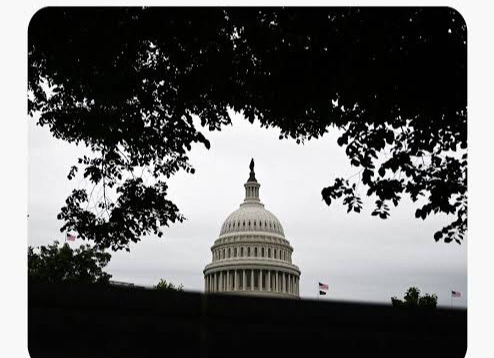
The Republican-controlled U.S. House of Representatives has passed a resolution directing President Donald Trump to halt military operations against Iran unless he first obtains congressional authorisation.
The House approved the war powers resolution by 214 votes to 208 on Thursday, with four Republicans joining Democrats in support of the measure. Hours later, however, the Senate blocked a similar resolution, voting 49-47 against advancing it.
The House resolution, introduced by Democratic Representative Pramila Jayapal of Washington, instructs Trump “to remove the use of United States Armed Forces from hostilities” against Iran unless Congress authorises military action.
Similar measures adopted since the United States and Israel launched strikes on Iran on February 28 have failed to bring an end to the fighting.
The four Republicans who joined Democrats in backing the House resolution were Representatives Tom Barrett of Michigan, Brian Fitzpatrick of Pennsylvania, Warren Davidson of Ohio and Thomas Massie of Kentucky.
In the Senate, Republican Susan Collins of Maine voted with Democrats in support of the measure, while Democrat John Fetterman of Pennsylvania sided with Republicans in opposing it. Four Republican senators did not cast votes.
The split votes highlighted growing bipartisan frustration over a conflict that Trump had portrayed as a limited military campaign but which has since developed into a prolonged engagement.
READ ALSO: U.S. Senator Moves To Restrict Trump’s War Power On Iran
Welcoming the House vote, Jayapal said the issue transcended party politics.
“This is not a partisan issue. Vast majorities of Americans, of all parties, believe that this is an unconstitutional and illegal war that needs to stop,” Jayapal said, citing the deaths of service members and civilians, as well as rising fuel costs linked to the conflict.
With congressional midterm elections due in November, Democrats are seeking to link the unpopular war to the rising cost of living, while Republicans argue that criticism of the military campaign weakens the president during wartime.
Republican Senator Tim Sheehy defended Trump’s actions and criticised supporters of the resolutions.
“This regime that we are fighting does not care about our partisan politics,” Sheehy said, accusing backers of the measure of “defending these lunatics who want us all dead” while praising Trump’s decision to attack Iran.
Under the U.S. Constitution, Congress has the power to authorise the use of military force, although presidents have long exercised authority to launch limited military operations without prior congressional approval.
The congressional votes came as Trump intensified military pressure on Iran, promising “major military punishment” for Tehran and its Houthi allies after Houthi fighters attacked two Saudi oil tankers in the Red Sea.
The U.S. military also carried out another overnight round of airstrikes on Iranian targets, prompting retaliatory attacks by Iran on U.S. military bases in neighbouring countries.