


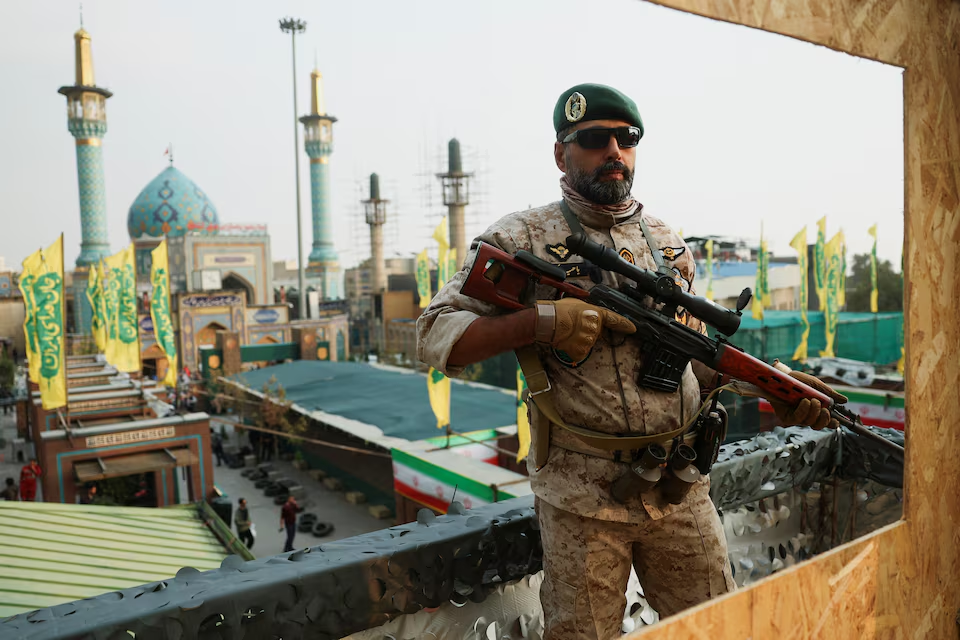
Iran and the United States remain far from reaching an agreement to end their conflict, despite intensified diplomatic efforts led by Qatar to prevent renewed military escalation following the US midterm elections.
The United States carried out limited airstrikes on Iran’s Qeshm Island on Monday, November 2, 2026, targeting Iranian surface-to-air missile systems and missile launchers near the strategically important Strait of Hormuz..
According to three US officials who spoke to CBS News, the operation was defensive and followed an incident in which Iran’s Islamic Revolutionary Guard Corps (IRGC) reportedly fired at an American aircraft.
Another US official told Reuters that the strikes targeted Iranian forces using surface-to-air missiles against US assets.
US officials described the operation as limited, insisting it did not represent a resumption of major combat operations. However, the Pentagon referred media enquiries to US Central Command (CENTCOM), which did not publicly respond to requests for comment.
Qatar also has intensified mediation, with its officials travelling to Tehran to discuss a draft agreement that has been under negotiation for eight days.
Iranian officials said progress depended on Washington meeting Tehran’s conditions, particularly regarding the reopening of the strategically important Strait of Hormuz.
“Mediators are working hard to narrow gaps between Tehran and Washington,” a senior Iranian official said, warning that Iran would reject Washington’s “excessive demands.”
Qatar, meanwhile, confirmed that both sides remained committed to mediation and were reviewing proposals, expressing hope that an agreement could still be achieved.
READ ALSO: Iran Receives US Feedback On Trust-Building Plan
Iran’s Parliament Speaker, Mohammad Baqer Qalibaf, declared that “the ball is in Washington’s court,” insisting that Tehran would not surrender to military pressure. Iranian military authorities also warned that any renewed US attack would attract an immediate response, potentially targeting American and Israeli assets beyond the Middle East.
However, US President Donald Trump played down the possibility of renewed strikes after the elections, saying he believed Iran wanted an agreement and that a deal “could happen.”
Meanwhile, Iran’s Revolutionary Guards claimed to have downed an American MQ-9 drone and two Lucas drones near the Strait of Hormuz. The uncertainty surrounding negotiations contributed to a roughly one-dollar increase in oil prices on Tuesday, following a decline of more than seven per cent the previous day.
Beyond the US-Iran negotiations, Tehran is also engaging regional powers to prevent a wider conflict. Iranian Foreign Minister Abbas Araqchi confirmed that discussions with Saudi Arabia were continuing towards establishing new regional security arrangements without foreign military involvement.
Last week, senior officials from Saudi Arabia, Turkey and Pakistan visited Tehran in the first high-level engagement with Iran since August. The diplomatic initiative comes amid escalating tensions involving Saudi Arabia and Yemen’s Iran-aligned Houthi movement.
Houthi attacks on Saudi territory, including oil facilities and airports, have disrupted aviation and energy exports, prompting Saudi airstrikes in Yemen. The militia has also advanced towards the Bab el-Mandeb Strait, another critical international shipping route.
Yemen has remained embroiled in civil war since the Houthis seized the capital, Sanaa, in 2014, forcing out the internationally recognised, Saudi-backed government.
With tensions surrounding both the Strait of Hormuz and Bab el-Mandeb, diplomatic efforts are increasingly focused on preventing renewed confrontation from threatening regional stability and global energy supplies.

