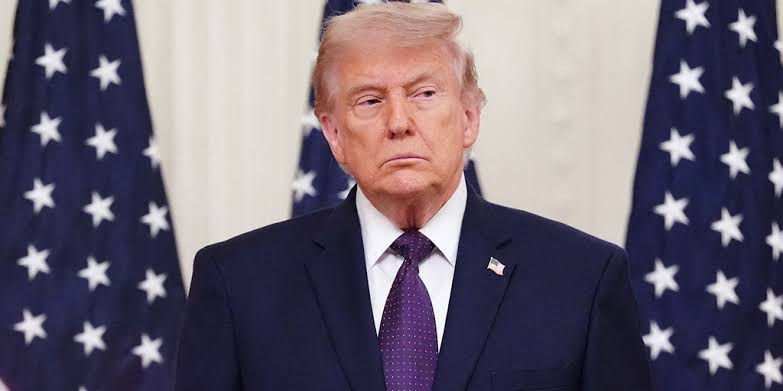
US President Donald Trump has rejected Iran’s proposal to reopen the Strait of Hormuz and end hostilities in the Middle East, despite Tehran’s offer to begin wider negotiations.
President Trump announced the decision on Saturday while speaking to reporters at the White House before departing for Tennessee.
“I reject their proposal. … I rejected their deal,” he said.
President Trump claimed Iran was seeking an agreement to reopen the strategic waterway because of mounting economic pressure.
“They want to make a deal to open the Hormuz Strait immediately because they’re losing so badly,” he said.
READ ALSO: Strait of Hormuz to Stay Closed-Iran
He said Iran wanted the strait reopened because it depended on the waterway for revenue.
The United States has imposed an economic blockade on Iran to pressure Tehran to lift its own blockade of the Strait of Hormuz, which has significantly reduced shipping through the strategic maritime route.
President Trump, however, again asserted that the United States had control of the waterway.
The Wall Street Journal first reported Trump’s rejection of the proposal, citing unnamed US officials.
It reported that President Trump was privately sceptical that Iran would meet his demands and had told his staff that renewed bombing could follow the November US midterm elections.
Earlier, a US official had described discussions with Iran through mediators as “positive and constructive”.
Iran presented the proposal at the United Nations General Assembly in New York, saying it had been conveyed to Washington through Qatari mediators.
Iranian Foreign Minister Abbas Araqchi said on Friday that the proposal would trigger a seven-day countdown to reopening the Strait of Hormuz and suspending regional hostilities.
“If there is seriousness on the US side to come to a deal and reopen the Strait of Hormuz, everything is now prepared,” Araqchi said.
He added that an agreement could pave the way for broader negotiations on mutually agreed issues, potentially including Iran’s nuclear programme.
President Trump had insisted that Iran must never acquire a nuclear weapon, while a senior Iranian official told reporters that Tehran would make no concessions on its nuclear programme, even if Washington accepted the proposed peace deal.
The official said Iran would not surrender its rights, including uranium enrichment and retaining its highly enriched uranium within the country.
Iranian President Masoud Pezeshkian, in an interview, said Tehran was prepared to negotiate its nuclear programme and other issues but would not accept “bullying or coercion”.
“Iran is not seeking war, but will defend itself against pressure, threats and attacks,” President Pezeshkian said.
He added that Iran had already agreed not to develop nuclear weapons.
Previous diplomatic efforts have failed to end the conflict, which began on Feb. 28 with US and Israeli attacks on Iran.
The seven-month-old war has killed thousands, weakened Iran’s conventional military capabilities and further damaged its struggling economy.
The conflict has also disrupted global oil supplies and harmed the world economy, with Iran and its allies extending hostilities across the region.
Reuters