Nigeria’s Vice President Kashim Shettima has called on African countries to unite and take a more influential role in shaping the global digital agenda.
VP Shettima said that the continent must move beyond being a consumer of technology to becoming a key player in determining the future of digital governance.
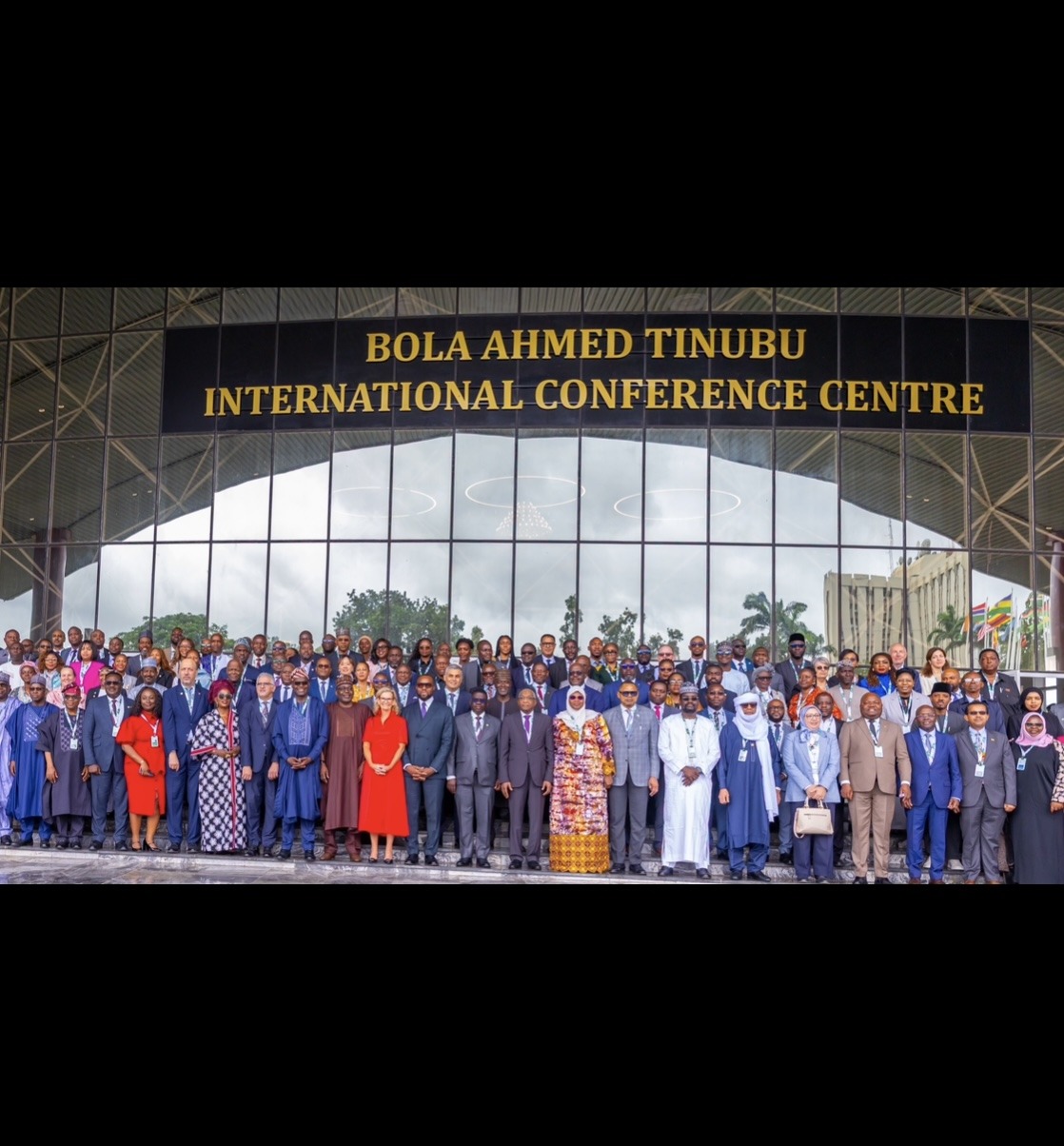
He disclosed this at the opening of the 7th Ordinary Session of the ATU Conference of Plenipotentiaries (CPL 26) in Abuja.
Represented by the Deputy Chief of Staff to the President, Ibrahim Hadejia, VP Shettima said Africa must speak with one voice on issues that will determine the future of the global digital economy.
He urged African countries to demand greater representation in global technology policymaking, arguing that decisions affecting the continent’s digital future should no longer be taken without adequate African participation.
According to him, “Africa must assume a more prominent role in shaping the global digital agenda. For too long, global technology policies have been developed without adequate representation of African priorities and perspectives, that must change. Nigeria is proud of its contributions within both the African Telecommunications Union (ATU) and the International Telecommunication Union (ITU), and we remain committed to ensuring that Africa is not merely present at global discussions but actively shaping decisions that define the future for digital technologies.”
In his address, Nigeria’s Minister of Communications, Innovation and Digital Economy, Dr Bosun Tijani described the Conference as a defining opportunity for Africa to strengthen cooperation and advance a shared digital vision.
Dr Tijani said; “The Conference of Plenipotentiaries is where Africa reflects on its progress and charts a common course for the future. At a time when digital technologies are reshaping economies and societies at an unprecedented pace, our responsibility to work together has never been greater.
“Today, we gather to strengthen the partnerships and shared resolve that will ensure Africa continues to play a leading role in shaping the future of telecommunications and the digital economy.”
He further emphasised the importance of Africa speaking with one voice on global digital issues, noting that “Africa must arrive prepared, united and credible. We must continue to invest in technical preparation, strengthen regional cooperation and speak with one voice where our interests align. Where global digital rules are being shaped, Africa must be ready to participate and help shape outcomes that affect our people, our economies and our future.”
A major highlight of the opening ceremony was the official launch of the ATLAS UMOJA, a continental initiative announced by Minister Tijani to accelerate the development of locally relevant Large Language Models across Africa.
Building on Nigeria’s pioneering N-ATLAS initiative, the Network will bring together governments, researchers, academia, innovators, and ecosystem partners to ensure that Africa’s languages, cultures, and knowledge systems are reflected in the AI technologies shaping the continent’s future.
GSM Association (GSMA) Senior Director of Public Policy and Communications, Caroline Mbugwa said; “the initiative represents a major step towards ensuring Africa plays a leading role in the global AI ecosystem rather than remaining merely a consumer of emerging technologies.’
According to her, the ATLAS Network provides a collaborative platform through which African countries can work together to develop locally relevant large language models capable of understanding and responding in the continent’s diverse languages.
“We’re making a statement today that it’s not just our governments, the industry, the startups are ready to work together to ensure that we keep building frontier technology in Africa. So, this initiative ensures that when our people go to use some of these models, they’re actually able to interact with them through their own communities.”
Highlighting its economic significance, Mbugwa said developing AI models within Africa would help retain value, talent and innovation on the continent.
She cited Nigeria’s N-ATLAS initiative as an example, noting that thousands of developers have already begun building applications on the platform.
“When N-ATLAS was launched, thousands of developers started building on it. Previously, many of them relied on AI technologies developed outside Africa, meaning valuable data and economic value were leaving the continent,” Mbugwa explained.
According to her, “the new initiative will create an ecosystem where African developers can build solutions using locally developed AI models, reducing dependence on foreign technologies while strengthening the continent’s digital economy.’
The outgoing Secretary General of the African Telecommunications Union, John Omo, welcomed delegates and described the Conference as a pivotal moment for the continent’s digital future.
“We are deeply grateful to the Government and people of the Federal Republic of Nigeria, whose support made this Conference possible. The Union’s work rests on the commitment of its Member States and the partnerships we continue to build to place ATU on a firmer and more sustainable footing. The Union recognises the important role of partnerships in the achievement of its mission. We therefore recognise GSMA, QUALCOMM, ICANN, and our Tower Companies who extended their hand of collaboration to ATU during this CPL-26,” he said.
Over the course of the two-day Conference, delegates will consider strategic, financial, and governance matters affecting the Union, adopt resolutions that will guide the implementation of Africa’s digital priorities for the 2027–2031 period, and strengthen the continent’s common position ahead of the International Telecommunication Union (ITU) Plenipotentiary Conference later this year.
Hosting CPL-26 reinforces Nigeria’s growing leadership in Africa’s digital transformation and reflects the Nigerian Government’s commitment to leveraging technology, innovation, and regional collaboration to accelerate socio-economic development across the continent.