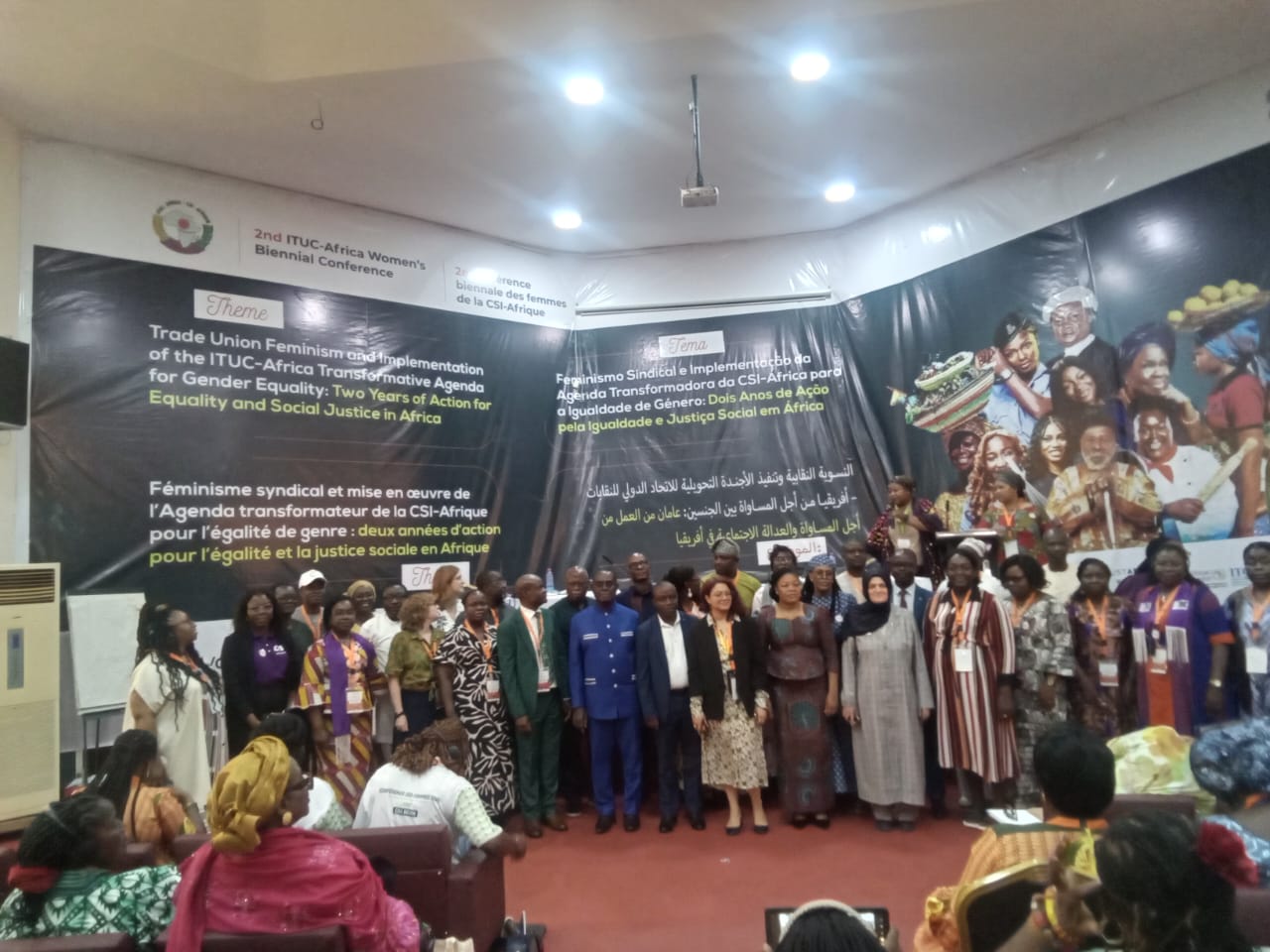
The second International Trade Union Confederation-Africa (ITUC-Africa) Women’s Biennial Conference has opened in Lomé, Togo, with a focus on strengthening women’s participation in decision-making and advancing gender equality in the workplace.
The three-day conference provides a platform for women to share experiences, assess the impact of illicit financial flows and debt burdens on their living and working conditions, and advocate gender-responsive public policies across society.
Addressing participants virtually, the Director-General of the International Labour Organisation (ILO), Dr Gilbert Houngbo, said governments and trade unions must ensure greater inclusion of women in decision-making and build their capacity to respond to changes in the world of work.
Houngbo congratulated ITUC-Africa for institutionalising the conference, following its inaugural edition held in Cotonou, Benin, in 2024.
He said the second gathering demonstrated a sustained commitment to advancing gender equality, social justice and women’s leadership within the African trade union movement.
According to him, the theme of the conference was timely, particularly as Africa’s world of work undergoes significant changes driven by digitalisation, artificial intelligence, climate change, demographic shifts and economic restructuring.
He, however, noted that such developments would not automatically translate into greater equality if women remained over-represented in informal employment, carried a disproportionate share of unpaid care work, faced discrimination and violence, or remained under-represented in leadership and decision-making.
“The inequalities of yesterday will simply be reproduced in the economies of tomorrow,” he said.
Houngbo said gender equality was central to social justice, inclusive growth, decent work and democratic governance.
He said the ILO remained committed to promoting equal pay for work of equal value, expanding social protection, investing in the care economy, supporting a just transition that benefits women, accelerating the transition from informal to formal employment, and eliminating violence and harassment in the workplace.
He also called for wider ratification and implementation of ILO Convention 190 on violence and harassment in the world of work.
“But policies alone are not enough. Women must have a stronger voice where decisions are made in governments, enterprises, trade unions, collective bargaining processes, and institutions shaping economic, social, climate and technological policies,” he said.
Houngbo described strong, independent and representative trade unions as essential to achieving greater gender equality.
He urged ITUC-Africa to organise more women workers, including those in the informal economy, promote young women into leadership positions and build alliances across generations and movements.
“Ensure that gender equality remains at the heart of economic and labour policies,” he said.
The ILO Director-General reaffirmed the organisation’s readiness to work with African trade unions to promote a more inclusive and equitable future of work where women’s rights are protected, their contributions valued and their leadership strengthened.
The representative of the Ministry of Labour and Social Justice, Mr Fantowou Burno, drew attention to hostility and discrimination faced by women and called for stronger frameworks to protect them in the workplace.
He said decent work and social dialogue were important tools for empowering women and ensuring their effective participation in society.
Welcoming more than 200 delegates to the conference, the General Secretary of ITUC-Africa, Comrade Joel Odigie, said women continued to face exploitation, economic inequality, unpaid care responsibilities, precarious employment and limited access to equal opportunities.
He said the conference would provide an opportunity to assess progress made since the inaugural meeting two years ago, identify challenges and develop practical ways of addressing them.
“This conference is stock-taking. We want to ask ourselves, what have we achieved? How do we grow this achievement? Perhaps there were challenges that prevented us from achieving them. What are they? How can we overcome them? And how can we move forward?” Odigie said.
He urged delegates to participate actively in the discussions and develop achievable recommendations for advancing women’s rights and participation in trade union activities.
“We really want to listen to you, harvest your thoughts, and see how we can move forward together better,” he said.
Odigie said ITUC-Africa had also undertaken research to assess achievements and challenges since the first conference in 2024.
He said the organisation had established the conference as part of efforts to ensure greater inclusion of women in decision-making through capacity building.
The conference is themed: “Trade Union Feminism and Implementation of the ITUC-Africa Transformative Agenda for Gender Equality: Two Years of Action for Equality and Social Justice in Africa.”
The inaugural ITUC-Africa Women’s Biennial Conference was held in Cotonou, Benin, in August 2024.