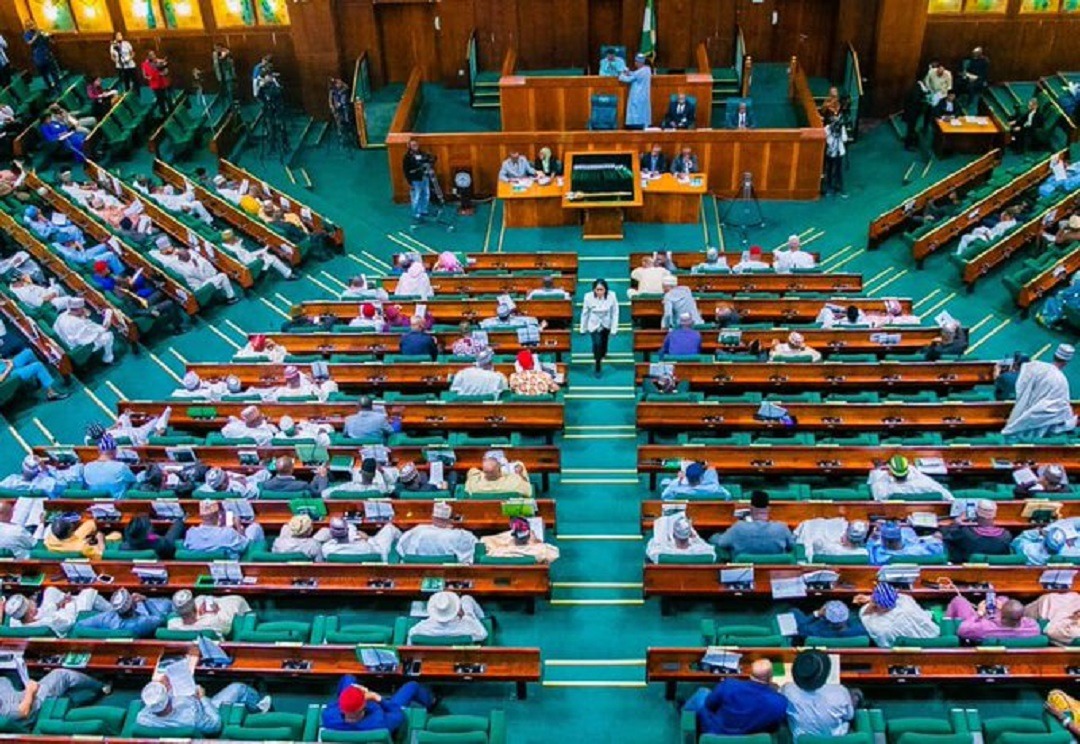
The House of Representatives has resolved to summon the nation’s Service Chiefs and the Minister of Finance to appear before it and provide a detailed account of funds released to the military amid growing concerns over the worsening security situation across the country, despite huge budgetary allocations to the defence sector.
The resolution followed the adoption of motions on the escalating wave of banditry, kidnappings and attacks on communities, schools and places of worship across Nigeria, moved by Ibe Osonwa and Sulaiman Abubakar Gumi.
The House expressed concern that despite substantial resources committed to security operations over the years, bandits and kidnappers continue to operate with apparent ease, carrying out deadly attacks and mass abductions in several parts of the country.
READ ALSO: Nigeria Commits to Fighting Insecurity, Freeing Abductees
Leading the debate, Ibe Osonwa lamented the increasing incidents of kidnappings and attacks on schools, warning that the trend was worsening the country’s out-of-school children crisis and exposing vulnerable communities to constant fear and trauma.
He stated: “That the fundamental constitutional obligation of the Federal Government of Nigeria as enshrined in Section 14(2)(b) of the 1999 Constitution (as amended), which explicitly states that ‘the security and welfare of the people shall be the primary purpose of government.
“Aware that the daily abduction of innocent schoolchildren has not only disrupted the educational fabric of the nation but has forced thousands of children out of school, compounding the country’s out-of-school children crisis and traumatising an entire generation of young Nigerians.
“Note that with profound grief and alarm, the unrelenting escalation of banditry, mass kidnappings and terror attacks across various states of the Federation has left the nation in a perpetual state of mourning and fear.
“Also note the deeply disturbing and systematic targeting of educational institutions and places of worship, which has turned schools, once sanctuaries of learning, and churches, sanctuaries of spiritual solace, into prime targets for ruthless bandits and kidnappers.
“Aware that religious congregants are now regularly attacked, abducted or killed during worship services, severely infringing upon citizens’ fundamental right to freedom of thought, conscience and religion;
“Also aware that ordinary Nigerians are crying out every day, feeling entirely abandoned by the state, as businesses collapse, farming communities are deserted due to terror, and families are forced into extreme poverty trying to raise astronomical sums for ransom.
“Concerned that despite the trillions of naira allocated to the defence and security sectors in consecutive national budgets, the current security architecture appears overwhelmed, reactive and incapable of halting the sophisticated operations of these bandits.
“Further concerned that the apparent lack of a decisive and crushing military response from the security agencies reflects a collapse in the enforcement of sovereign security, leaving citizens with the grim impression that the government has lost control of vast territories within the nation.”
Osonwa argued that the current security response appeared largely reactive and inadequate, despite the enormous public funds appropriated annually for defence and security operations.
Also contributing through a motion on recurring attacks in Zamfara State and other North-West states, Sulaiman Abubakar Gumi described the security situation in the region as a humanitarian crisis driven by armed banditry, kidnappings and the growing activities of violent criminal groups.
He cited the recent abduction of seven students of Federal Polytechnic, Kaura Namoda, Zamfara State, as well as the continued captivity of two senior lecturers of the institution despite ransom payments.
Gumi also highlighted deadly attacks in Zamfara, Sokoto, Katsina, Kaduna, Kano, Kebbi and Jigawa states, noting that many communities had been deserted as residents fled persistent violence.
The lawmakers questioned why insecurity has continued to escalate despite repeated assurances by security agencies and consistent government funding.
Consequently, the House resolved to invite the Chief of Defence Staff, the Chief of Army Staff, the Chief of Naval Staff, the Chief of Air Staff and other relevant security chiefs, alongside the Minister of Finance, to brief lawmakers on the exact amount of money appropriated and released for security operations, and to explain the impact of the expenditure on the fight against insecurity.
Members said the appearance would provide an opportunity for Nigerians to understand how security funds have been utilised and why the desired results have yet to be achieved.
The House also called on President Bola Tinubu to immediately deploy a more aggressive and comprehensive security strategy to dismantle bandits’ strongholds, secure vulnerable communities and ensure the release of citizens held captive by criminal groups.
In addition, lawmakers urged the Minister of Defence to deploy more troops and operational equipment to Zamfara State and other affected North-West states to strengthen ongoing military operations.
The House further called for non-kinetic approaches to addressing insecurity, urging the Ministries of Agriculture, Education, Environment and Humanitarian Affairs to implement programmes capable of tackling the socio-economic conditions that fuel criminality.
In a strongly worded warning, lawmakers maintained that continued insecurity despite massive security spending raises serious questions about accountability and effectiveness within the nation’s security architecture.
They stressed that Nigerians deserve to know how public funds allocated for security have been spent and why banditry, kidnappings and terrorist attacks continue to threaten lives, livelihoods and national stability.
The Committees on Defence, National Security and Intelligence, Army and other relevant committees were mandated to oversee implementation of the resolutions and report back to the House within two weeks.