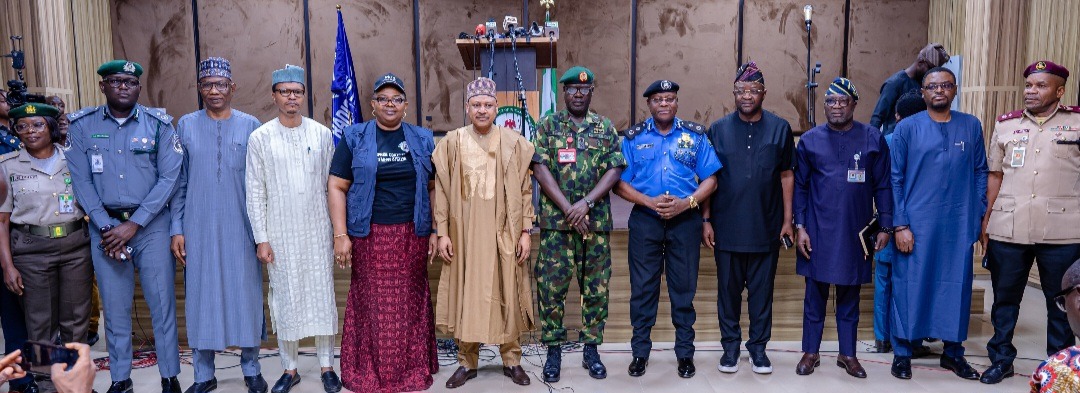
Nigeria’s Minister of Information and National Orientation, Mohammed Idris, has reassured Nigerians of the Federal Government’s unwavering commitment to tackling insecurity and ensuring the safe return of all abducted victims across the country.
The Information Minister stated this in Abuja at a press conference amid renewed concerns over security challenges in parts of the nation.
Idris said the government is working closely with security and intelligence agencies to safeguard communities from kidnapping, banditry, terrorism, and other criminal activities. According to him, recent incidents in Oyo and Borno States, as well as other affected areas, have tested the nation’s collective resolve.
“The abduction of innocent schoolchildren and their teachers is not merely an attack on families and communities; it is an attack on the future of our nation, on education, and on the values that unite us as Nigerians,” he stated.
Idris, speaking on behalf of President Bola Ahmed Tinubu and the Federal Government, assured citizens that the safe return of every child and teacher currently in captivity remains a top national priority.
“The President has made it clear that no child belongs in captivity and that no effort will be spared in ensuring that those responsible for these heinous crimes are brought to justice,” he said.
The minister of information said defeating terrorism requires a united national response that transcends political, ethnic, religious, and regional differences.
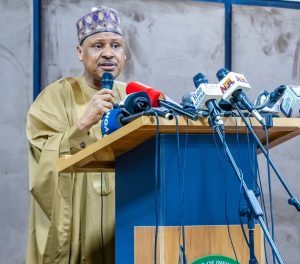
“The Federal Government is rallying citizens, the media, and security agencies in a united front against terrorism because an attack against one Nigerian is an attack against all Nigerians. Terrorism has no tribe, no religion, and no political affiliation. Its only purpose is destruction,” said Idris
As part of efforts to strengthen security in vulnerable areas, the Minister revealed that the President had approved the recruitment of 1,000 forest guards to reinforce security presence in forested and high-risk communities nationwide.
“This attack bears the familiar signature of terrorist groups that have, for years, sought to undermine education and destabilise communities in the North-East,” Idris noted.
READ ALSO: Information Minister Reaffirms Commitment to Public Sector Reforms
While declining to disclose operational details for security reasons, he emphasised that multiple security and intelligence agencies are working in close coordination to address the situation.
The Minister stressed that the Tinubu administration’s strategy extends beyond the deployment of force, focusing on an intelligence-driven and comprehensive overhaul of the nation’s security architecture.
“One of the pillars of this reform agenda is the implementation of state policing. President Tinubu is determined to leave behind a policing system that is dynamic, responsive, and capable of effectively securing local communities across the country,” he said.
Idris noted that upon assuming office, President Tinubu inherited a complex security landscape marked by terrorism, banditry, kidnapping, oil theft, and other criminal activities.
“Rather than relying solely on military force, the administration has adopted a multi-faceted approach combining military operations, intelligence coordination, technological advancement, regional cooperation, and socio-economic interventions,” he noted.
Providing an update on security operations, the Minister said that since May 2023, significant progress has been recorded, with hundreds of terrorists and criminal elements neutralised, arrested, or compelled to surrender.
“Numerous kidnapping victims have also been rescued across various parts of the country,” he stated.
Highlighting gains in the North-East, Idris said troops under Operation Hadin Kai continue to make advances against Boko Haram and ISWAP insurgents.
“In the past week alone, the Nigerian Army and the Nigerian Air Force successfully repelled multiple infiltration attempts along the Kirawa, Pulka, and Ngoshe axes in Borno State. Follow-up operations led to the neutralisation of about 50 terrorists, including several high-value targets,” he disclosed.
He further revealed that approximately 1,000 terrorist elements, including several commanders, were eliminated in the first quarter of 2026 as sustained operations intensified across the theatre.
A joint Nigeria–United States-supported operation also disrupted terrorist logistics networks and eliminated key ISWAP commanders while security forces rescued 92 civilians from captivity near Buratai.
In the North-West and North-Central regions, Idris said joint military operations have increased pressure on bandit groups and kidnapping syndicates operating in Zamfara, Sokoto, Katsina, Kebbi, Niger, Kwara, Kaduna, and neighbouring states.
“Several criminal camps have been dismantled, numerous suspects arrested, and intelligence-led operations have continued to restrict the movement of criminal elements,” he said.
According to him, security forces in the South-East and South-South have sustained operations against violent criminal networks, separatist-linked groups, cultists, oil thieves, and economic saboteurs.
On maritime security, the Minister highlighted enhanced operations by the Nigerian Navy, which he said have significantly reduced oil theft and contributed to an increase in crude oil production by approximately 400,000 barrels per day since the current administration assumed office.
“These efforts are equally yielding positive results within the justice sector,” Idris stated.
He disclosed that Nigeria has commenced one of the largest terrorism prosecution exercises in its history, with more than 500 suspects facing trial for terrorism-related offences.
According to the Office of the Attorney-General of the Federation, 508 terrorism-related cases were recently brought before the courts, resulting in 386 convictions.
“The convictions represent a major milestone in Nigeria’s counter-terrorism efforts and demonstrate the government’s commitment to ensuring accountability,” he said.
Idris emphasised that terrorism has become a transnational challenge requiring strong international collaboration.
“Consequently, Nigeria has expanded strategic security partnerships with friendly nations and international organisations, particularly in intelligence sharing, counter-terrorism, military training, border security, cybersecurity, and capacity building. The relationship between Nigeria and the United States has grown significantly stronger under this administration,” he noted.
He also underscored the importance of cooperation between the Federal Government and state governments, as well as continued collaboration with countries across Africa, Europe, and other regions through multinational security frameworks.
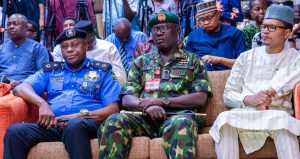
Also speaking at the briefing, the Director of Defence Information, Brigadier General Samaila Uba, reaffirmed the commitment of security agencies to protecting the nation.
“All security agencies remain resolute in ensuring the safety of the country and the protection of citizens from terrorism and other threats,” he said.
On concerns over delays in rescue operations, the Director of Legal Services at the Office of the National Security Adviser, Zakaria Mijinyawa, explained that established protocols guide every operation.
“Every rescue mission is carefully planned and executed in line with established procedures designed to ensure the safety and well-being of the victims. Security agencies assess each situation thoroughly and adopt the most appropriate strategy to secure the safe release of hostages while minimising risks to their lives,” he stated.
All Nigerians, the media, civil society organisations, and security agencies were called upon to strengthen collaboration in the fight against terrorism and other forms of violent extremism threatening national peace and security.