
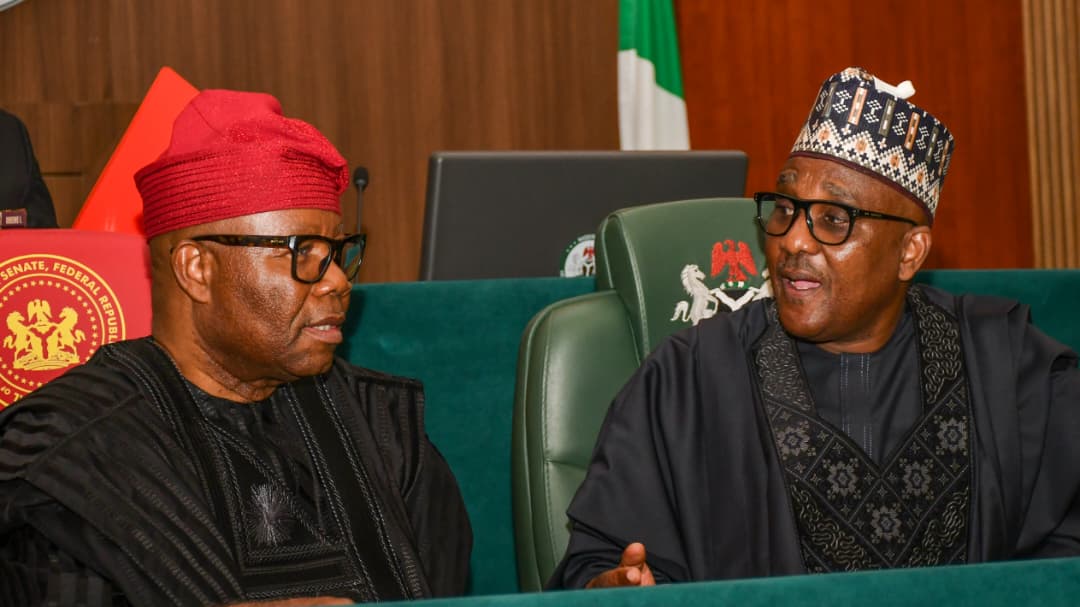
The President of the Senate, Senator Godswill Akpabio, and the Speaker of the House of Representatives, Tajudeen Abbas have commended Nigerian security agencies for the successful rescue of abducted pupils and teachers in Oyo State.
They gave the commendation during the 2026 National Assembly Open Week in Abuja.
Speaking at the event, Akpabio said; “the successful rescue demonstrated the Nigerian Government’s commitment to protecting the lives and property of Nigerians.”
He noted that many security personnel were injured during the operation, while others paid the supreme sacrifice to ensure the safe rescue of the victims.
The Senate President said “the National Assembly Open Week was designed to strengthen public engagement and keep Nigerians informed about the activities of the legislature, adding that the initiative was achieving its objectives.”
He also stated that the Senate and the House of Representatives had continued to work harmoniously in advancing the nation’s interests.
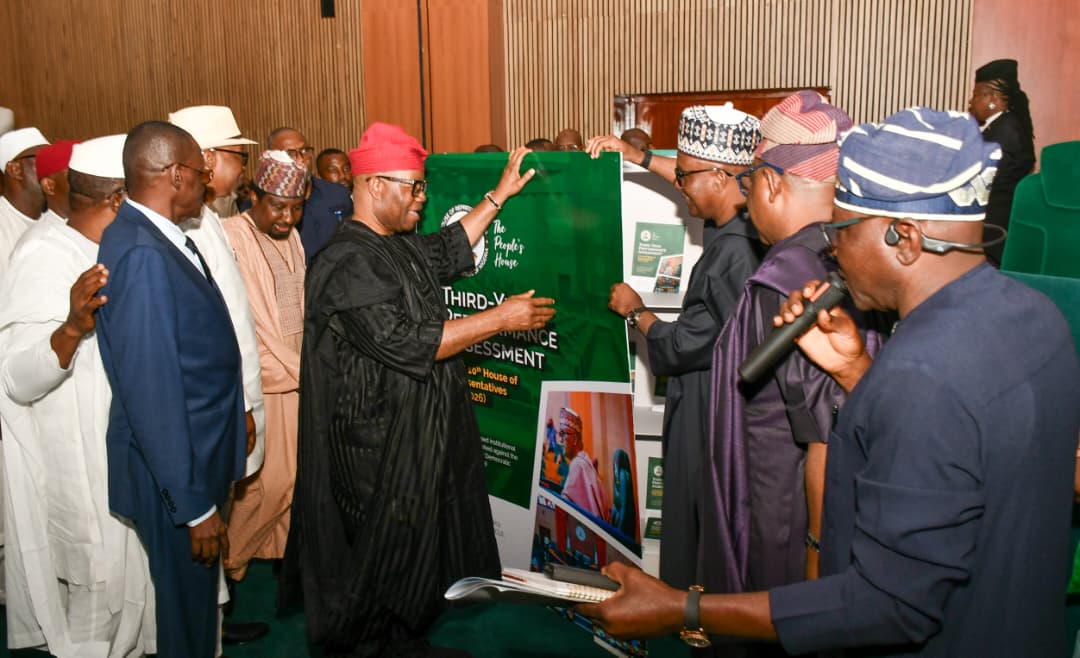
“Sometimes, parliament may fight. They may struggle but at the end they agree. But, I would put it on record that the House of Representatives and the Senate, we have never had reasons to fight. This is the most peaceful and most productive assembly we have had since 1999,” Akpabio said.
He stated that Nigeria no longer depends on crude oil to pay salaries as the President has transformed the country from a mono economy.
He commended members of the Diplomatic Corps and other stakeholders for supporting the National Assembly Open Week.
“Openness means more than allowing citizens to observe proceeding. It means assuring every Nigerian that no community is too remote, no voice is to quiet and no corner of this Republic is too insignificant to deserve representation and attention,” Akpabio said.
He urged Nigerians to pray and support their lawmakers always.
In his keynote address, the Speaker of the House of Representatives, Mr. Tajudeen Abbas Nigerian citizens brought Two Thousand, Seven Hundred and Forty-seven bills to the House in the last three years.
He said; “The citizens of this nation submitted two thousand, seven hundred and forty-seven bills to this House. Of these, we passed three hundred and sixty-three, and seventy-two have already received presidential assent and become law. These are not lines upon a page; they are measurable and lasting change. These figures represent the highest for any Assembly since 1999.”
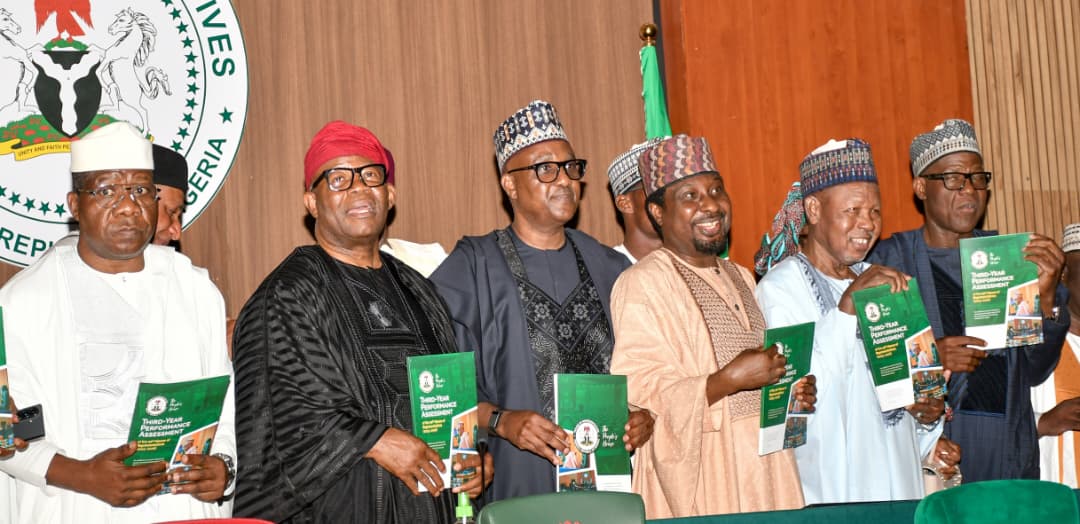
Mr Abbas said that the Open Week was conceived not as an exercise in self-congratulation, but as an act of accountability.
“Openness is not a courtesy this House extends at its pleasure; it is an obligation it owes to those it serves. In opening these doors, we affirm one enduring principle: that the making of your laws is your concern, and that you are entitled to observe it, to interrogate it, and to help shape it. No other arm of government submits itself to public examination in this manner, and we do so not with reluctance, but with conviction,” the Speaker explained.
He noted that the open week is designed not as a lecture but as a national conversation, and at every table, a place has been reserved for the citizens.
“Constructive criticism is critical to good lawmaking, and this House is open to input from the public. Let me also correct one belief that harms our democracy. Some assume, in good faith, that when a President signs a Bill quickly, then the legislature is a rubber-stamp. That is not how the work is done. Swift assent is usually the reward of months of committee work, completed long before the cameras arrive. Even the Congress of the United States has, in urgent moments, passed sweeping legislation in a single day, and no serious observer called it surrender. Speed built on hard preparation is the mark of a Parliament that is working, not one that has stopped thinking,” Mr Abbas said.
He appealed to the citizen to draw closer to the House and acquaint themselves with the true workings of the Parliament.
The theme of the 2026 National Assembly Open Week is “Three Years of the 10th National Assembly: Advancing Transparency, Inclusion and Reform”

