The Nigerian Communications Commission (NCC) has called for stronger collaboration among African countries to build a united, technically sound and influential continental position on global telecommunications and digital policy.
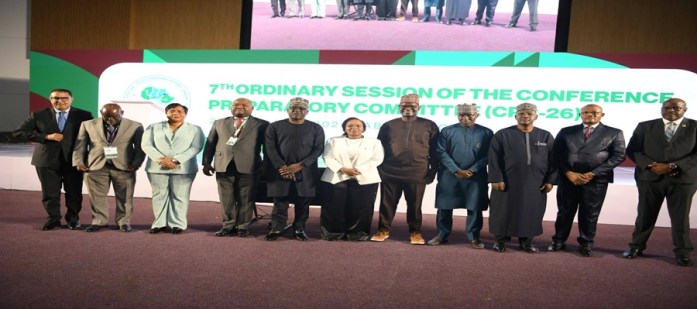
Speaking at the opening of the 7th Ordinary Session of the African Telecommunications Union (ATU) Conference Preparatory Committee (CPC-26) in Abuja, the NCC Executive Vice Chairman (EVC), Dr Aminu Maida, emphasised that Africa’s role in global digital policymaking should go beyond attending international meetings to actively shaping the standards and frameworks that guide the sector.
He described preparation as “the place where influence is built,” adding that the Conference Preparatory Committee performs some of the most important work in ensuring Africa effectively shapes international telecommunications policies.
“Africa must prepare together, work together between meetings, and arrive at global forums with positions that are both coherent and technically compelling.
“A conference preparatory committee can easily sound like the work that takes place before the important work.
“In reality, it is where much of the important work is done. Over the next two days, this committee will consider the activities of the African Telecommunications Union from 2023 to 2026. And prepare the agenda, resolutions, decisions, and recommendations to be taken forward to the ITU Conference of 10th Potentiaries, EP26.
“Africa’s influence in international forums does not depend simply on the size of our delegations or the number of interventions we make, it depends on the quality of our preparation, the coherence of our positions, and the consistency with which we advance them,” Maida said.
Reaffirming Nigeria’s commitment to the Union, he pledged continued technical support, knowledge sharing, peer learning and active participation in the organisation’s programmes while expressing readiness to support practical coordination mechanisms member states eventually adopt.
“We offer contributions with humility as one of the members of a wider African efforts. Our collective strength will always be greater than the contribution of any single administration. As we begin this session, let us be clear about what success should look like,” the NCC Executive Vice Chairman added.
Earlier, the Secretary General of the ATU, John Omo, reminded delegates that although the committee’s title may appear procedural, much of the substantive work that determines the success of the Conference of Plenipotentiaries would be completed during its deliberations.
Reviewing the Union’s activities over the past four years, he noted that ATU membership had expanded from 49 to 52 member states, while associate membership had increased from 50 to 56 organisations.
The Secretary General outlined several achievements recorded during the period, including work on Africa’s IMT spectrum roadmap, satellite communications, harmonised costing methodologies, submarine cable resilience, non-geostationary satellite systems, internet governance, cybersecurity, child online safety, artificial intelligence, rural broadband, internet exchange points, standardisation and strengthening internet infrastructure resilience.
Despite these achievements, he acknowledged persistent financial challenges facing the Union, noting that irregular payment of contributions by member states had affected planning, staffing and programme implementation at a time when expectations of the Secretariat continue to grow.
“This gathering then gives us the opportunity to address those issues clearly. Several of the proposals before us will also require a reflection on the wider institutional health of the Union. Our membership has grown, the telecommunications and digital sectors have changed considerably, the expectations placed upon the Union have also become broader.”
He called on delegates to use the conference to strengthen the Union’s institutional framework by reviewing governance arrangements, legal instruments and financial obligations to ensure they remain fit for purpose.
Describing the meeting as the final Conference Preparatory Committee he would address after serving two terms as Secretary General, he said his overriding objective was to hand over a stronger and better prepared Union to the incoming leadership.
Also addressing delegates, the Permanent Secretary of the Federal Ministry of Communications, Innovation and Digital Economy, Nadungu Gagare, reaffirmed Nigeria’s commitment to working closely with the African Telecommunications Union in advancing regional digital integration, innovation and sustainable socio-economic development across the continent.
He described the Conference Preparatory Committee as central to the Union’s governance framework, explaining that its recommendations would provide the foundation for decisions to be taken at the forthcoming Conference of Plenipotentiaries.
“As we navigate an era of rapid technology advancement and digital innovation, the importance of collaboration among our member states has never been greater. Through constructive dialogue and consensus building, I am confident that this committee will produce recommendations that will further strengthen the African Telecommunication Union and enhance its capacity to support inclusive and sustainable digital development across African continent,” Gagare said.