

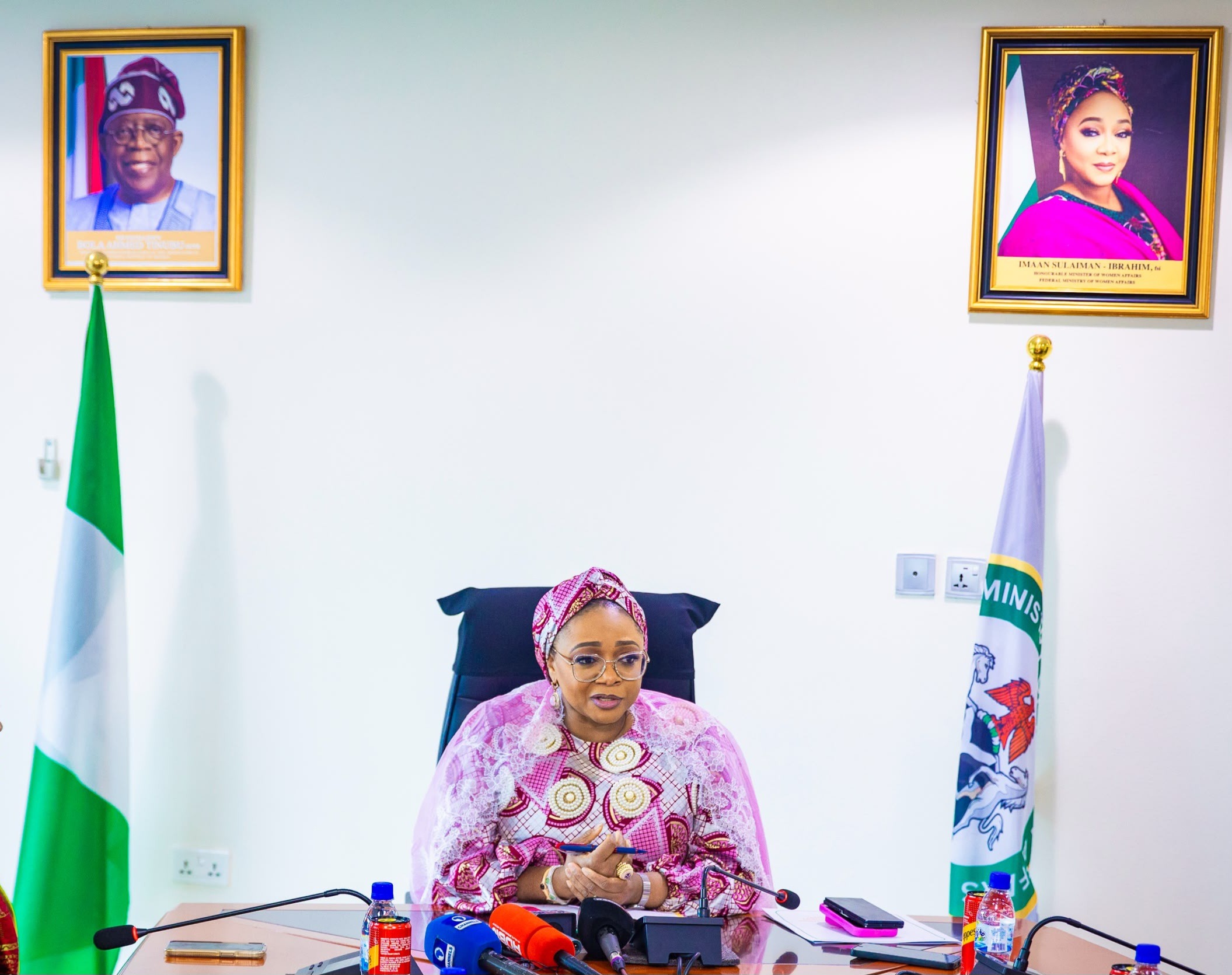
The Federal Ministry of Women Affairs and Social Development and the National Identity Management Commission (NIMC) have strengthened collaboration to expand access to legal identity for women, children and vulnerable groups.
The move is expected to deepen financial inclusion, strengthen social protection and improve service delivery under the Renewed Hope Agenda.
The Minister of Women Affairs and Social Development, Imaan Sulaiman-Ibrahim made this kbown during a courtesy visit by the Director-General and Chief Executive Officer of NIMC, Abisoye Coker-Odusote. The visit aimed at advancing implementation of the newly enacted NIMC Act 2026 and strengthening inter-agency collaboration.
Commending the Commission’s ongoing reforms, the Minister said “the collaboration on Nigeria’s digital identity ecosystem would benefit the nation’s digital economy.”
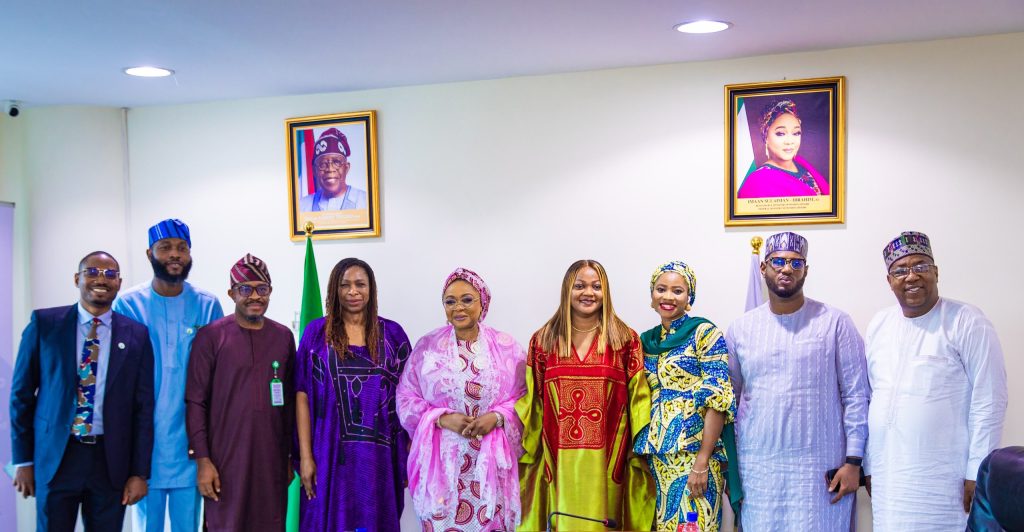
She said strengthened identity management would benefit women entrepreneurs by making digital transactions more secure.
The Minister also underscored the importance of collaboration in implementing the Nigerian Government’s Universal Child Grant.
“The collaboration between the Ministry and NIMC and NPC will help us to ensure that the Universal Child Grant is a success and it’s not abused.”
Sulaiman-Ibrahim, said that the Nigeria for Women Scale-Up Programme has reached nearly 1.2 million women, targets five million beneficiaries, and could expand to 25 million women with additional World Bank financing.
According to the Minister, requiring beneficiaries to obtain National Identification Numbers would strengthen inclusion and access to economic opportunities. She further welcomed plans for a unified identity system.
“With a single identity number, what it is achieving for us is a child having only one identity number across the board to access services through their educational life cycle, so this is highly commendable,” Sulaiman-Ibrahim stated.
The NIMC Director-General, Abisoye Coker-Odusote, said the visit aimed at deepening collaboration following the enactment of the NIMC Act 2026 and advancing Nigeria’s digital identity transformation.
“We’re the home for digital public infrastructure, which speaks to a set of shared systems around identity, payment, and data exchange that will enable very easy access to goods and services,” Coker-Odusote explained.
She said that the Commission was harmonising identity databases to establish a single national identity.
Reaffirming the Commission’s inclusion drive, she said: “In this process we want to make sure that every single woman is captured before the end of the year.”
The partnership, which will foster collaboration in Nigeria’s digital identity ecosystem, is expected to accelerate legal identity coverage, improve access to government services and strengthen accountability through the implementation of the NIMC Act 2026.

 have strengthened..)