

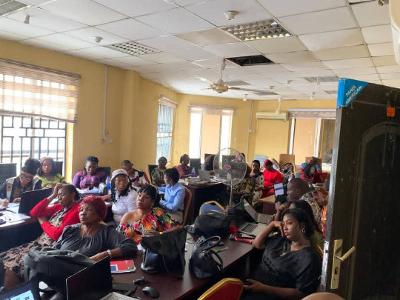
The Anambra State Ministry of Health has started training programme officers on the preparation and implementation of the 2027 Annual Operational Plan (AOP), aimed at ensuring that the state’s health programmes are consistent with national priorities.
The one-day capacity-building exercise, organised by the Department of Planning, Research and Statistics (DPRS) in Awka, focused on improving strategic planning skills and preparing programme officers to implement the AOP in accordance with the Federal Ministry of Health and Social Welfare’s Health Sector Strategic Blueprint (HSSB).
Speaking during the opening of the training, the Director of Planning, Research and Statistics, Dr. John Paul Onyekineso, urged participants to actively contribute to the exercise, saying a well-designed operational plan would strengthen healthcare delivery and improve Anambra’s standing in health sector planning.
He explained that the training was intended to improve participants’ ability to apply the HSSB, which serves as the national framework for coordinating, planning and monitoring health programmes.

Onyekineso said the blueprint provides a basis for harmonising state health priorities, development partner programmes and budgetary provisions with national health objectives under the Federal Government’s Renewed Hope Agenda.
He noted that states are required to prepare evidence-based Annual Operational Plans that are consistent with the national health framework before the commencement of the annual state and federal budgeting processes.
“The Annual Operational Plan is a critical planning instrument that guides health sector interventions, resource allocation and partner coordination. It ensures that state priorities are aligned with national health goals and serves as one of the key requirements for accessing federal and development partner support,” he said.
Onyekineso said the ongoing exercise was specifically focused on the 2027 AOP, stressing that proposed interventions must correspond with the state’s budget framework to promote effective implementation and increase opportunities for technical and financial assistance from development partners.
He added that proper execution of the plan would enhance coordination among health programmes, strengthen accountability in the management of resources and improve the quality of healthcare available to residents.

Some participants described the training as timely and useful, saying it had improved their understanding of strategic planning, setting programme priorities, coordinating development partners and applying results-based approaches.
They expressed optimism that the skills acquired would improve programme implementation, strengthen the state’s health system and contribute to better health outcomes.
The training is part of broader efforts to harmonise state-level health planning with national policy frameworks, expand access to quality healthcare and support Nigeria’s pursuit of Universal Health Coverage and other national and global health targets.


, aimed at ensuring that the state’s health programmes are consistent with national priorities.)