
Experts from the United Nations Population Fund (UNFPA), Hafsat Kagara and Deborah Tabara have emphasised the importance of effective coordination in preventing and responding to gender-based violence (GBV) against women and girls in Nigeria.
The submissions were made during the “National Technical Working Group Meeting on Ending Sexual and Gender-Based Violence Against Women and Girls in Nigeria”, a sideline event of the 26th National Council on Women Affairs, Child Advancement and Social Development in Jalingo, Taraba State.
The session, “GBV Coordination in Development,” examined the need for coordination, GBV coordination frameworks, the Essential Services Package for GBV, ESP, the roles of different actors and the Gender-Based Violence Information Management System, GBVIMS.
The presentation defined GBV as “any harmful act that is perpetrated against a person’s will and is based on socially ascribed (gender) differences between males and females.” It identified physical, sexual, emotional and economic violence, threats, coercion and deprivation among its forms.
On why coordination is necessary, Kagara said, “Effective GBV coordination ensures that efforts are comprehensive, survivor-centered, and multi-sectoral, ultimately helping to prevent and respond to GBV more efficiently.”
They further identified the “Multi-Sectoral GBV Coordination Framework” as a mechanism for facilitating a holistic approach involving multiple sectors and stakeholders. Key elements include “Inter-Sectoral Collaboration, Multi-Stakeholder Involvement, Survivor-Centered Approach, Prevention and Response.”

The National Action Plan on GBV in Nigeria, according to the presentation, seeks to address and mitigate GBV through comprehensive, coordinated efforts, including legal frameworks, prevention, survivor support, offender prosecution, partnerships, data management, monitoring and evaluation.
The experts also examined the “Essential Services Package”, which provides a framework for ensuring essential services for survivors of GBV and addressing their immediate and long-term needs.
The package covers “health, justice, social services, action against perpetrators, prevention and coordination”. Its principles include “Survivor-Centered, Confidentiality, Non-Discrimination, and Comprehensive services,” while strategies include capacity building, policy development, community mobilisation and data-driven decisions.
On the roles of actors, Kagara said the health sector’s response includes clinical care, evidence collection to support criminal investigations and referrals for additional services, with the aim of improving service quality, increasing awareness and reducing barriers to healthcare.
For the security sector, she identified risk and threat assessment, locally appropriate strategies to reduce risks and safety options for survivors. For the justice sector, she highlighted “ensuring accountability for crimes committed”, “protecting people’s rights”, and “deterring would-be perpetrators”.
At the national level, Kagara said coordination requires law and policy making, resource allocation, standard setting, inclusive approaches, capacity development, monitoring and evaluation. At the local level, she identified formal coordination and governance structures.
On Gender-Based Violence Case Information Management Systems (GBVCIMS), the experts said the system was important to GBV programming, particularly information management and data use in coordinated responses, including “Data-Driven Decisions” as a strategy for GBV response.
Tabara also emphasised survivor-centred programming, stating that it “prioritises the rights, needs, and wishes of survivors, ensuring their safety, confidentiality, and well-being” and called for a “Do no harm” approach, inclusivity, and community engagement.
Earlier, the Permanent Secretary, Federal Ministry of Women Affairs and Social Development, Mrs Nko Esuabana, reaffirmed the government’s commitment to ending SGBV.
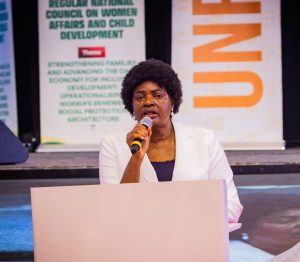
She said, “Laws alone are not enough,” stressing stronger coordination, financing, implementation and accountability, while urging stakeholders to identify gaps, share good practices and develop recommendations.
The side event was a collaboration between the Ministry of Women Affairs and Social Development and UNFPA, held during the 26th National Council themed “Strengthening Families and Advancing the Care Economy for Inclusive Development: Operationalising Nigeria’s Renewed Social Protection Architecture”.

