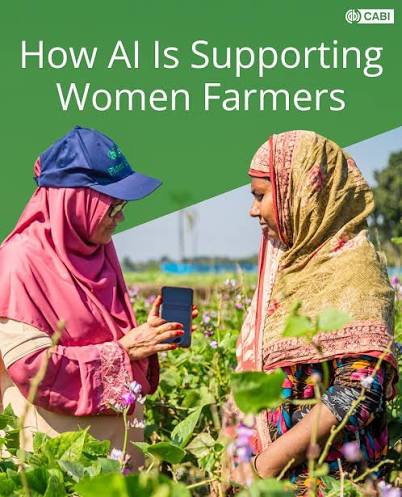
African women innovators are using artificial intelligence and smart technologies to address persistent health and agricultural challenges across the continent.
From smartphone-based disease diagnosis in Uganda to sensor-driven potato production in Rwanda, the innovations are demonstrating how emerging technologies can be adapted to meet local needs.
In Uganda, innovators are combining smartphones with microscopes to speed up disease diagnosis, while in Rwanda, sensors and cloud-based systems are being used to improve potato production.
The developments highlight the growing role of African women in applying technology to practical challenges and advancing solutions in key sectors.
The technologies were showcased by two African innovators during a webinar hosted through the Africa Science Dialogue, bringing together more than 50 participants, including scientists, farmers, policymakers, journalists, academics and industry representatives.
In Uganda, Dr. Rose Nakasi, a researcher at the Makerere AI Health Lab and lecturer at Makerere University, is leading efforts to use artificial intelligence to improve the diagnosis of diseases including malaria, tuberculosis and cervical cancer.
READ ALSO: Minister Urges African Women to Embrace Empowerment
She said for patients and health workers, delayed or inaccurate diagnosis can have serious consequences, particularly in facilities where laboratory expertise and resources are limited.
“One of the key contributors to some of increased severity of this burden is that we lack simple, rapid, accessible and accurate diagnostics,” Nakasi said.
Her team is developing an ocular system that combines a microscope, smartphone and artificial intelligence to automate the analysis of patient samples.
She said the sequence involves a process whereby a 3D-printable adapter connects a smartphone to a microscope, allowing images of samples to be captured and analysed by AI models trained to identify disease-causing pathogens.
She emphasised that the approach is designed to make diagnosis faster and more consistent, potentially helping health workers make treatment decisions more quickly.
“If a disease is not accurately diagnosed, you are not going to get the right treatment, you are not going to get the right care,” Nakasi noted.
The researchers report that their malaria model has achieved 92 percent specificity, while the cervical cancer model has recorded more than 94 percent accuracy.
The technology is also moving beyond research and More than 150 laboratory technicians and 10 pathologists have been trained to use the ocular system, with the project being implemented across more than 35 health facilities in Uganda.
Smart technology in Rwanda
In Rwanda, agroforester and innovator Clémence Uwamutarambirwa is using smart technology to tackle a different challenge: improving potato production.
Her Smart Potato Greenhouse Technology combines sensors, cloud-based analytics and a mobile application to give farmers and greenhouse managers greater control over growing conditions.
He said Sensors installed in greenhouse beds continuously monitor temperature, humidity and soil moisture.The information is transmitted to a cloud platform for analysis, while farmers receive updates and alerts through their mobile phones and can remotely control irrigation.
He said the system also supports hydroponic production, allowing potatoes to be grown using water-based nutrient solutions instead of conventional soil.
“This soil-less technique yields higher potato seed output, conserves water resources and insulates crops against soil-borne pathogens,” Uwamutarambirwa said.
According to Uwamutarambirwa, feedback from greenhouse managers indicates that the technology is making it easier to monitor production remotely, regulate temperature and humidity, and improve the security of crops.
Together, the Ugandan and Rwandan innovations highlight a broader shift in African science and technology: researchers are increasingly developing solutions around challenges experienced in their own communities rather than relying solely on technologies created elsewhere.
More women in innovation
Dr. Margaret Karembu, Director of ISAAA AfriCenter and Chair of Africa Women for Biosciences (AWfB), said unlocking the full potential of women in science and technology would require support from society as a whole.
She said men have an important role to play as colleagues, supervisors, mentors, partners, institutional leaders and policymakers.
“Increasing women’s participation in science and technology cannot be viewed as a responsibility for women alone,” Karembu said.
She also called for stronger networks and greater opportunities for women interested in science and innovation, including those without formal training in biosciences.
“I want to emphasize something very important: you do not have to be a bio-scientist to belong in AWfB,” she said.
The innovations from Uganda and Rwanda demonstrate that artificial intelligence and smart technologies are not simply futuristic concepts. In the hands of African researchers and innovators, they are becoming practical tools for strengthening healthcare, improving food production and addressing challenges that directly affect communities.
For the women behind these technologies, innovation is not just about adopting new tools it is about developing solutions that can work where they are needed most.