The Nigerian Government says it is implementing policies to improve agricultural productivity, expand infrastructure and create a conducive environment for agriculture and agro-processing as part of efforts to strengthen food security and create jobs.
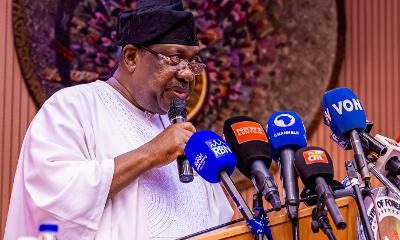
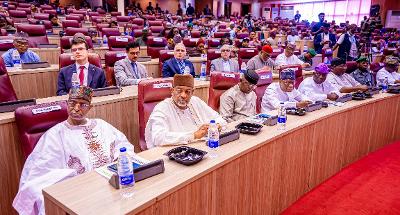
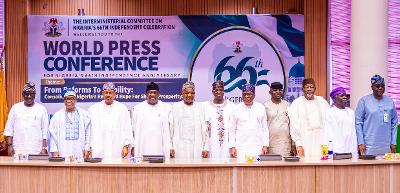
The Secretary to the Government of the Federation (SGF), Senator George Akume, disclosed this in Abuja at a World Press Conference to commemorate Nigeria’s 66th Independence Anniversary.
Akume explained that the government was focusing on agriculture as a major driver of economic growth, with interventions covering improved farm inputs, irrigation, storage, processing facilities and infrastructure linking farmers to markets.
The SGF noted that Nigeria’s vast arable land and youthful population presented opportunities for the country to become a major producer of food and agricultural products.
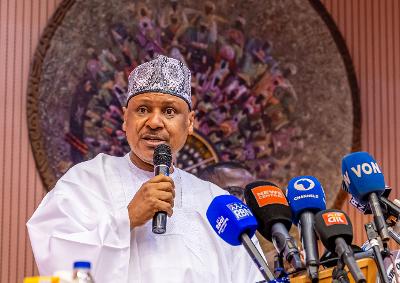
“Our goal is to become a major producer of food and growing industrial products. We can’t sit on the fence. The government is supporting farmers with improved seeds, fertilisers, irrigation, as well as better storage and processing facilities to increase output and reduce losses,” he said.
READ ALSO: Nigerian Government Deepens States Partnership to Boost Agricultural Development
Akume also stressed that infrastructure was critical to the success of the agricultural sector.
“Investments in roads, railways, electricity and other critical infrastructure are necessary to reduce production and transportation costs and connect farmers with markets. These projects that range from expanding highway networks to modernising rail lines are aimed at reducing the cost of doing business, connecting farmers to markets, and encouraging industry,” he said.
The SGF linked the agricultural strategy to Nigeria’s growing population, saying the country must prepare for the food-security implications of future growth.
“I was informed during an African Water Summit that Nigeria’s population could reach 450 million by 2050. This has implications for food security, food sovereignty. Nigeria must grow enough food for itself, for its citizens, the West African subregion, for Africa, and even beyond,” Akume noted.
He further emphasised the importance of water infrastructure to agricultural development.
“Adequate water supply is fundamental to sustainable food production and economic development. Water more than anything is a substructure that shares the entire structure of society.
The government will continue to support irrigation and other water-related infrastructure needed to expand agricultural production,” the SGF added.
Also speaking, the Minister of Information and National Orientation, Mohammed Idris, described the anniversary as an opportunity to reflect on Nigeria’s journey, recognise the resilience of its people and renew commitment to building a prosperous, secure and united country.
“Independence Day occupies a special place in our national life. It reminds us of the sacrifices that brought us here, the resilience that has sustained us, and the responsibility every generation carries to strengthen the country it inherited,” Idris stated.
The Minister explained that President Tinubu’s administration was increasingly focusing its economic policies on production, local processing and value addition.
“The government’s objective is to ensure that Nigeria increasingly produces what it consumes and extracts greater value from its natural resources. The principle is simple: Nigeria must increasingly produce what it consumes, process what it extracts, and create opportunities from its abundant human and natural resources,” Idris said.
Responding to questions from journalists, the Minister of Budget and Economic Planning, Senator Abubakar Atiku Bagudu, said the reforms were designed to make deliberate policy choices that would build a larger and more inclusive economy.
“We are not yet where we want to be. What is important is to identify what are the choices that we need to make so that we can go to where we want to be,” Bagudu explained.
The Minister of Agriculture and Food Security, Senator Abubakar Kyari, said improved access to farmlands in previously affected areas, alongside government support for fertiliser and improved seeds, was contributing to increased agricultural production.
“We have seen a lot of areas in the centre; 70 per cent of those places that were hitherto under security have been liberated. We have seen an increase in production today,” Kyari disclosed.