


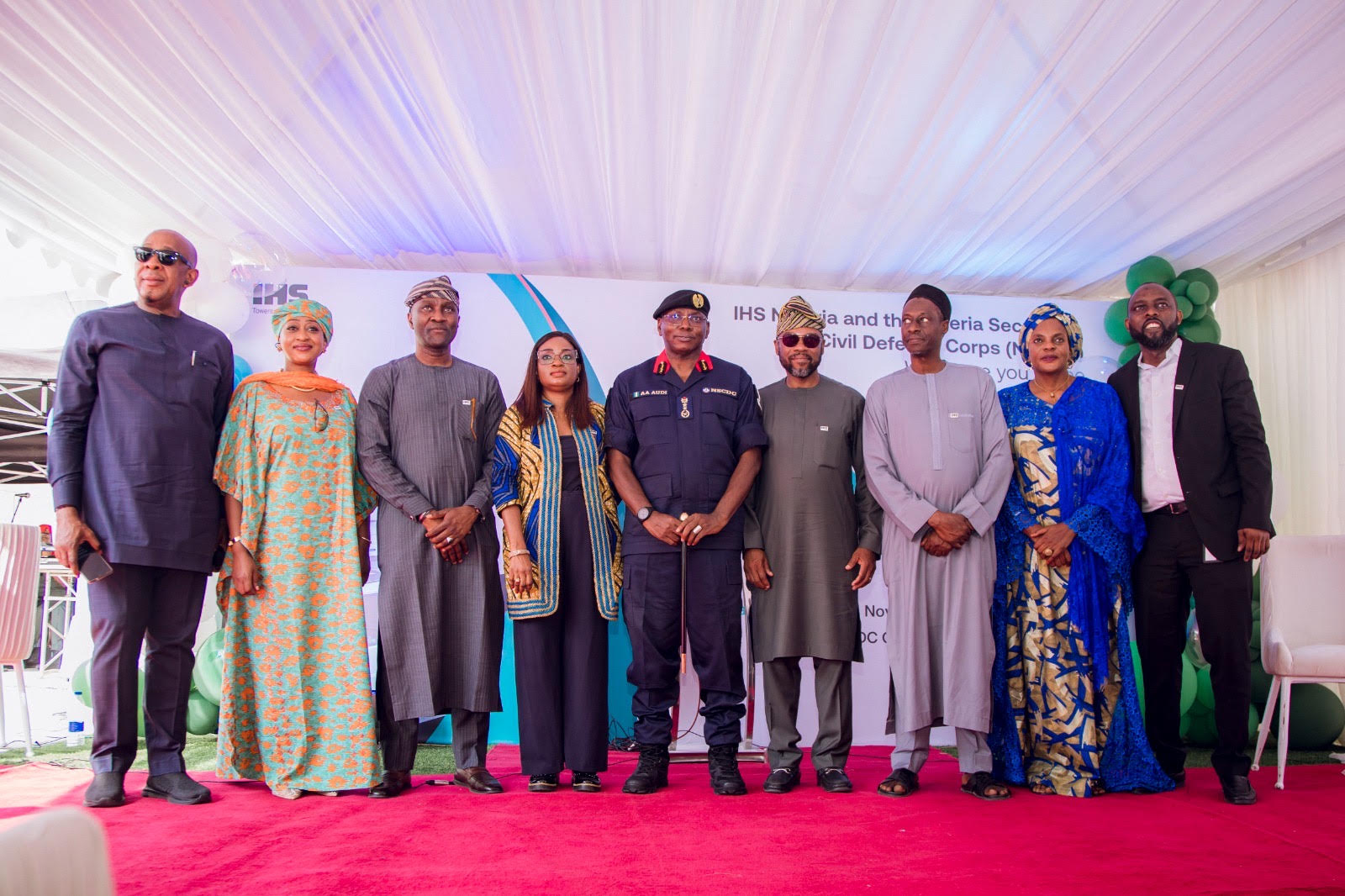
The Nigeria Security and Civil Defence Corps (NSCDC) has formally taken delivery of a newly constructed Computer-Based Test (CBT) Centre donated by telecommunications infrastructure provider IHS Nigeria to strengthen its digital learning, training and institutional capacity development.
Speaking at the handover ceremony in Abuja, the Commandant-General of the NSCDC, Professor Ahmed Abubakar Audi, described the development as one of the most significant milestones in the history of the Corps, describing the facility as a legacy project that would enhance its institutional capacity and operational effectiveness.
Audi explained that the project originated from an engagement between the Corps and IHS Nigeria in Lagos, where the NSCDC presented its infrastructure and capacity-building needs, particularly in view of its responsibility for protecting critical national assets, including telecommunications infrastructure.
He noted that the proposal for a digital learning and innovation centre was accepted by IHS Nigeria, leading to the establishment of a joint team to facilitate its implementation.
READ ALSO: NSCDC Boss Urges PR Practitioners to Verify Information – Voice of Nigeria
According to him, the facility, named the NSCDC Digital Learning Centre for Innovation, will provide an enabling environment for computer-based examinations, professional training, workshops, conferences and other learning activities.
“We talk about using different platforms, you know, to help learning, especially the use of AI and what is called machine learning. Now, this centre will provide that kind of ambience and the needed guide and the platform that we require to use it to do some trainings in terms of exams, in terms of workshops and conferences.”
The Commandant-General reaffirmed the Corps’ commitment to sustaining its strategic collaboration with IHS Nigeria, stressing that effective partnerships between public and private institutions remain essential to national development and the protection of critical infrastructure.
In his remarks, Senior Vice President and Chief Corporate Services Officer, IHS Nigeria, Dapo Otunla said the project reflected the company’s commitment to investing in people, strengthening institutional capacity and supporting Nigeria’s digital development.
Otunla disclosed that IHS Nigeria operates approximately 16,000 telecommunications towers and has laid more than 15,000 kilometres of fibre-optic cables across the country, underscoring the importance of protecting the infrastructure that supports the nation’s digital economy.
He explained that the centre occupies a 4,180-square-metre site, with a built-up area of approximately 1,300 square metres, and was designed to serve as a modern hub for training, assessment and capacity development.
He said, “The facility has a seating capacity of more than 150 people and is equipped with 152 high-end computers and a dedicated server to support computer-based learning, examinations, training programmes and certification exercises.”
Describing the project as an investment in the future readiness of the Corps, Otunla urged NSCDC personnel to maximise the facility by ensuring its effective utilisation for training and professional development.
“For us at IHS Nigeria, this project goes beyond constructing and equipping a building. It is an investment in people and their potential.”
Also speaking, the Executive Vice Chairman of the Nigerian Communications Commission NCC, Dr Aminu Maida, commended the NSCDC for its continued commitment to safeguarding critical national assets and telecommunications infrastructure.
Represented by the Head of Special Intervention Projects, Temitope Orebe, Maida acknowledged the Corps’ role in protecting telecommunications facilities, including base stations, fibre-optic cables and other network infrastructure against vandalism, theft and related threats.
He noted that the protection of telecommunications infrastructure was increasingly important as the sector expanded, adding that the NSCDC’s contributions had helped improve service availability for millions of Nigerians.
According to him, the handover demonstrated the value of strategic public-private partnerships in strengthening national institutions and promoting socioeconomic development.
He described the centre as an investment in human capacity and institutional excellence, expressing confidence that it would enhance the skills, competencies and professionalism of NSCDC personnel.
Maida urged the Corps to make optimal use of the facility, particularly in strengthening its capacity to discharge its statutory responsibilities, including the protection of telecommunications infrastructure and other critical national assets.
The handover marks another milestone in the partnership between IHS Nigeria and the NSCDC, reinforcing the importance of collaboration between government institutions and private-sector organisations in advancing digital skills, institutional development and national security.

