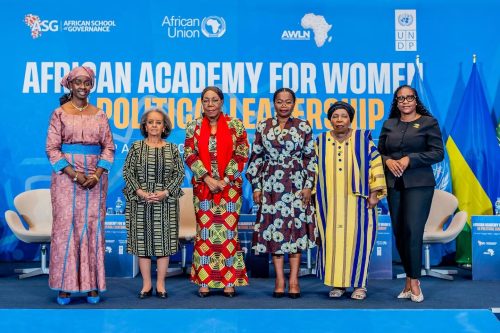
The United Nations Development Programme (UNDP) and the African School of Governance Foundation have signed a Memorandum of Understanding (MoU) in Kigali, Rwanda, to establish the African Academy for Women in Political Leadership.
The move marks the first major outcome of the West Africa Women’s Political Leadership Forum held recently in Abuja.
The five-year partnership signed on behalf of UNDP by Director, UNDP Regional Programme for Africa, Dr. Jide Okeke follows commitments contained in the Abuja Roadmap adopted at the regional forum on “Accelerating Gender Parity in Political Leadership in West Africa: From Commitment to Action”.
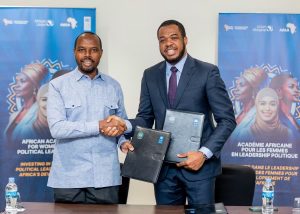
It seeks to strengthen women’s participation in governance through leadership development, mentorship, campaign financing, coalition-building, alumni networks and locally adapted training aligned with Agenda 2063 and the Sustainable Development Goals.

Implementation is already underway, with the inaugural cohort of the African Academy for Women in Political Leadership comprising 40 ministers, parliamentarians, mayors and party leaders from 28 African countries and the Caribbean.
Selected from more than 1,300 applicants, the participants are currently engaged in leadership sessions in Kigali alongside distinguished African women statespersons, focusing on ethical, inclusive and transformative leadership.
Some women leaders who spoke exclusively to Voice of Nigeria on the sidelines of the Abuja forum said “the emerging initiatives could reshape political leadership across Africa, provided commitments are matched with sustained implementation.”
Former five-term Nigerian lawmaker and APC House of Representatives candidate, Benni Lar, described the convergence as a watershed for women seeking elective and appointive offices across the continent.
“This inclusion, I believe if it’s sustained, could make a huge turnaround in the fortunes of many women on the African continent who seek for political offices and are often marginalised,” Lar said.
While acknowledging progress in countries such as Senegal, she argued that Africa’s largest democracy must lead by example.
She said; “Nigeria is one of the most disadvantaged countries when it comes to the inclusion of women. Women are the greatest resource and asset in any country. Give them their proper place and positioning, and we’ll see the difference. If we get it right in Nigeria, we’ve gotten it right in the rest of Africa.”
Sierra Leone’s Minister for Gender and Children’s Affairs, Dr. Isata Mahoi said the “forum represented more than dialogue, describing it as an opportunity to reshape governance by changing societal attitudes towards women in leadership.
“It’s a learning point where we come and reflect on how to change the mindset, to change the landscape in which we are.”
She stressed that meaningful inclusion requires education, capacity strengthening and stronger support systems for women aspiring to leadership.
She said; “Women should not shy from aspiring for offices, but they should also have the support by their male counterparts.”
Nigeria’s Federal Commissioner representing the South-East at the National Salaries, Incomes and Wages Commission, Ginika Tor argued that Africa’s greatest challenge is implementation.
Tor said: “What we are not doing right is action. Talk, talk, talk but implementation of those discussions has always not been positive.”
She also called for stronger mentorship across generations.
Former African Union Special Envoy on Women, Peace and Security and African Women Leaders Network (AWLN) Co-Convener, Bineta Diop said the Abuja Roadmap marks a defining moment for women’s political participation in West Africa.
Diop stressed that success will depend on building an ecosystem that removes structural barriers to women’s leadership.
She identified access to political financing as one of the greatest obstacles confronting aspiring women leaders across the continent.
Diop said; “legislation and gender quotas alone are insufficient without effective implementation and accountability mechanisms.
“You cannot pretend to present a candidate. That accountability mechanism is not just about law, but making sure that you implement it.”
Looking ahead, she expressed confidence that the Abuja Roadmap, backed by the Academy and the African Women Leaders Network, would steadily increase women’s representation.
She said; “In the 10 years to come, I’m sure that we will get that critical mass of women in decision-making in the West African region, but showing, as we always do, the way to other regions to scale it up and make sure that women are there where they are needed.”
From Abuja’s commitments to implementation in Kigali, African women leaders say the continent must now sustain investment, strengthen accountability and translate political commitments into lasting representation for women at every level of decision-making.