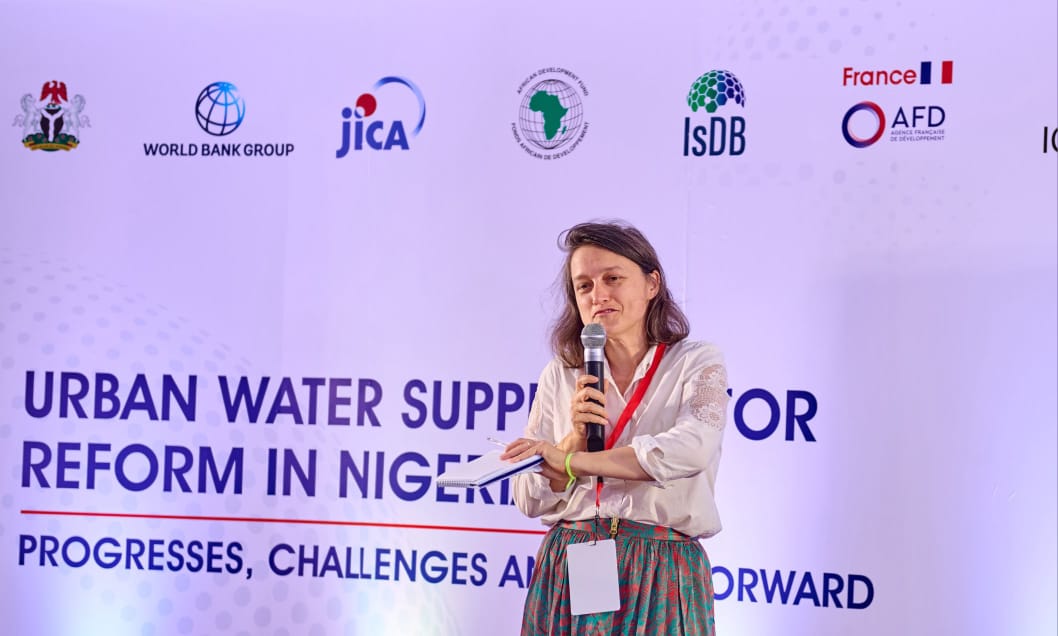
The French Development Agency (AFD) Nigeria Deputy Director Mahamadou Diarra says Africa’s challenge was not the availability of water resources but the inability to convert them into reliable potable water services, stressing that financing alone will not resolve the country’s urban water supply challenges.
Speaking on the sidelines of a water sector workshop convened by the Federal Ministry of Water Resources and Sanitation and the Development Partners Group for industry stakeholders in Abuja to review sector reforms and chart pathways for improved service delivery, he identified sustainability as the missing link in Nigeria’s efforts to expand access to potable water.
“Africa does not lack water. There is an abundance of water, but we lack potable water because we have, so far, not been able to transform the potential into impact.”
Diarra said development partners had continued to provide substantial support for water projects across Nigeria, maintaining that the sector’s major challenge lay in ensuring sustainable operations and service delivery.
“The problem is not the funding because we, as donors, have made available an immense amount of money for the states, for the Federal Government of Nigeria, to have projects being prepared and implemented for the benefit of the population.”
According to him, infrastructure development must be accompanied by efficient utility management, cost recovery mechanisms and dependable services.
“If we build the infrastructure alone, we have not resolved the problem; we will not resolve the problem with infrastructure alone. For me as a citizen to be able to pay, I need to have water. I need to have quality water. I need to have water supplied 24 hours, 7 days.”
The AFD official also called for stronger support for state-owned water utilities, noting that many remain dependent on government intervention for operational costs. He further observed that improvements were more visible in states where political leaders prioritised water sector development.
“Today, we have very few water companies in Nigeria that are autonomous. My experience is that we have improved services in states where the governor and the government, the state government, are on top of the topic.”
Also speaking, Deputy Head of the Water and Sanitation Division of AFD, Madeleine Portmann, while stating that water utilities must strengthen revenue generation and collection systems, said operational and commercial efficiency remained essential to achieving sustainability in the sector.
“The issue is not so much about the funding because the funding exists. What is important is for the companies themselves to be able to reach efficiency.”
Portmann emphasised:
“Billing, being able to bill, being able to collect, and this is how the system will become sustainable.”
Representing the Abia State Commissioner for Water Resources, Engr Ikechukwu Monday, the Permanent Secretary, Mrs Nwanyieze Otum, highlighted ongoing efforts by the state government to revive water infrastructure.
“Before the administration of His Excellency, Dr Alex Otti, the situation of water was very bad.”
She said several previously non-functional schemes were undergoing rehabilitation, including the CKC Aba water scheme.
“The rehabilitation is ongoing and is almost close to 80% completion.”
During group sessions, participants identified insufficient political will, weak regulation, poor data management, inadequate funding, ageing infrastructure, political interference, illegal water connections and poor staff motivation among key challenges confronting the sector.
The groups also highlighted concerns over the financial viability of water corporations, inadequate investment planning, weak cost-recovery mechanisms, rising operational costs and limited deployment of technology.
On capacity development, participants cited shortages of skilled manpower, inadequate training budgets, lack of succession planning, poor data management, resistance to organisational change and dependence on external support as major constraints.
Participants also highlighted inadequate investment planning, poor cost recovery, limited deployment of technology, shortages of skilled manpower, weak staff motivation, resistance to organisational change and over-reliance on external support.
Across the discussions, delegates advocated stronger policy implementation, improved utility autonomy, sustainable financing models, enhanced capacity development, robust monitoring frameworks and greater state government commitment to ensure long-term functionality of water infrastructure and improved service delivery.
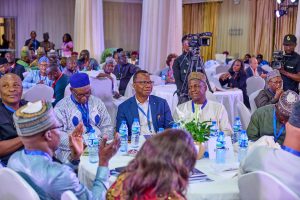
The first day of the workshop also featured presentations on key progress in urban water supply sector reforms by the Director of Water Supply and Support Services, Federal Ministry of Water Resources and Sanitation, Babarinde Mukaila; Water Utility Credit Worthiness Tools by consultant Engr Benson Ajisegiri; and a review of 25 years of progress and challenges in the urban water supply sector by Canadian consultant Mr Paul Maycher.
Stakeholders agreed on the need for stronger reform implementation, improved utility governance, sustainable financing mechanisms, better planning and enhanced capacity development to strengthen urban water service delivery across the country.