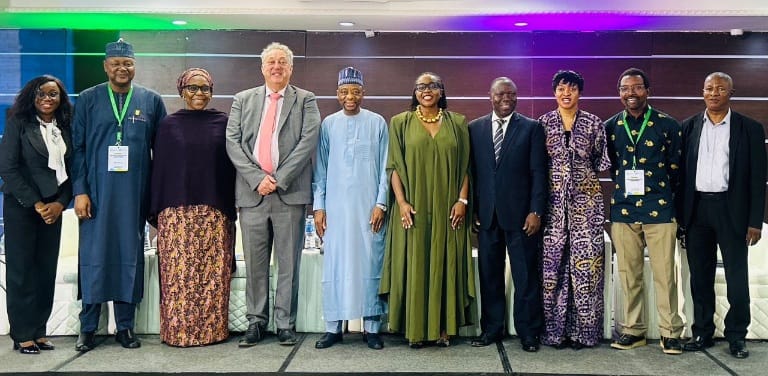
The African Development Bank has backed Nigeria’s strengthened policy drive towards achieving universal access to sanitation by 2030 with the launch workshop of the Nigeria Urban Sanitation Diagnostic Report, a roadmap designed to guide reforms, mobilise investments and deepen collaboration among government, development partners, financial institutions and the private sector to improve urban sanitation service delivery.
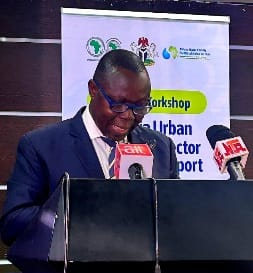
Speaking at the workshop launch in Abuja, the Acting Vice President and Director General for Nigeria at the African Development Bank Group, Dr. Abdul Kamara, described sanitation as a critical pillar of human development and sustainable urban growth.
“Sanitation is not only about infrastructure; it is about people. It is about children going to school in healthier communities, families living with greater dignity, cities growing sustainably, and nations unlocking the full promise of human development.”
Dr. Kamara said the diagnostic report reflected a shared commitment to improving lives through evidence-based investments and reforms.
“But let us be clear: this report is not a catalogue of shortcomings. It is a map for progress. It shows us where the gaps are, where the opportunities lie, and where collective action can deliver the greatest impact.”
Represented by the Lead Operations Manager, AFDB, Nigeria Country Department, Mr Orison Amu, Dr. Kamara said achieving Nigeria’s ambition of universal access to sanitation by 2030 would require accelerated investment alongside stronger institutional, legal and financial frameworks.
“The Government of Nigeria has set the ambition to achieve universal access to sanitation by 2030, in line with Sustainable Development Goal 6. The report indicates that to achieve this objective, a substantial acceleration of the pace of investment in the sector is required,” he stated.
Underscoring the role of partnerships in closing the investment gap, Dr Kamara added, “Government cannot do it alone, and neither can development partners.”
Also addressing workshop stakeholders, the African Development Bank’s Director of the Water Development and Sanitation Department, Jeane-Astrid Ngako De Foki, said Nigeria’s rapid urbanisation demanded practical financing solutions and coordinated implementation.
“The question before us, therefore, is not whether urbanisation will continue. It will. The question is whether our cities will be ready,” she said.
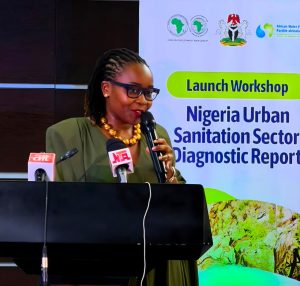
Describing the diagnostic report as “a roadmap for action”, she said addressing the sanitation needs of rapidly growing urban populations would require substantial investments and innovative approaches, urging stakeholders to convert its recommendations into practical investments.
She noted that while sewerage infrastructure remained important, on-site sanitation solutions offered a practical, affordable and scalable pathway for expanding services, particularly in underserved urban and peri-urban communities.
“The objective is straightforward: to transform diagnostic findings into projects that are practical, bankable, scalable, and capable of delivering measurable results on the ground.”
According to her, the African Urban Sanitation Investment Initiative was established to help bridge financing gaps through technical assistance, institutional capacity development and innovative financing mechanisms capable of attracting both public and private investment.
Calling for sustained collaboration, Foki said, “No single institution can address this challenge alone. We must move beyond isolated projects toward a truly programmatic approach,” adding that coordinated implementation under the leadership of the Government of Nigeria would be critical to achieving sustainable impact at scale.
She urged stakeholders to focus on measurable outcomes, stating, “The success of our collective efforts, under the leadership of the government of Nigeria, will not be measured by the number of reports produced, workshops convened, or meetings held. It will be measured by cleaner cities, healthier communities, protected water resources, stronger local economies, and improved quality of life for millions of Nigerians.”
The high-level stakeholders’ engagement on Nigeria’s urban sanitation sector, which provided a platform to present the findings of the report on the sanitation sector in Nigeria to key stakeholders of the sector was hosted by the Federal Ministry of Water Resources and Sanitation in collaboration with the African Development Bank (AfDB) with support from African Water Facility, Gates Foundation and Nordic Development Fund.
The launch reaffirmed a shared commitment by the Federal Government, the African Development Bank and development partners to advance coordinated reforms, mobilise investment and deliver bankable sanitation projects that will expand access to safely managed services, strengthen urban resilience and support Nigeria’s pursuit of universal sanitation by 2030 through evidence-based policy, financing and sustainable implementation.