Nigeria’s President Bola Tinubu has called on African nations to end the era of exporting raw minerals while importing finished products.
He urged the continent to embrace industrialisation, value addition and regional cooperation to transform its vast natural resources into sustainable prosperity.
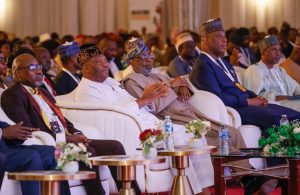
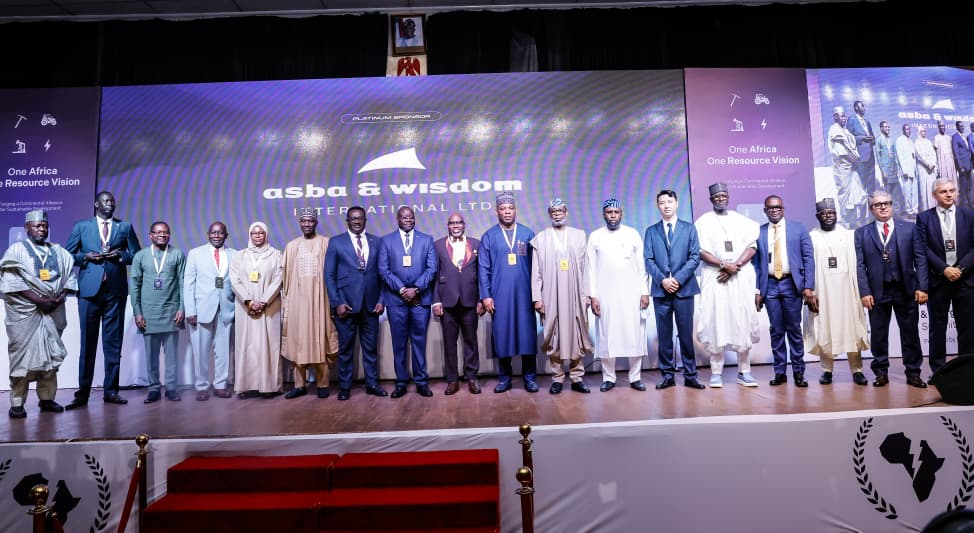
Speaking at the 5th African Natural Resources and Energy Investment Summit (AFNIS) 2026 in Abuja, President Tinubu said Africa’s abundant mineral and energy resources must become instruments for economic growth, job creation and industrial development rather than mere sources of raw material exports.
According to the President, Africa can no longer afford to remain a supplier of raw materials while other regions capture the bulk of the value from processing and manufacturing.
“Africa must no longer export its future in raw form and import prosperity in finished form. We must manufacture, power our factories, train our engineers, build our value chains and ensure that the wealth taken from African soil creates prosperity for African people,” he said.
President Tinubu noted that the global shift towards energy transition, critical minerals and climate-conscious development has placed Africa at the centre of the emerging global economy.
“There can be no global energy transition without Africa. There can be no secure supply of critical minerals without Africa, and there can be no true industrial future without Africa,” he stated.
The President described the summit’s theme, “One Africa, One Resource”, as a declaration that African countries must work together rather than operate as fragmented markets and isolated producers.
He stressed that Africa’s prosperity depends on stronger regional integration, saying mines, refineries, power infrastructure and manufacturing hubs across the continent should be interconnected.
“A mine in one African country should feed a refinery in another. A gas field in one region should power factories across borders. A solar corridor in one nation should support a continental grid,” he said.
President Tinubu also assured investors that Africa remains open for business but emphasised that the continent now seeks partnerships that create jobs, transfer technology, strengthen local capacity and protect communities.
“We welcome capital that builds, not capital that merely takes. Africa does not reject partnership; Africa rejects unequal partnership,” he said.
On energy development, the President argued that industrialisation cannot occur without reliable power, adding that Africa’s energy transition must be practical, balanced and just.
“We accept the responsibility to protect the planet, but we also insist on the right to develop. Millions of Africans still need reliable electricity, and a just transition must not force Africa to choose between climate responsibility and human dignity,” he said.
President Tinubu said Nigeria’s development agenda is focused on economic diversification, industrial growth, energy access, infrastructure expansion and job creation, while maintaining that the country’s prosperity is closely linked to that of the African continent.
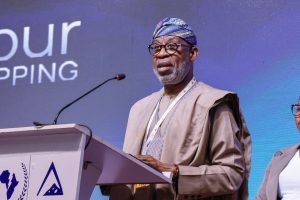
Declaring the summit open, the President urged governments, investors, financial institutions and development partners to translate agreements into projects and projects into industries capable of creating jobs and driving what he described as “a new African century”.
“Africa is not waiting to be discovered. Africa is defining itself. We know our worth, our responsibilities and our destination,” he said.
Meanwhile, the Minister of Solid Minerals Development, Dele Alake, said Nigeria is already implementing policies aimed at ensuring more value is retained within the country through mineral processing, manufacturing and industrial development.
According to Alake, the reforms being implemented under President Tinubu’s administration are repositioning the solid minerals sector as a key driver of economic diversification, industrial transformation and job creation while strengthening Nigeria’s leadership role in Africa’s mineral development agenda.
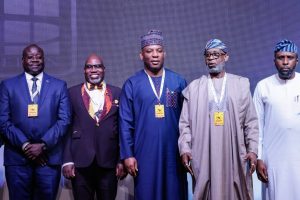
Alake revealed that the Federal Government has revoked more than 3,000 dormant mineral titles to curb speculation and restore seriousness in the mining sector. He said mining lease applicants are now required to submit value-addition plans as part of efforts to discourage the export of raw minerals.
The minister disclosed that Nigeria has attracted major investments in lithium processing, including a $600 million lithium processing plant in Nasarawa State, a $200 million lithium project near completion in Niger State, and a $50 million lithium processing facility in the Federal Capital Territory.
The minister added that Nigeria, through the Africa Minerals Strategy Group (AMSG), is working with other African countries to ensure the continent captures more value from its mineral resources through processing, refining, manufacturing, technology transfer and skills development.