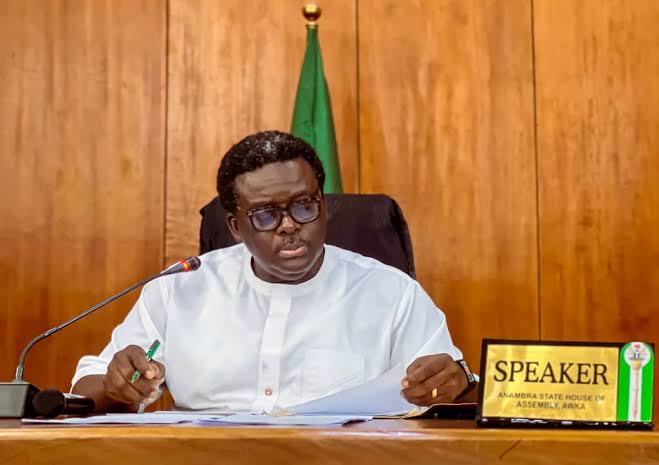
The Anambra State House of Assembly has called for greater fiscal transparency, tighter deficit management and disciplined public spending in the preparation of the state’s 2027 budget, highlighting key accountability issues in subnational public finance.
The lawmakers made the recommendations while adopting the report of the House Committee on Finance and Appropriation on the 2027–2029 Medium-Term Expenditure Framework (MTEF), a fiscal planning instrument that sets the basis for annual budget preparation and expenditure priorities.
A major concern raised by the committee was the projected ₦214.9 billion budget deficit for 2027. It urged the Ministry of Budget and Economic Planning to provide a comprehensive explanation of the deficit and outline measures to mitigate potential revenue shortfalls.
READ ALSO: Anambra State Governor Presents ₦757bn 2026 Budget
The committee also recommended an exchange rate benchmark of ₦1,400 to the dollar for preparing the 2027 appropriation bill, a decision that will shape the fiscal assumptions underpinning the state’s budget proposals.
Presenting the report, the committee chairman, Ejike Okechukwu, said the MTEF comprised three core documents: the Economic and Fiscal Update (EFU), Fiscal Strategy Paper (FSP) and Budget Policy Statement (BPS). The documents provide the economic outlook, revenue and expenditure assumptions, and policy direction needed to prepare the annual budget.
Beyond the deficit, the committee called for a transparent framework for ranking projects and allocating funds to ministries, departments and agencies (MDAs). It recommended that spending priorities reflect critical infrastructure needs, the state’s Vision 2070 agenda and the development needs of residents.
The recommendations place emphasis on the link between fiscal planning and public accountability, particularly the need to ensure that budget projections are supported by clear assumptions and that public funds are allocated according to established priorities.
On legislative timelines, the committee urged the executive to submit the 2027 appropriation bill to the Assembly on or before November 9, 2026, to allow adequate time for scrutiny and passage before the December 1 deadline.
It also called for sustained funding of projects validated under the Community Charter of Demand, warning that mid-year budget cuts could derail community development priorities and weaken the impact of approved expenditure.
The committee’s recommendations underscore broader public finance concerns facing state governments across Nigeria, including the credibility of revenue forecasts, the management of budget deficits, transparency in expenditure decisions and compliance with budget calendars.