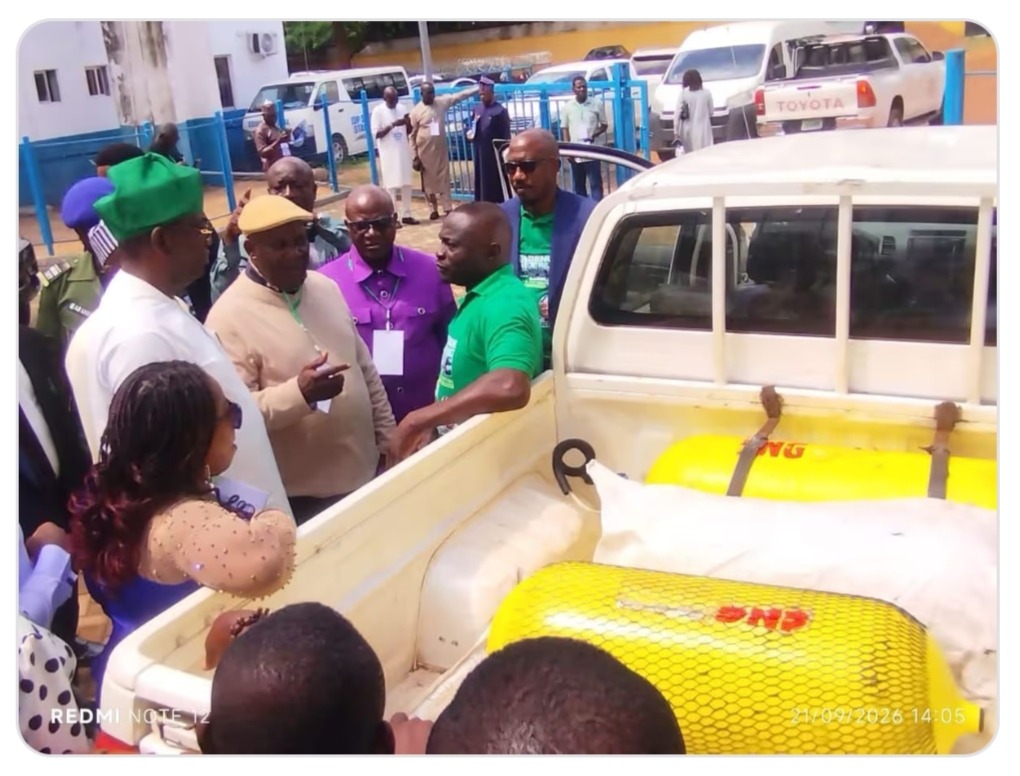
The Benue State Government has commenced a three-day awareness and technical workshop on Compressed Natural Gas (CNG), with a focus on reducing transportation and energy costs, building technical capacity and creating new economic opportunities across the state.
The programme, themed “Presidential CNG Initiative: The Game Changer,” began on Monday at the Rev. Fr. Hyacinth Alia Conference Hall of the Benue State Emergency Management Agency (SEMA), Makurdi, and is expected to run until Wednesday.
Governor Hyacinth Alia, who was represented at the opening ceremony by his Deputy, Mr Sam Ode, said the state was determined to move beyond merely observing the Federal Government’s CNG initiative to translating it into practical benefits for residents.
Alia said the initiative was particularly important against the backdrop of high transportation, energy, agricultural production and business costs, stressing that CNG could provide an alternative fuel source for vehicles, generators and other suitable applications.
According to him, the state government is working towards developing the infrastructure, skills and awareness required for CNG adoption, including technical and competency training, vehicle conversion, access to conversion kits, deployment of mobile refueling units and daughter stations, and expansion of CNG services beyond Makurdi to other parts of the state.
He said the programme would also support Benue’s agricultural economy by making energy more affordable for production, processing, storage and transportation, thereby helping businesses and farmers improve productivity and reduce operating costs.
READ ALSO: Maritime Transport: Niger-Benue River gets $750,000 grant
The governor urged residents not to approach CNG with fear or misinformation, but to acquire the right knowledge and ensure that approved equipment and properly trained personnel were used in conversion and operation.
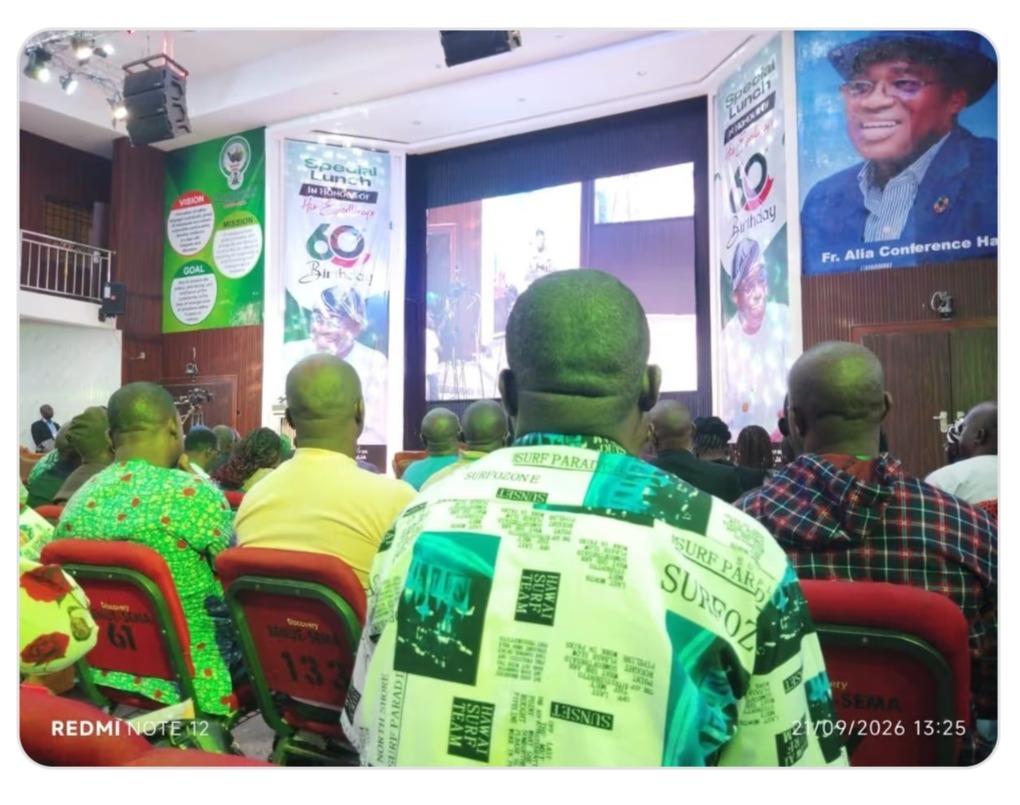
He said the workshop was designed to educate participants on how CNG is produced, transported, stored and dispensed, as well as its application in vehicles and generators, safety requirements and opportunities for mechanics, technicians, young people, businesses, investors and entrepreneurs.
Earlier, the Commissioner for Power, Renewable Energy and Transport, Hon. Joseph Ter Jir, said the state government viewed CNG as a potential tool for reducing transportation and business costs while creating a new economic value chain.
Jir said the Benue CNG Project would focus on public awareness, technical and vocational training, vehicle conversion, access to conversion kits, deployment of CNG-powered buses and tricycles, engagement with transport unions and private-sector investment.
“The introduction of Compressed Natural Gas, CNG, gives Nigerians a cheaper alternative for transport and power. It is about reducing transport costs, reducing business costs, and cushioning the effects of fuel subsidy removal,” he said.
The commissioner urged transport operators to regard the initiative as an opportunity rather than a threat, while encouraging young people to see CNG as an emerging industry capable of providing employment and entrepreneurial opportunities.
“To our transport operators, this is an opportunity, not a threat. To our youths, see CNG as a new industry, not just fuel. To investors, Benue is open for business in the CNG value chain,” Jir said.
He disclosed that his official vehicle had already been converted to CNG as part of efforts to demonstrate the government’s commitment to the initiative.
Also speaking, the Chairman of the occasion and Chairman of the Benue State Steering Committee on Coalbed Methane and Allied Resources, Ambassador Nicholas Agbo Ella, said the workshop should serve as a bridge between awareness creation and practical implementation.
“The overall objective is to move away from awareness creation to practicals,” Ella said, stressing the need for Benue to move towards greater utilisation of its natural resources.
An oil expert, Dr. Matthew Ogbaba, said Benue possessed significant natural resources that could be developed and harnessed for economic benefit.
Making a technical presentation titled “CNG in Your Vehicle and Generator Engines: Cheaper, Cleaner, Efficient, Locally Relevant,” the Technical Adviser to the Governor on Natural Gas and Renewable Energy and Coordinator of the Benue CNG Project, Engr. Ashir Jonathan Terkosu, explained the operation, conversion requirements and potential applications of CNG.
Terkosu explained that CNG, which is primarily methane compressed under high pressure, could be used in vehicles through dedicated fuel systems or approved conversion systems, while generators could also utilise it through suitable gas engines or approved conversion and dual-fuel arrangements.
He said petrol-powered vehicles could ordinarily be converted into bi-fuel systems, allowing them to retain petrol capability while adding CNG, adding that the process requires approved cylinders, high-pressure lines, regulators, injectors and control components, followed by proper installation, testing and calibration.
He stressed that motorists should use approved equipment and properly trained or accredited technicians, noting that diesel-powered vehicles require different technical pathways depending on the vehicle and application.
According to him, properly calibrated CNG systems could reduce particulate emissions, carbon monoxide and other pollutants compared with conventional petrol and diesel use, although methane leakage must be prevented through proper maintenance because methane is itself a potent greenhouse gas.
Terkosu identified transportation, agriculture, agro-processing, cold-chain operations, small businesses and technical services as areas where CNG could have significant applications in Benue.
He said CNG could potentially power tractors, irrigation pumps, dryers, mills and generators, while lower energy costs could support enterprises such as bakeries, workshops, welding and fabrication businesses and water systems.
He also identified employment opportunities in vehicle conversion, CNG station operations, cylinder inspection, gas logistics, maintenance, fabrication and technical training.
The coordinator said the cost of conversion would depend on the vehicle and installation requirements, explaining that a CNG cylinder and engine conversion kit could cost between N500,000 and N600,000, while conversion itself could cost about N150,000.
He said the state was also working towards making CNG increasingly accessible to transport operators and businesses, while engaging relevant stakeholders to expand infrastructure and technical capacity.
The three-day workshop is expected to serve as the first stage of a wider Benue CNG programme aimed at moving adoption from public awareness to technical training, vehicle conversion, infrastructure development and wider access across the state.