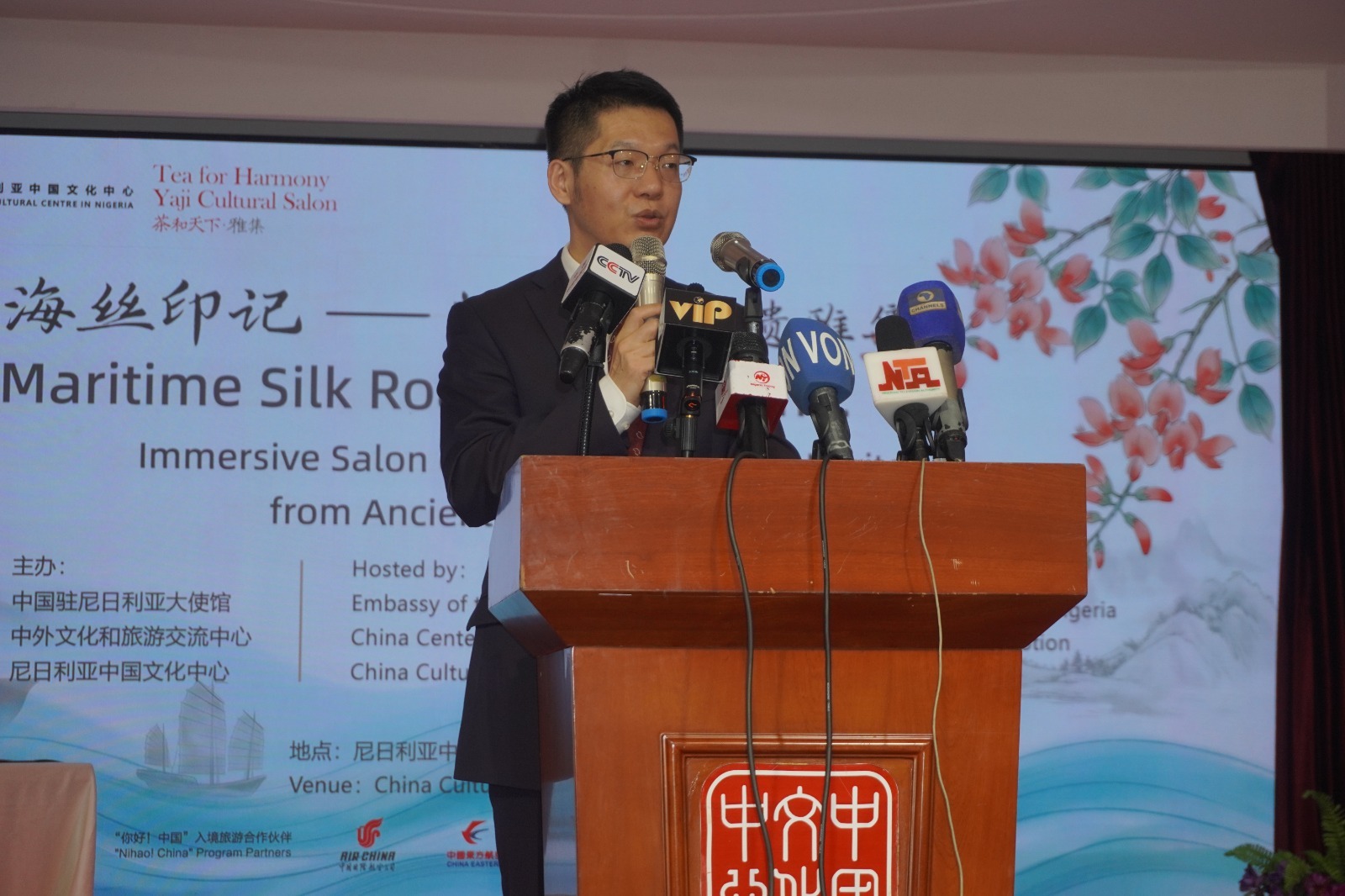
China and Nigeria have reiterated their commitment to strengthening cultural diplomacy, economic cooperation, and people-to-people ties through the shared values of tea culture and the ancient Maritime Silk Road.
Underscoring Tea culture as a powerful symbol of peace, trust, and friendship capable of strengthening relationships between China, Nigeria, and the African continent.
This was disclosed in Abuja, at the 2026 “Tea for Harmony, Maritime Silk Road Impressions: Immersive Salon of Intangible Cultural Heritage from Ancient Zayton Port,” organised by the Chinese Embassy in Nigeria and the China Cultural Centre.
The salon is expected to serve as a platform for stronger people-to-people connections and greater cultural exchange between both nations.
Speaking at the event, Zhou Hongyou, Minister of the Chinese Embassy in Nigeria, described tea as a symbol of harmony, dialogue, and friendship among nations.
“In this season filled with the fragrance of tea and the lasting grace of culture, the salon would serve as a platform for stronger people-to-people connections and greater cultural exchange between both nations.
“Civilisations become colourful through exchange and are enriched through mutual learning. We believe today’s event will become a new starting point for deeper friendship and stronger cultural cooperation between China and Nigeria.”
The envoy commended the Chinese artists who travelled to Nigeria for the cultural exchange programme and thanked Nigerians for their support towards the growing friendship between both countries.
“Tea has become a bridge for dialogue and mutual learning between Chinese civilization and other civilizations around the world,” he stated.
According to Zhou, tea originated in China about 5,000 years ago before spreading across the globe through the Silk Road and Tea Road, eventually becoming an important part of daily life in many societies.
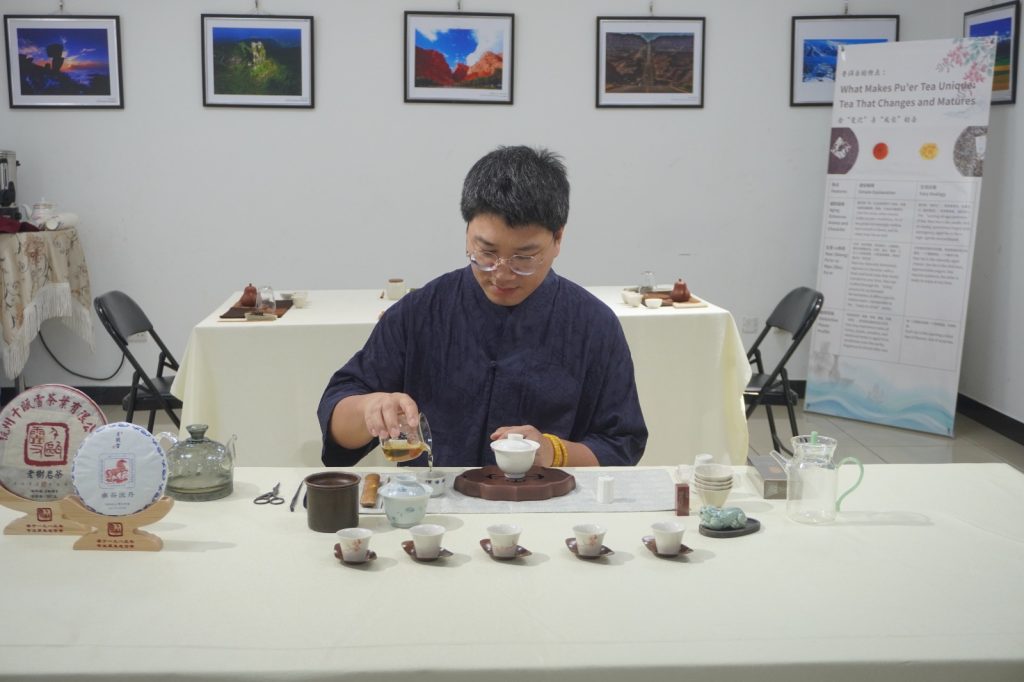
He noted that in 2022, “Traditional tea processing techniques and associated social practices in China” were officially inscribed on UNESCO’s list of intangible cultural heritage.
“This honour reflects the creativity and cultural richness of the Chinese nation and carries the beautiful idea that ‘tea unites the world,’” he said.
READ ALSO President Putin’s China Visit Targets Trade, Global Cooperation
He highlighted the significance of Quanzhou, historically known as Zayton, describing it as a major tea-producing city and the only UNESCO-recognized starting point of the Maritime Silk Road.
“Thousands of years ago, merchants from all nations gathered there as ships filled the harbor, reflecting how civilizations interacted and blended peacefully,” Zhou added.
He explained that beyond silk, spice,s and porcelain, the ancient Silk Road also carried values of peaceful cooperation, openness, inclusiveness, mutual learning,g and shared prosperity.
Civilisations become colourful through exchange and are enriched through mutual learning. We believe today’s event will become a new starting point for deeper friendship and stronger cultural cooperation between China and Nigeria.
These principles remain alive today and continue to inspire China and Nigeria under the Belt and Road Initiative,” he noted.
Zhou further disclosed that China recently introduced zero-tariff measures for 53 African countries with diplomatic relations with Beijing.
“This step embodies the Silk Road spirit of unity, mutual trust, equality, mutual benefit, inclusiveness, and mutual learning in this new era,” he stated.
The envoy is optimistic that Nigerian agricultural products such as sesame, cocoa beans, peanuts,s and cassava would benefit from the new trade policy.
“I truly believe that more high-quality Nigerian agricultural products will find their way to Chinese dinner tables,” he said.
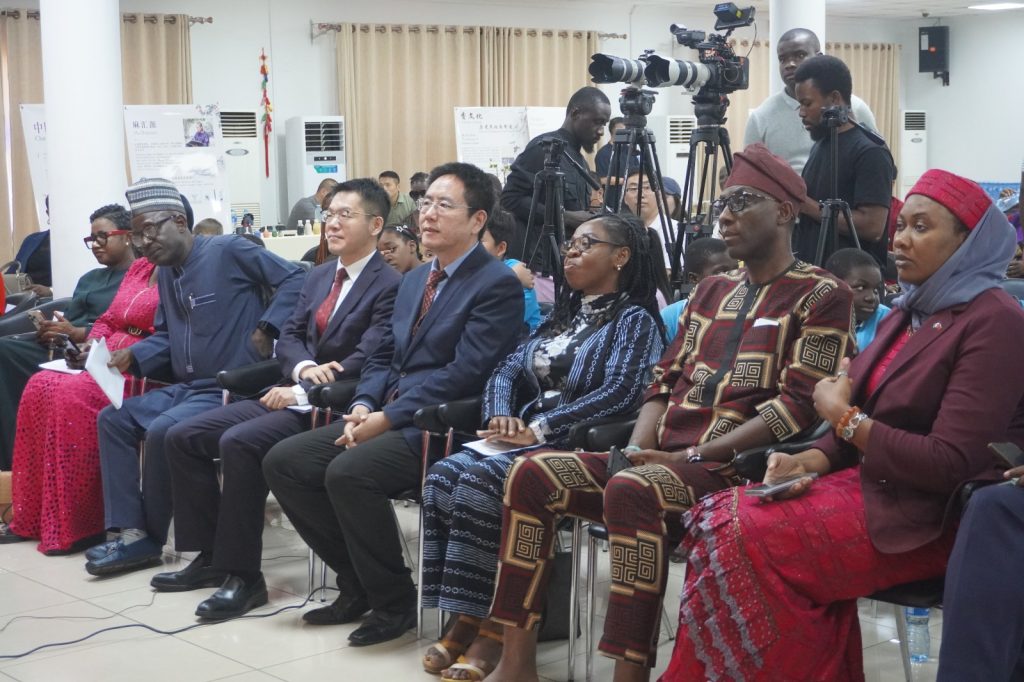
On his part, the Cultural Counsellor, Chinese Embassy,y and Director of the China Cultural Centre, Yang Jiaxing, said tea holds deep cultural significance for the Chinese people because it reflects nature, calmness, and human connection.
“Chinese people value tea culture because the taste of tea is the taste of nature, the taste of land and heaven. To taste the delicious flavour of tea is a very important purpose, but beyond that, tea also helps people become calm and peaceful”, he noted
According to him, tea culture plays an important role in strengthening relationships within societies and among nations across the world. He explained that sharing tea with others creates an atmosphere of trust and unity.
“The role of tea can improve the relationship between ourselves, other people, our society, and the international community. When we enjoy tea culture with other people, we enjoy the same place, the same space, the same time, and the same moment. It is a calm, safe, and mutually trustworthy time”, he added.
Also speaking at the event, the Permanent Secretary representing Nigeria’s Federal Ministry of Arts, Culture, Tourism and Creative Economy commended the Chinese Embassy and China Cultural Centre for strengthening cultural relations between both countries.
According to the ministry, Nigeria’s growing tea market presents opportunities for agro-processing, cultural tourism,m and creative branding.
“Tea is far more than a beverage; it is a vessel of history, a symbol of harmony,y and a medium of cultural exchange. From the northern chai culture infused with spices and shared in brotherhood, to the urban tea centres springing up in Abuja and Lagos, tea has become a symbol of hospitality and innovation,” they stated.
The Permanent Secretary, Abdulkarim Ibrahim, represented by the Director International and Cultural Relations, Yohanna Evandu disclosed that the ministry, under the leadership of the Minister, is committed to promoting creative enterprises around tea culture and strengthening partnerships that support Nigeria’s creative economy.
“We envision a future where Nigeria and China co-create opportunities in the creative sector,” an official said.
The ministry also pledged support for initiatives that combine traditional practices with modern innovation, establish cultural exchange hubs,s and strengthen bilateral partnerships in arts and tourism.
Just as tea leaves soak in hot water to reveal their full essence, so too do our cultures blossom when steeped in mutual respect and collaboration, he added.
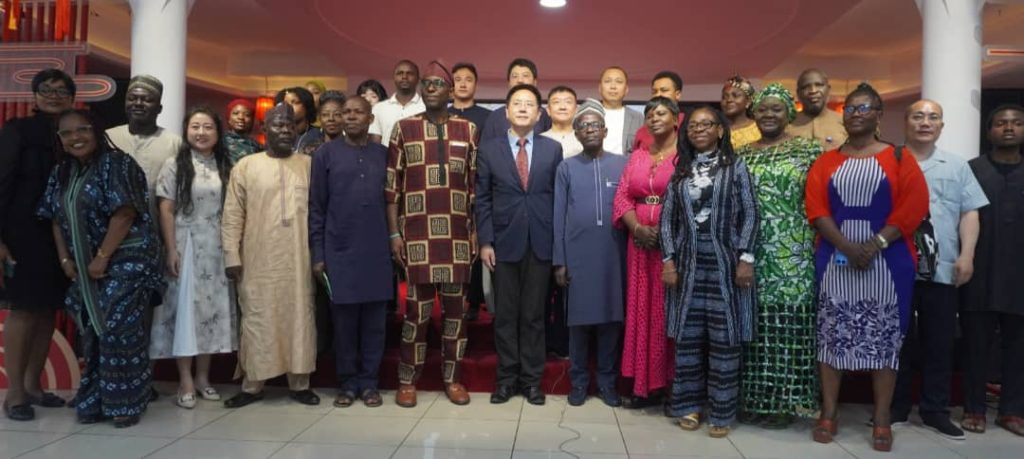
The event featured traditional Chinese tea ceremonies, incense art, ceramic exhibition,s and guqin musical performances as part of efforts to deepen cultural understanding and friendship between Nigeria and China.