Chinese President Xi Jinping has called for stronger measures to prevent, mitigate and respond to natural disasters following a series of deadly floods and landslides across the country this summer.
Xi’s remarks, published on Saturday in Qiushi, a journal central to Communist Party messaging, came after China was hit by its strongest typhoon of the year and several deadly landslides, highlighting the increasing impact of extreme weather on the world’s second-largest economy.
“As global warming continues, extreme weather events and disasters such as torrential rains, floods, typhoons, and droughts are increasing significantly, exacerbating their destructive impact,” Xi said, according to the article.
Xi called for greater emphasis on preventing disasters before they occur, improved monitoring and early-warning systems, and the closing of gaps in flood-control and drainage infrastructure, particularly in northern China.
The remarks were drawn from a speech Xi delivered during a Politburo study session on April 28.
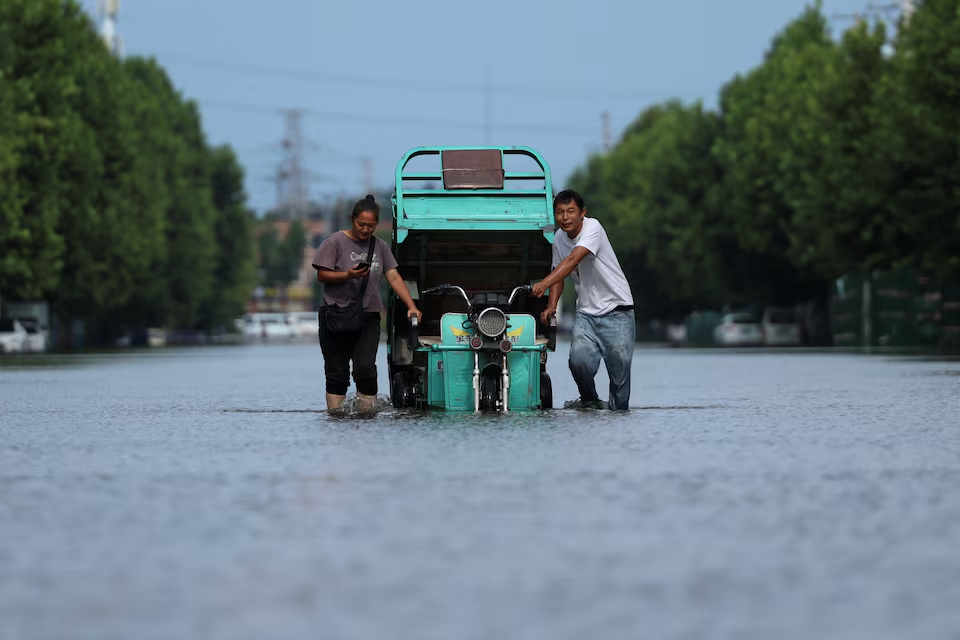
China’s strongest typhoon this year brought periods of torrential rain to the capital, flooding major roads, stranding vehicles and affecting large parts of the country.
READ ALSO: Nigeria Targets More Exports Under China’s Zero-Tariff Policy
Last month, flash floods triggered landslides in northwestern Gansu province, killing 25 people, while another landslide in southwestern Chongqing, caused by a collapsed mountain, left 51 people dead.
China has increasingly faced destructive weather events that scientists associate with climate change. This year, an emerging El Niño pattern has also contributed to rising temperatures and more frequent and intense typhoons.
China will “continuously improve our ability and level of prevention and response to various natural disasters and effectively safeguard the lives and property of the people and social stability,” Xi said.
He also warned that disaster risks must not be allowed to spill over into economic, energy, food and social security, while calling for technologies such as artificial intelligence, drones and satellite remote sensing to be deployed in rescue operations.