Nigeria and other African countries have been urged to strengthen their productive capacity and shift from exporting raw materials to value-added products to maximise the benefits of China’s zero-tariff access policy for African exports.
The call was made at a one-day international seminar organised by the Centre for China Studies (CCS) on the theme: “China’s Zero Tariff Treatment for African Countries and Its Implications for Structural Economic Transformation in Africa.”
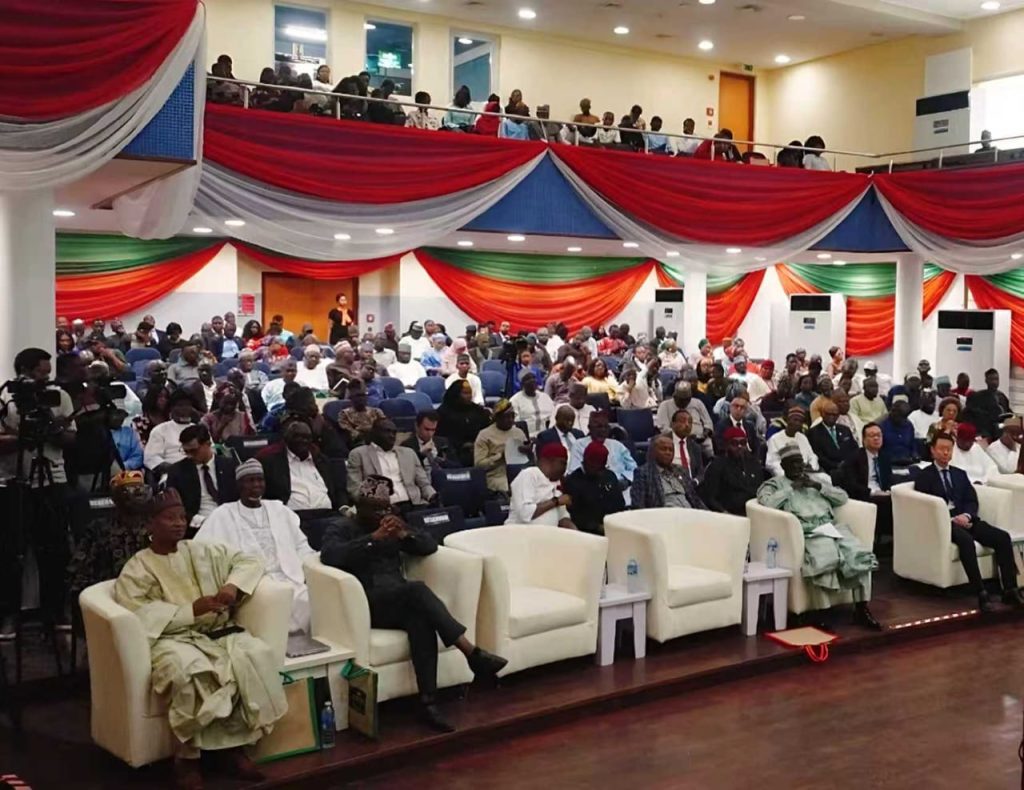
The seminar brought together government officials, diplomats, policymakers, business leaders and development experts to examine how China’s expanded market access could be leveraged to promote industrialisation, agricultural development, manufacturing and structural transformation across Africa.
China commenced comprehensive zero-tariff treatment for imports from the 53 African countries with which it maintains diplomatic relations on May 1, 2026, covering 100 per cent of tariff lines and providing qualifying African products wider duty-free access to one of the world’s largest consumer markets.
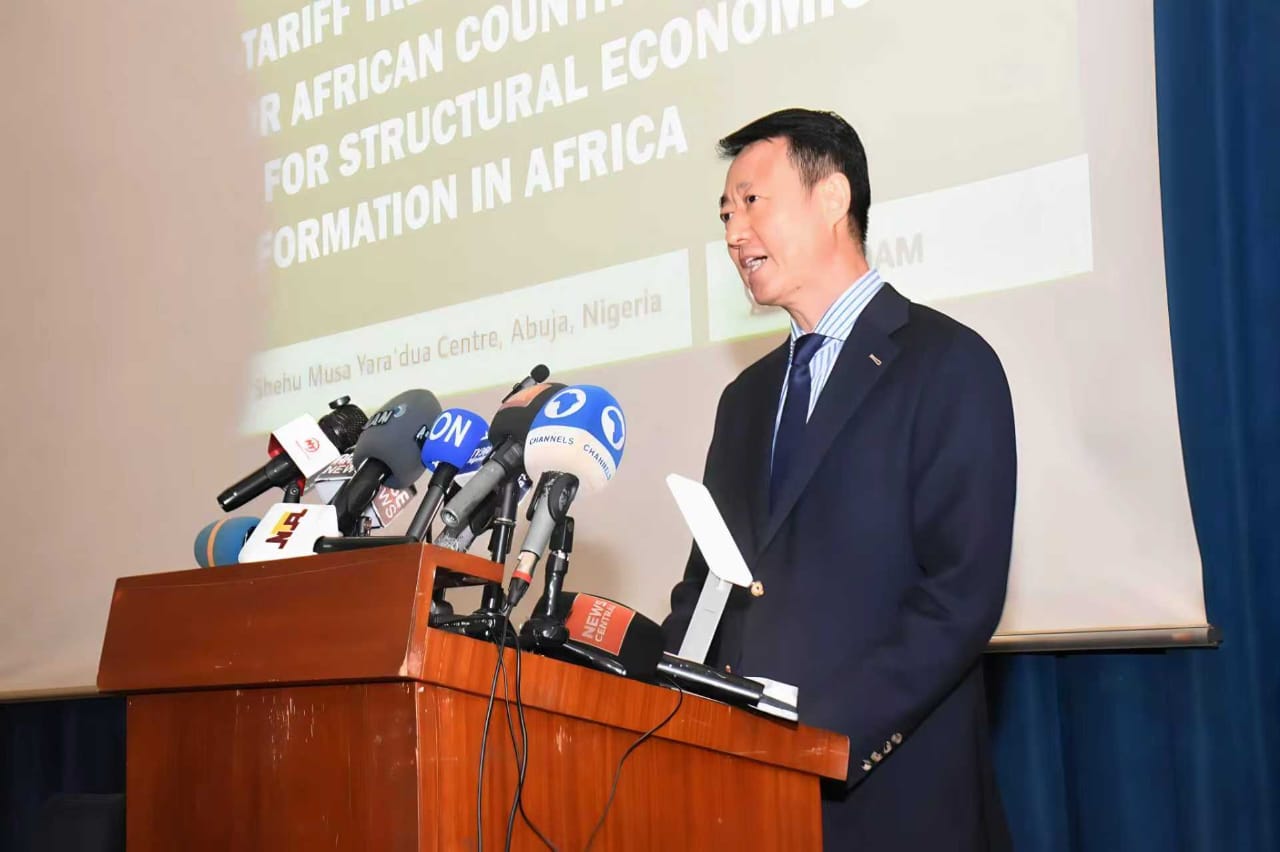
Speaking at the forum, the Chinese Ambassador to Nigeria, Ambassador Yu Dunhai, described the initiative as a significant development in China-Africa economic relations, saying it would provide African producers with greater opportunities to access the Chinese market.
“This zero-tariff measure represents a major upgrade to China’s preferential policies. Opening our market of 1.4 billion consumers without political conditions or market access barriers, it creates a modern institutional bridge for practical, mutually beneficial cooperation,” he said.
Ambassador Yu said the opportunity was particularly significant for Nigeria, given the country’s population, economic size and resource base.
He disclosed that Nigeria-China bilateral trade reached about $18 billion in the first half of 2026, representing a 35 per cent increase, while Chinese imports from Nigeria rose by 80 per cent to $2.3 billion.
The Ambassador cited examples of savings Nigerian exporters could make under the new arrangement.
“Every hundred tons of sesame exports saves $11,000 in costs. Nigeria’s annual export of 7,000 tons of cattle bone granules saves nearly $450,000, and on day one of the policy, a single shipment of 23,000 tons of Nigerian liquefied propane saved $300,000 in tax,” Ambassador Yu explained.
He, however, stressed that tariff-free access alone would not transform African economies, noting that African countries must improve product quality, strengthen supply chains, expand local processing and establish stronger institutions capable of supporting international trade.
“China is ready to provide technical support for standardised production to help Nigerian products earn recognition and market share,” he said.
Ambassador Yu also called for increased China-Africa cooperation in industrial parks, technology transfer, skills development, trade facilitation and investment.
“African economies must use the new market opportunity to develop domestic value chains instead of continuing to depend heavily on exports of unprocessed commodities. China’s zero-tariff policy is a long-term strategic commitment rooted in mutual respect and shared benefits,” the Envoy noted.
He added that the Chinese Embassy in Nigeria would support efforts to ensure that quality Nigerian products reached Chinese consumers, while Chinese technology, equipment and expertise contributed to Nigeria’s industrial development.
“China remains fully committed to working hand-in-hand with Nigeria and all African countries to turn these shared opportunities into lasting prosperity,” he added.
Also speaking, the Minister of Foreign Affairs, Ambassador Bianca Odumegwu-Ojukwu, represented by the Permanent Secretary, Ministry of Foreign Affairs, Ambassador Dunoma Umar Ahmed, said the critical question for Nigeria was not simply how much the country could export, but what it would produce and how much value would remain within the domestic economy.
He said the administration of President Bola Ahmed Tinubu was committed to reducing the country’s dependence on unprocessed commodity exports.
“Our natural resources must become the starting point, not the end point, of economic activity. Nigeria must use its natural resources as inputs for industrial development. We must transition from exporting resources to exporting value. Crude oil should support petrochemical and downstream industries, agricultural commodities should feed agro-processing and manufacturing, while solid minerals should stimulate mineral processing and industrial production,” he said.
The Permanent Secretary described China’s zero-tariff policy as an opportunity to deepen industrial cooperation, technology transfer, skills development, investment partnerships and manufacturing linkages between both countries.
He urged Chinese and other foreign investors operating in Nigeria to establish production facilities that source locally, process locally, employ Nigerians and develop Nigerian suppliers.
“Nigeria is open for business, but increasingly, we seek investment that does more than extract. We seek investment that builds,” he said.
The Minister of State for Agriculture and Food Security, Dr Aliyu Sabi Abdullahi, said agriculture could become one of the biggest beneficiaries of China’s zero-tariff initiative if Nigeria addressed its production and processing challenges.
He noted that Nigeria had historically exported raw agricultural commodities while importing finished products at higher prices, limiting industrial growth, employment and income opportunities.
“The question before us, therefore, is not ‘Can Nigeria export more?’ The question should be ‘Can Nigeria export better?’” Abdullahi said.
The Minister cautioned that tariff-free access would not automatically translate into increased exports.
“Opportunities alone do not create prosperity. Access to market must be matched by increased agricultural productivity, modern processing industries, efficient logistics, quality assurance systems, traceability, competitive financing, modern storage infrastructure, export certification, and compliance with sanitary and phytosanitary standards,” he said.
He said the Federal Government was focusing on irrigation, mechanisation, agricultural research, climate-smart agriculture, improved seeds, youth participation, commodity value chains and agro-processing.
Dr Abdullahi called for greater China-Nigeria cooperation in agricultural mechanisation, technology transfer, research, skills development and value-chain development.
The Chairman of the seminar and former Director-General of the National Institute for Policy and Strategic Studies, Mr Jonathan MelaJuma, said Nigeria should learn from its previous experience with the African Growth and Opportunity Act and avoid repeating the weaknesses associated with that arrangement.
He noted that Nigeria possessed enormous agricultural potential but needed appropriate policies and institutions to transform that potential into export competitiveness.
“China has given us an opportunity to correct the challenges and the weaknesses that were associated with our experience. What can we do with this? What can we offer to the world? What can we offer to China?” he asked.
MelaJuma urged stakeholders to develop practical strategies to ensure Nigerian producers could take advantage of the Chinese market.
The Director of the Centre for China Studies, Mr Charles Onunaiju, said the zero-tariff initiative should be viewed as the beginning of Africa’s economic transformation rather than its conclusion.
“Zero-tariff treatment for products coming from Africa is only the starting point, it’s not the finish line,” he said.
Onunaiju identified inadequate infrastructure, weak production capacity, non-tariff barriers, differences in standards and insufficient industrial integration as some of the major challenges African countries must overcome.
He called for closer alignment between China’s market-opening initiative and the African Continental Free Trade Area (AfCFTA) to create economies of scale and strengthen regional value chains.
“Africa has an opportunity to develop into a major global production centre while simultaneously gaining access to China’s enormous consumer market. The opportunity of becoming the next workshop of the world is in Africa,” he said.
The stakeholders called for stronger China-Nigeria collaboration in agricultural mechanisation, industrial parks, technology transfer, export certification, skills development, investment and trade facilitation.
They emphasised that China’s expanded market access should be used to accelerate the transition from raw material exports to value-added production, deepen industrialisation and strengthen Africa’s competitiveness in global trade.
The discussions reflected a broader shift in China-Africa economic relations from commodity-based trade towards greater emphasis on industrial capacity, manufacturing, technology, infrastructure development and value-added exports.