

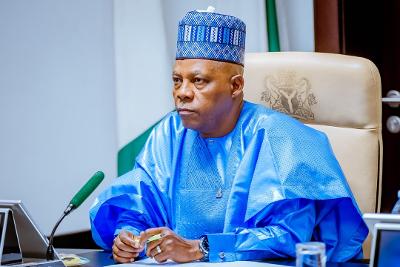
The National Addressing Council (NAC) has ratified the preliminary framework for the actualisation of Nigeria’s vision to build a digitised and modern addressing system for the country.
Under the new arrangement, the Ministry of Innovation, Science, Technology will serve as secretariat for greater efficiency and coordination, while other agencies will synergize efforts to achieve set objectives.
The decision was taken at the meeting of the council chaired by Vice President Kashim Shetima in Abuja, with key members and stakeholders in the public and private sectors in attendance.

“Under the Renewed Hope Agenda, our duty is to build institutions that match the energy and mobility of our people. We must build a system that locate every community, supports enterprise without barriers and strengthens government without compromising privacy.
“Our objective should be simple. For Nigerians to understand, wherever a citizen lives, wherever a business operates, wherever help is required, Nigeria should find the address. This is the standard before us and I am confident that the council will deliver,” VP Shettima noted while addressing the council.
He explained that the task before the Council is to build a national addressing system worthy of the scale and ambition of the nation, stressing that the addressing system must serve the village as effectively as the metropolis.
He stated: “Address is more than just a description of where a person lives or where a business operates. It is a point of connection between the citizen and the state; between the enterprise and opportunity; between identity and service.
“A country that cannot consistently locate its people and businesses carries an avoidable weakness into planning, commerce, security and social protection.”
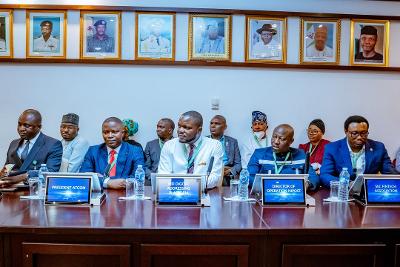
The Vice President warned that while geography must never become a sentence of invisibility, every Nigerian household and every legitimate enterprise should be located within a trusted national framework.
“The strength of a modern addressing system lies in its ability to speak to other public systems. Our digital addressing framework must connect intelligently with other digital identity, government databases and wider digital public infrastructure.
“When a verified identity can be linked securely to a verified address, the gains extend across financial inclusion, social interventions, logistics, planning and emergency response,” the VP explained
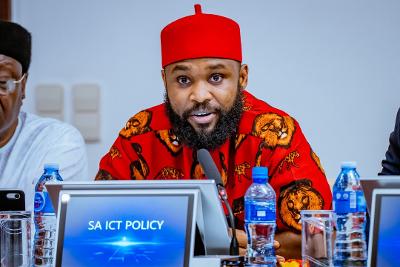
Mandate
On the mandate of members of the council, the Vice President said that the ambition requires institutional discipline, just as he appointed the Federal Ministry of Science, Technology and Innovation to serve as secretariat of the NAC.
VP Shettima said; “The Ministry of Science, Technology and Innovation is to serve as secretariat of the council. It must guide technical implementation, systems integration, interoperability and standards.”
“National Identity Management Commission (NIMC) has an essential responsibility in addressing individual verification and authentication, while CAC must support verification of business addresses. NIPOST remains indispensable for postcode administration and postal infrastructure.
“The success of this undertaking will also be decided, where Nigerians live. States and LGAs working through the NGF and ALGON must drive implementation at the community level through the local addressing and proof of address.
“NITDA, NDPC, ONSA, CBN, NCC and the OPS must bring their mandates to bear. No institution can own a system whose usefulness depends on participation across our federation,” he added.
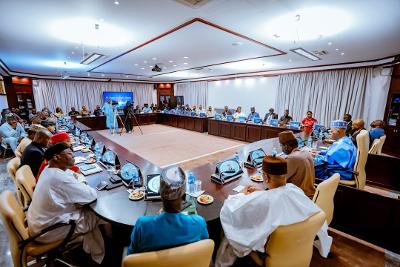
The Minister of Interior, Dr. Olubunmi Tunji-Ojo, said that with the Vice President, who is also Chairman of the National Economic Council, serving as Chairman of the NAC, the addressing process is fundamental and quite foundational to Nigeria’s economic revolution.
Noting that it is about the foundation of harnessing the talent of the average Nigerian entrepreneur, he expressed confidence that news of the addressing process will restore confidence of foreign investors in Nigeria.
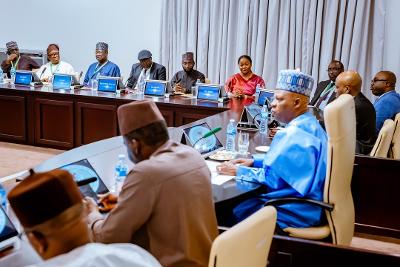
Minister of Science, Technology and Innovation, Dr Kingsley Udeh, thanked the Vice President for transforming the Council from crisis management to synergy, collaboration and coordination among relevant agencies.
Dr Udeh pledged to discharge his responsibilities with discipline, purpose and unity, particularly in standardising addresses, proof of address and digital addresses.
NIMC Director-General, Dr Abisoye Coker, also thanked the Vice President for resolving the initial lack of coordination and disagreements among participating agencies.
Technical teams from NIPOST, NIMC and ALGON also made presentations at the meeting.


 has ratified the preliminary framework for the actualisation of Nigeria’s vision to build a digitised..)