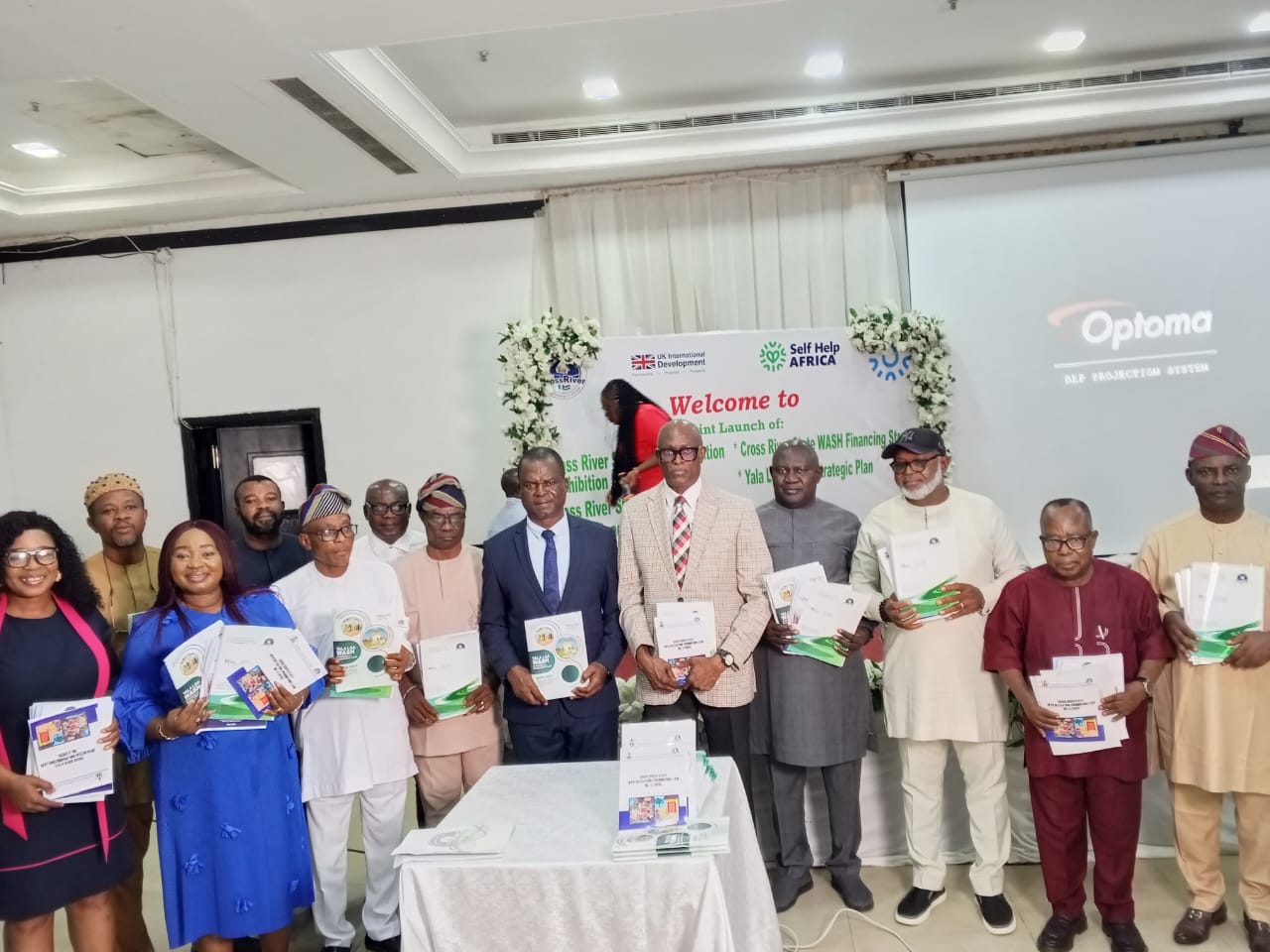
The Cross River State Government has launched four strategic policy documents aimed at improving access to safe water, sanitation and hygiene services across the eighteen local government areas.
The documents were unveiled in Calabar, the capital of Cross River State, South-South Nigeria, during a ceremony organised by the State Ministry of Water Resources and Sanitation in conjunction with Self Help Africa under the WASH Systems for Health programme funded by the UK International Development.
The four policy documents included the Open Defecation Roadmap; WASH Finance Strategy for Small Towns and Rural Communities; the Open Defecation Prohibition Law; as well as the WASH Strategic and Investment Plan for Yala Local Government Area.
Launching the documents, the representative of the governor and the Secretary to the Government of Cross River State, Professor Anthony Owan-Enoh, said that the initiatives were a reflection of the commitment to improving living conditions of citizens, especially in underserved communities.
Owan-Enoh hinted that the state government was determined to implement the policies and facilitate aggressive grassroots sensitisation.
He averred, “Open defecation is actually a problem, not in the urban areas, but in the rural areas. To some people, it is a matter of culture, and to some, a way of life. “But we believe that with education, people will understand the dangers.”
The SGS pledged the state government’s resolve to synergise with local government councils, the traditional institution and other critical stakeholders at the community level to ensure effective implementation of the policies.
Consolidating previous efforts
Also speaking, the Commissioner for Water Resources and Sanitation, Bassey Mensah, said the launch of the four strategic documents “reflected the commitment of the Governor Bassey Otu-led administration to improve access to water, sanitation and hygiene services, especially for residents in underserved communities.”
He noted that the new policies would provide a framework for coordinated action toward ending open defecation, improve sanitation financing and expand access to safer and sustainable WASH services.
“The future we seek is a Cross River State where every home has access to safe water, every community enjoys decent sanitation, every school has functional hygiene facilities and every citizen lives with dignity and good health,” he said.
Earlier, the Country Director of Self Help Africa, Joy Aderele, who was represented by Elisha Maida, acknowledged that the development of the documents was a demonstration of effective coordination and stakeholder engagement in strengthening the WASH sector in Cross River.
Adeleke informed the gathering that the reforms were developed through consultations with government institutions, development partners, civil society organisations, private sector actors and community representatives.
She emphasised that to strengthen accountability, enhance sustainability and guarantee shared ownership in WASH services across the eighteen local government areas, the state government needs to adopt the collaborative approach.