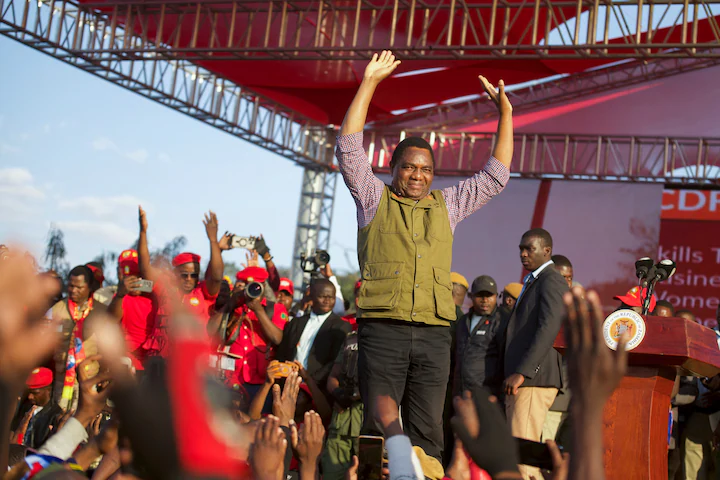
Zambia is preparing for its presidential election in August, with incumbent President Hakainde Hichilema widely tipped to secure a second term, although opposition leader Brian Mundubile is expected to mount a significant challenge.
The election is expected to serve as a referendum on Hichilema’s economic performance since he assumed office in 2021 after inheriting an economy burdened by a sovereign debt default.
Zambia, Africa’s second-largest copper producer, has recorded an economic recovery following a successful debt restructuring and improved copper prices. However, many citizens continue to struggle with the rising cost of living, an issue the opposition has placed at the centre of its campaign.
Official data show annual inflation slowed to 6.5 per cent in June, the lowest level in more than eight years, reflecting improved macroeconomic conditions. Despite the gains, many households say economic hardship persists.
Speaking at his campaign launch in Lusaka, Hichilema acknowledged the challenges facing citizens.
“Many of our families still need support beyond what we are delivering today, but I want you to know we hear you,” he said.
The 64-year-old businessman won the presidency by a landslide in 2021, defeating the late former President Edgar Lungu.
READ ALSO: Five Political Parties Join Zambia’s Ruling UPND Alliance
His main challenger, 55-year-old lawyer and Member of Parliament Brian Mundubile, is contesting the presidency for the first time after emerging as the consensus candidate of a divided opposition coalition.
The opposition has accused Hichilema’s administration of limiting political space by disrupting opposition activities and suppressing dissent, allegations the government has consistently denied.
Civil society groups have also criticised Zambia’s 2025 Cyber Crimes Act, arguing that its broad provisions could discourage free expression online. Critics have further questioned constitutional amendments signed into law in December, which expanded Parliament, saying the changes could benefit the ruling party.
Mundubile alleged that opposition political meetings had been disrupted by police, making it difficult to mobilise supporters.
A survey conducted by the Zambia Election Research Network late last year indicated that 51 per cent of respondents expected the election to be free and fair, while 55 per cent expressed support for Hichilema. The survey, however, was carried out before Mundubile formally entered the race.
Political analyst Lee Habasonda of the University of Zambia said the opposition should not be underestimated despite its late start.
“While the opposition started late to mobilise and organise, they should not be dismissed,” he said.
Hichilema is also expected to benefit from incumbency and an improving economy. The International Monetary Fund projects Zambia’s economy will grow by 4.3 per cent this year, up from 3.8 per cent in 2025, while foreign investment has continued to rise.
However, Mundubile insists the government’s economic gains have not translated into better living conditions for ordinary Zambians.
“How can you boast that you have built 6.5 billion dollars in foreign reserves when your people are going hungry?” he said during a campaign.
Reuters