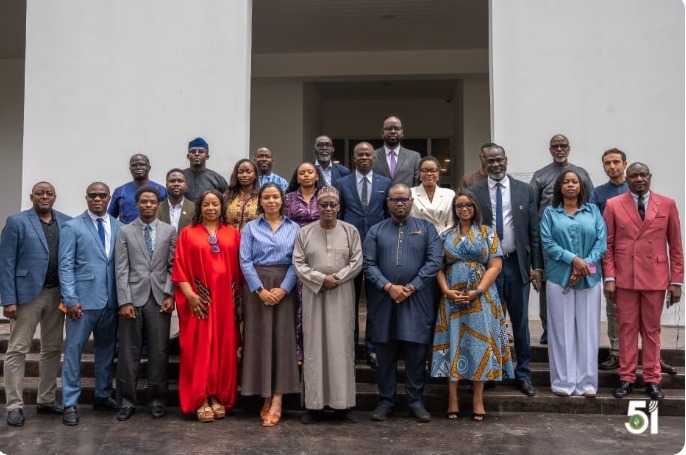
The Economic Community of West African States (ECOWAS) Commission, in collaboration with the German Agency for International Cooperation (GIZ), has commenced a workshop in Accra, Ghana, to advance the implementation of its Inter-Institutional Communication Strategy and Information and Communication Policy for 2026–2031.
According to a statement published on the ECOWAS Commission’s website, the workshop brings together communication officers from ECOWAS institutions and specialised agencies to strengthen coordination, harmonise institutional messaging and translate the newly adopted policy and strategy into practical actions supporting regional integration and the ECOWAS Vision 2050.
Communication Key to Regional Integration
In his opening remarks, the Director of Communication at the ECOWAS Commission, Joel Ahofodji, emphasised the strategic role of communication in bringing the regional organisation closer to citizens.
ALSO READ:ECOWAS Trains Statistical Leaders to Strengthen Data Systems
He described the workshop as a critical step towards moving from policy adoption to effective implementation, stressing the need to translate the 2026–2031 framework into practical initiatives that respond to the rapidly evolving digital communication landscape.
Ahofodji also highlighted the importance of addressing emerging information challenges and strengthening communication as a strategic tool for achieving the objectives of ECOWAS Vision 2050.
Representing GIZ, Lilian Seffer delivered a goodwill message on behalf of the Federal Republic of Germany, congratulating ECOWAS on the milestone and urging a decisive transition from policy development to implementation.
She stressed that effective communication was essential to transforming ECOWAS from an “ECOWAS of States” into an “ECOWAS of Peoples” by strengthening citizens’ understanding of, trust in and engagement with regional integration.
Seffer also reaffirmed GIZ’s commitment to supporting the implementation of the communication policy and strategy, particularly amid declining public trust in multilateral institutions.