By Olubunmi Osoteku, Ibadan
A foremost Nigerian researcher in essential oils and retired Professor of Phytochemistry and Organic Chemistry at the University of Ibadan, Olusegun Ekundayo, has advocated the formulation of a National Essential Oils Development Policy for advancing the essential oils industry in Nigeria.
The expert also identified increased investment in research, innovation and human capacity development as tools for quality assurance, export promotion and unlocking Nigeria’s potential in the essential oils industry.
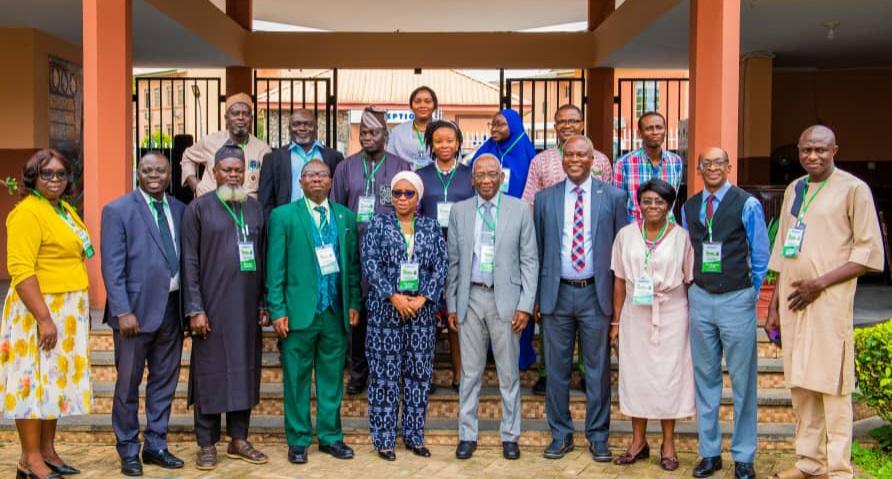
He disclosed this while delivering a plenary lecture titled: “Research, Innovation and Human Capacity Development for Advancing Nigeria’s Essential Oil Industry” at the first national symposium of the Society of Essential Oil Distillers and Analysts (SEODA).
The professor explained that essential oils are highly concentrated volatile compounds extracted from various parts of plants, including leaves, flowers, bark, roots, fruits and seeds, with biological properties such as antimicrobial, antioxidant, anti-inflammatory, analgesic and insecticidal activities.

Professor Ekundayo noted that essential oils have been valued for thousands of years with renewed scientific interest creating opportunities for their wider application in pharmaceuticals, cosmetics, food and beverages, agriculture, aromatherapy and other industries.
READ ALSO: Smallholder Farmers Backbone of Nigeria’s Palm Oil Industry
He explained that the growing global preference for natural and environmentally friendly products has created significant opportunities for research, innovation and industrial expansion in the sector.
The expert emphasised connecting indigenous knowledge with modern scientific research to preserve cultural heritage and create economic opportunities for local communities.
Ekundayo noted that variations in plant species, cultivation methods, harvesting periods, extraction techniques and storage conditions affect the quality and chemical composition of essential oils, making standardisation, quality assurance, safety, and sustainability critical to the industry’s development.
He called for reliable analytical methods, comprehensive toxicological studies and clinical trials to establish the safety, efficacy, dosage and possible interactions of essential oil products and cautioned against excessive dependence on wild harvesting.
The professor acknowledged that Nigeria is richly endowed with aromatic and medicinal plants including lemongrass, eucalyptus, basil, ginger, clove, peppermint, scent leaf and citrus species, which could provide the raw materials for a competitive essential oils industry.
He argued that essential oil research and production could be transformed given the prevalence of new and emerging technologies such as artificial intelligence, metabolomics, biotechnology, nanotechnology, precision agriculture and advanced extraction techniques.
Welcoming the guests, the Chairperson of SEODA, Professor Sherifat Aboaba, said the symposium marked a significant milestone in the Society’s efforts to position Nigeria as a major player in the global essential oils industry.