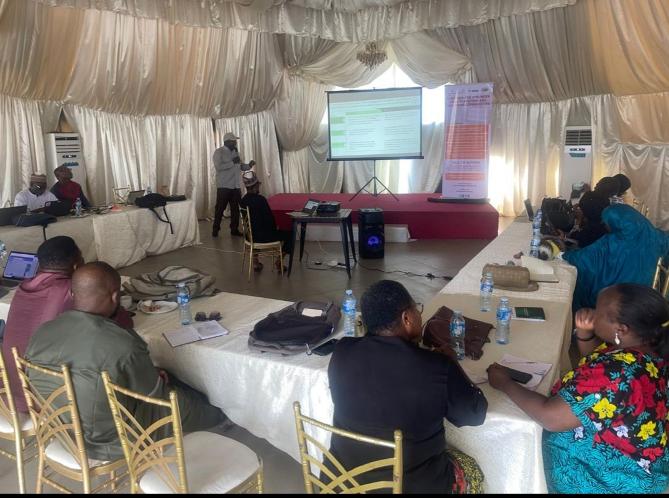
Health experts have called on journalists in Kaduna State to embrace evidence-based reporting as a tool for promoting accountability, influencing policy reforms and improving primary healthcare service delivery.
The experts made the appeal during a two-day Media Engagement Workshop organised by the Kaduna State Ministry of Health in partnership with ISMPH, the EngenderHealth Consortium and the Unified Health Media Network.
The workshop, themed “Strengthening Journalists’ Capacity to Interpret PHC Accountability Data and Produce Evidence-Based Accountability Stories,” brought together journalists and media organisations to enhance their ability to analyse primary healthcare data and produce impactful reports that promote transparency and better health outcomes.
Speaking at the opening session, Solomon Dogo, who represented the Executive Director of ISMPH, Moji Makanjuola, described the training as ‘an important platform for strengthening collaboration between the media and health stakeholders.”
He said; “the workshop was designed to equip journalists with the skills to interpret Primary Healthcare (PHC) accountability scorecards, Integrated Supportive Supervision (ISS) findings, health financing data and Primary Healthcare Facility Assessment Tool (PHC-FAT) reports.”
“Journalists have a critical role in transforming technical health data into accurate, compelling and solution-oriented stories that promote accountability and improve healthcare delivery,” Dogo said.
He added that participants would also improve their capacity to analyse budget allocations, expenditure patterns and other health performance indicators to support informed public discourse.
The Programme Manager and Lead for Accountability, Monitoring, Evaluation, Research and Learning (MERL), Dr. Abdulazeez Jumare, urged journalists to move beyond reporting challenges by using verified data to present balanced reports that highlight both achievements and existing gaps within the health sector.
According to him, “the quarterly Integrated Supportive Supervision exercise provides credible information on healthcare infrastructure, service delivery, availability of medicines and staffing levels across primary healthcare facilities.”
“Evidence-based journalism should be supported by field verification. Journalists should visit health facilities, engage patients and health workers, and ensure every report reflects verified facts,” Jumare said.
He identified inadequate manpower as one of the major obstacles confronting primary healthcare delivery in Kaduna State.
Jumare noted that while more than 1,000 primary healthcare centres require about 15,000 workers to provide uninterrupted services, only between 5,000 and 7,000 personnel are currently available.
The shortage, he explained, has “affected the ability of many facilities to operate round the clock, resulting in delays in accessing essential healthcare, particularly during emergencies and childbirth.”
Jumare also encouraged journalists to seek responses from relevant government authorities before publishing reports to ensure fairness, balance and credibility.
Delivering a presentation, the Deputy Director of Research, Planning and Evaluation at the Kaduna State Primary Health Care Board, Dr. Joseph Natsah, described data as the backbone of effective planning and decision-making in the health sector.
Dr Natsah said ”journalists play an important role in translating technical health information into simple and understandable reports that enable citizens to make informed decisions while promoting transparency in governance.”
The Director of Programmes at ISMPH, Solomon Dogo said the training was intended to help journalists better understand health facility performance data and use it to evaluate government interventions in the healthcare sector.
“When journalists rely on credible evidence, they strengthen public trust, encourage accountability and contribute to improved healthcare services,” he said.
In his goodwill message, the Chairman of the Kaduna Health Advocacy and Media Alliance (KADHAMA), Garba Muhammad, stressed that evidence-based journalism has become increasingly important in addressing misinformation and promoting responsible reporting.
He noted that a better understanding of ISS reports, PHC Accountability Scorecards and PHC-FAT findings would enable journalists to produce investigative reports capable of exposing systemic weaknesses, highlighting progress and influencing public policy.
The workshop ended with practical sessions that equipped participants with skills in interpreting primary healthcare accountability data, tracking health financing and budget implementation, and producing data-driven reports aimed at improving transparency, strengthening accountability and enhancing healthcare delivery across Kaduna State.