
Experts have emphasised the need for the media to strengthen accountability in Nigeria’s health sector through investigative reporting, fact-checking and public interest journalism.
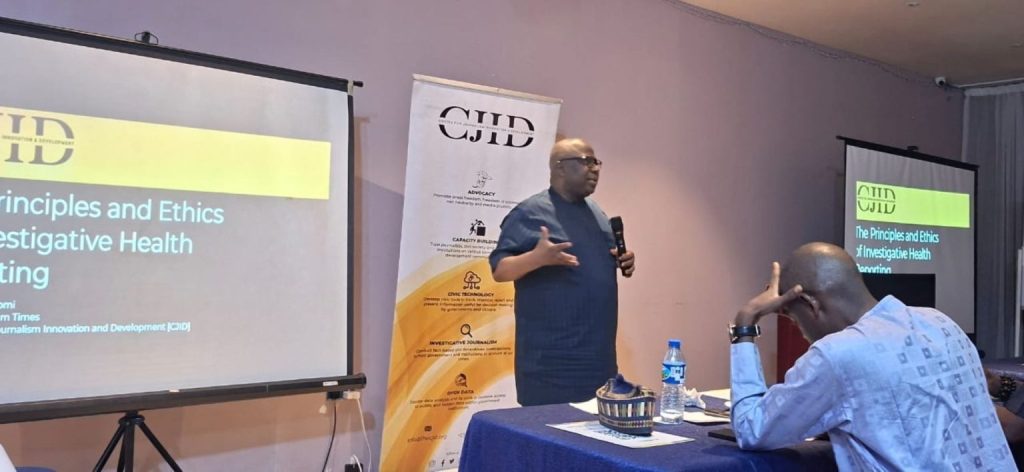
They made the call during a two-day workshop on investigative health reporting organised by the Centre for Journalism Innovation and Development (CJID) in Abuja.
At the event, journalists were trained on accountability, fact-checking, and solution-driven reporting on critical health issues.
The workshop helped participants enhance their skills in investigative and solution-oriented reporting, identifying systemic problems in the health sector and promoting reforms to improve healthcare outcomes.
CJID’s Chief Executive Officer, Dapo Olorunyomi said that “accountability journalism should be based on truth, professionalism, evidence, and thorough fact-checking.’
The Programme and Advocacy Manager at Nigeria Health Watch, Ibukun Oguntola, said delays in seeking medical care, poor access to health facilities, and low quality of care are major factors affecting health outcomes in Nigeria.
- READ ALSO: Media Professionals Convene in Kaduna to Strengthen Health Advocacy
- Kano Journalists Get Boost on Reproductive Health Reporting
A key session on misinformation and disinformation was led by Dubawa Editor, Lois Ugbede, who warned against unverified health claims, including miracle cures and false narratives linking vaccines, such as the HPV vaccine, to infertility.
She introduced the SIFT approach- Stop, Investigate, Find trusted sources, and Trace claims to their original source, as a tool for improving verification and accuracy in health reporting.
Policy reporting
On policy reporting, the Programmes Manager at the Centre for Journalism Innovation and Development (CJID), Ifeanyi Chukwudi, called for stronger investigative coverage of governance, funding gaps, and weak implementation that hinder healthcare delivery.
Also speaking, Health Editor at Premium Times, Nike Tambe, emphasised the importance of functional Primary Health Care (PHC) facilities in Nigeria.
She noted that although PHCs are meant to serve as the first point of care in rural communities, many remain poorly equipped and understaffed.
She added that assessing PHC readiness should include staffing, supplies, infrastructure, and accessibility, as these determine service delivery and overall health outcomes.
The workshop underscored the need for health journalists to move beyond crisis reporting, amplify community voices, counter misinformation, and support reforms that strengthen Nigeria’s healthcare system.