
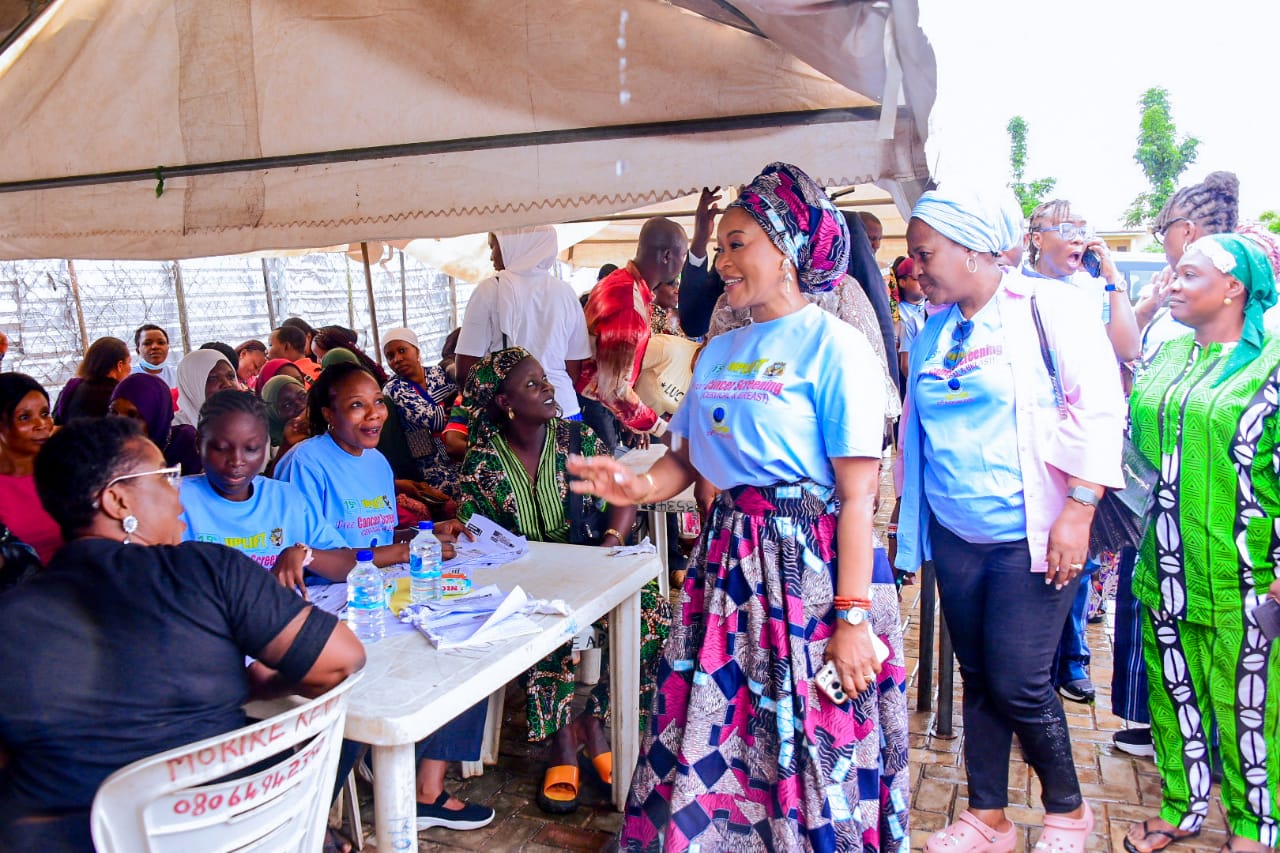
She noted that the programme was designed not only to screen women, but also to give them an opportunity to know their health status early, urging them “to see screening as an investment in their health and families.”
She stated: “The essence of this exercise is not just screening. It is about saving lives, giving women access to healthcare and ensuring that no woman loses her life because she was afraid to know her health status…Cancer is not necessarily a death sentence. The earlier it is detected and treated, the better the opportunity for appropriate care and improved outcomes.”
Mrs Amosun said the need for such interventions had become more urgent given the burden of breast and cervical cancers in Nigeria, urging women not to allow fear of a possible cancer diagnosis prevent them from seeking medical attention.
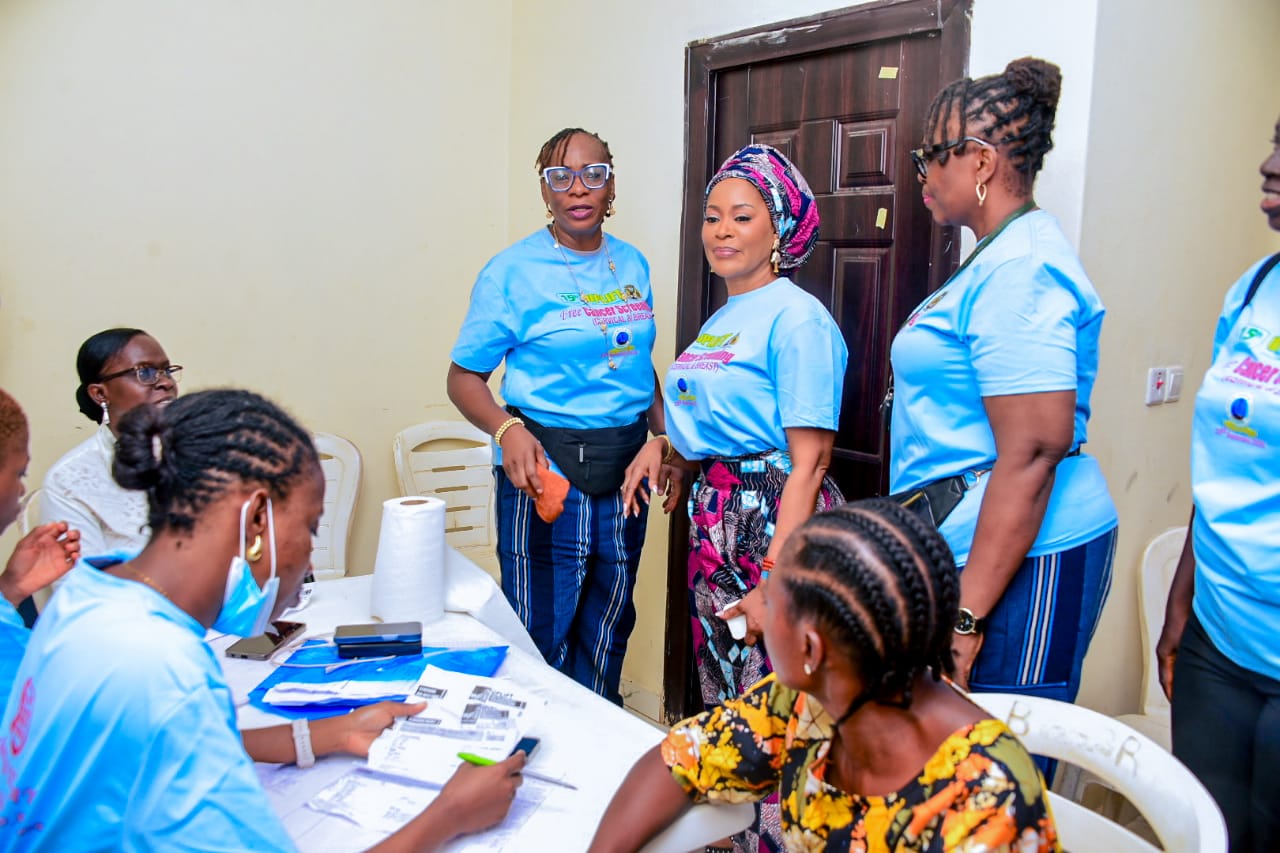
She cited 2022 estimates from the International Agency for Research on Cancer’s Global Cancer Observatory, which put Nigeria’s breast cancer burden at 32,278 new cases and 16,332 deaths.
The same data estimated 13,676 new cases of cervical cancer and 7,093 deaths from the disease.
Mrs Amosun said the impact of the programme was already evident in the experience of women who benefited from the previous edition, disclosing that more than 600 women participated in the 2025 screening exercise, with 22 found to have breast-related concerns.
She said that 11 women with suspicious breast lumps subsequently underwent free lumpectomy surgeries and received post-operative care funded entirely by the Foundation in November, 2025.
She said; “the intervention demonstrated the importance of linking screening with follow-up care, particularly for women who may not be able to afford further medical investigations or treatment.”

The former first lady said the UPLIFT Development Foundation, established in 2012, had continued to support cancer awareness and screening, healthcare facilities, and humanitarian initiatives for women, widows and other vulnerable people across Ogun State.
Medical experts at the event said cervical cancer screening can identify high-risk Human Papillomavirus (HPV) infection and abnormal or precancerous cervical cell changes that can be treated before they develop into cancer.
They identified HPV testing and Pap testing as established methods of cervical cancer screening and noted that persistent infection with high-risk types of HPV causes virtually all cervical cancers.
A Chief Consultant and Surgeon at the Federal Medical Centre, Abeokuta, Dr Stella Ogunmuyiwa, urged women to share accurate information about cancer prevention and early detection with their relatives, friends and communities.
Ogunmuyiwa advised women to maintain breast awareness, seek appropriate clinical evaluation of any unusual changes from qualified health professionals, and undergo recommended cervical cancer screening, as breast self-awareness is not a substitute for recommended screening.
Similarly, a Medical Consultant and Surgeon, Dr Ebenezer Nkom, warned women against relying on unproven remedies or myths in the treatment of breast cancer.
Nkom specifically dismissed claims that sucking a woman’s breast could cure breast cancer, describing such beliefs as misinformation capable of delaying appropriate medical treatment.
The message from health professionals and organisers at the event remains clear: knowing one’s health status early can open the door to timely intervention.
Victoria ibanga