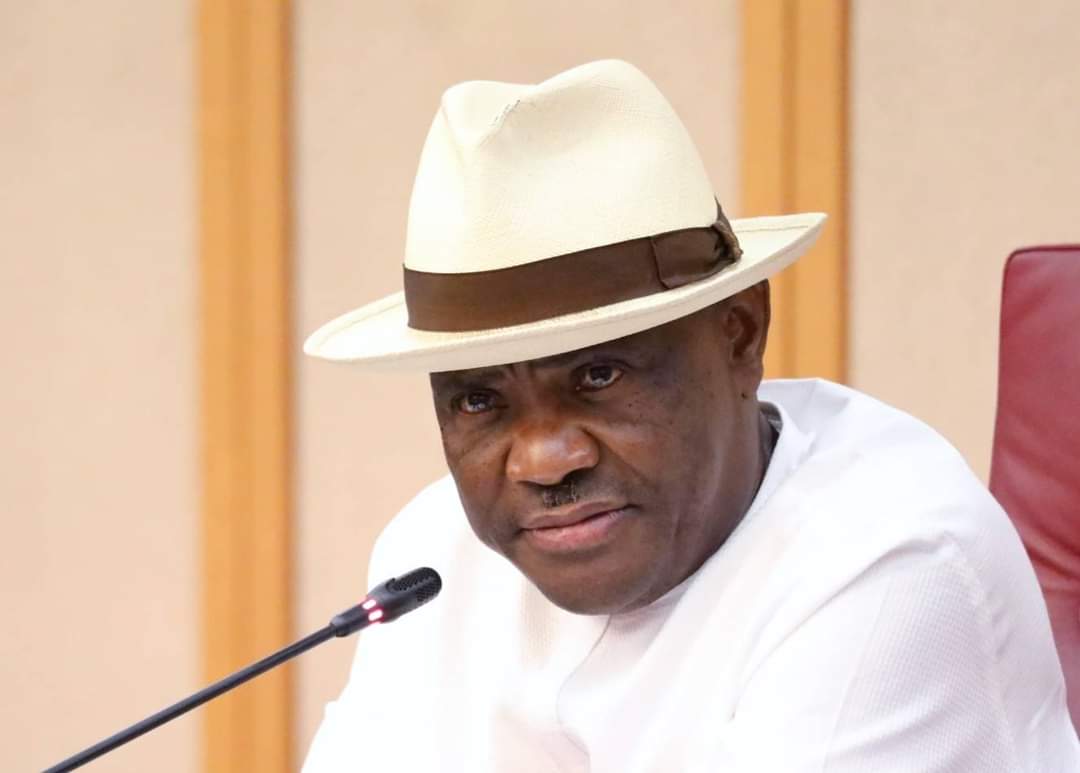
The Minister of the Federal Capital Territory (FCT), Nyesom Wike, says Rivers State Governor Siminalayi Fubara remains an active member of the Rainbow Coalition, dismissing claims that the governor has been politically sidelined.
Wike made the statement while speaking with journalists in Abuja on Tuesday, insisting that Fubara’s quiet disposition should not be interpreted as a sign of exclusion from the coalition’s activities.
“Fubara has not been pushed aside. If you know him, he’s been a very quiet person.
“He is fully a member of the Rainbow Coalition and fully playing his part in efforts to ensure the re-election of President Bola Tinubu in 2027,” Wike said.
The minister cited a recent strategic meeting hosted by Fubara at his residence, which he said was attended by key political stakeholders, as evidence of the governor’s continued involvement.
Wike, who is coordinating the re-election campaign in Rivers State, disclosed that the lists of campaign committee members had been submitted, with Fubara expected to serve in a leadership capacity.
He blamed external political interests, including some opposition governors, for previous tensions between him and Fubara, alleging that they had attempted to exploit the disagreement for political advantage.
Wike, however, said reconciliation had helped to ease the differences between the two leaders.
On speculation about Fubara’s political future after his tenure, including the possibility of a federal appointment, the minister said he did not have the constitutional authority to nominate ministers.
He also dismissed suggestions of renewed hostility between them, maintaining that they were working together to sustain political stability in Rivers State.
According to Wike, the Rainbow Coalition was established to bring together different political groups, including members of the All Progressives Congress (APC) and other parties, around a common agenda of supporting President Tinubu’s re-election bid in 2027.
He said the arrangement was also intended to reduce political divisions and avoid prolonged litigation that could disrupt governance and political activities in the state.
Addressing concerns about the sharing of political offices and electoral tickets among coalition members, Wike explained that decisions would reflect the political realities of different areas rather than require all candidates to belong to the same party.
“When you talk about politicians that agree to form an umbrella, the umbrella does not mean that all the candidates will be one party.
“We look at the peculiarities of areas and say, ‘Listen, all of us are together and all of us are supporters of Mr. President,'” he said.