Ghana has launched its first National Union for Informal Waste Workers to strengthen the recognition and inclusion of waste pickers in the country’s circular economy.
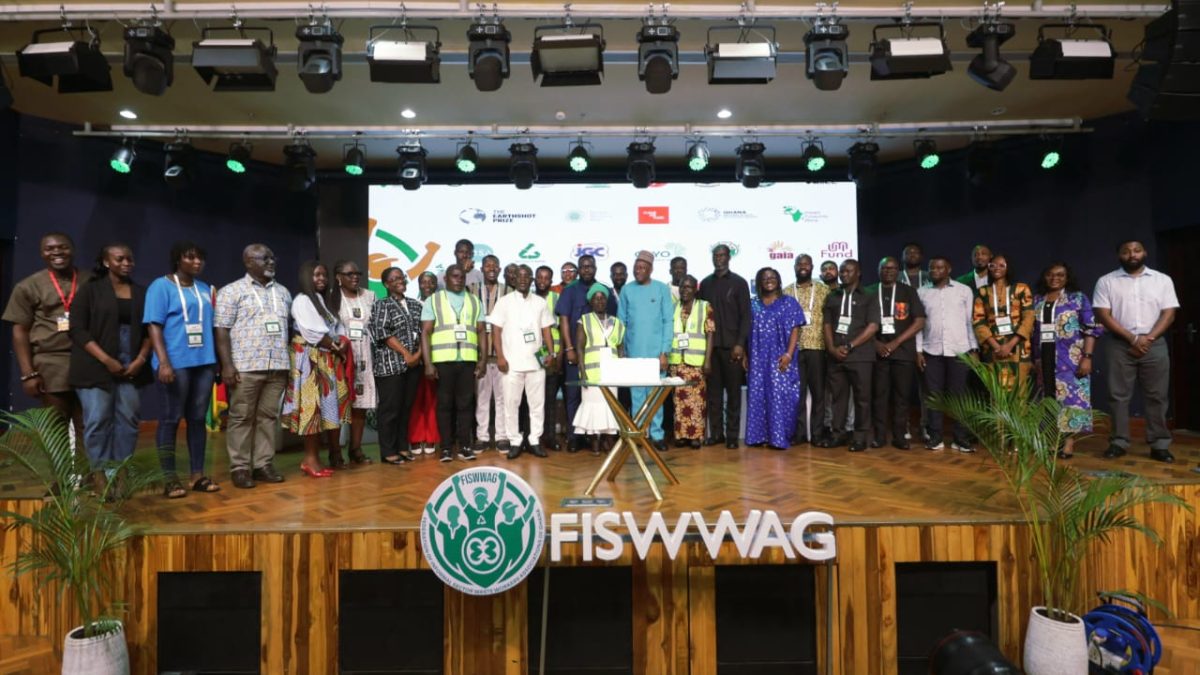
The Green Africa Youth Organisation (GAYO) in collaboration with government and development partners, inaugurated the union in Accra.
The event was themed, “From Informality to Inclusion: Recognising Informal Waste Workers as Essential Actors in Ghana’s Circular Economy.”
It brought together waste worker leaders from Ghana’s 16 regions, government officials, development partners and private sector stakeholders.
GAYO said that “the launch culminated a five-year campaign to organise waste pickers nationwide.”
The organisation said that the initiative had grown from a single cooperative into a nationwide movement promoting the environmental and economic contributions of informal waste workers.
According to GAYO, the union will provide a unified platform for informal waste workers to engage government, municipalities, industries and development partners.
It explained that the union will advocate safer working conditions, improved market access, social protection, occupational health and safety and greater participation in policy decisions.
Ghana’s Minister for Labour, Jobs and Employment, Dr. Abdul-Rashid Pelpuo described the union as a lawful organisation under the country’s Labour Act 2003.
Pelpuo said that the union was also consistent with Ghana’s obligations under International Labour Organisation conventions on freedom of association.
“The formation of the National Informal Waste Worker Union is a lawful exercise of constitutional and statutory provisions.
“Government fully recognises this important development,” he said.
The Minister pledged government’s support for safer workplaces, social dialogue and inclusive employment opportunities for informal waste workers.
Richard Matey, speaking on behalf of GAYO, said that the launch reflected years of mobilisation and collaboration.
“Recognition requires organisation. Organisation requires representation. Representation requires partnerships.
“That understanding shaped the journey that has brought us here today,” he said.
Matey said that the organisation would continue working towards legal recognition, municipal integration and expanded market opportunities for waste workers.
He said that strengthening the union’s capacity and improving access to social protection remained key priorities.
Other priorities include expanding partnerships with Metropolitan, Municipal and District Assemblies and integrating waste workers into Ghana’s Extended Producer Responsibility system.
The initiative received support from the UMI Fund, The Earthshot Prize, Global Methane Hub and the Clean Air Fund.
The technical partners included the Global Alliance for Incinerator Alternatives, Ghana National Plastic Action Partnership, Accra Metropolitan Assembly and other public and private institutions.
GAYO called on governments, producer responsibility organisations, research institutions, private companies and development partners to support the union’s activities.
The organisation said that it would continue promoting youth-led climate solutions, zero-waste cities, green jobs and circular economy initiatives across Africa.
AP