The House of Representatives Public Accounts Committee (PAC) has directed the Office of the Accountant General of the Federation (OAGF) to provide details of funds owed to the Federal Government through unremitted operating surplus and other revenues by the Central Bank of Nigeria (CBN), the Nigerian National Petroleum Company Limited (NNPC Ltd.) and other government agencies.
The committee also requested an explanation over the alleged withdrawal of N15 billion from the account of the Universal Basic Education Commission (UBEC), as well as deductions from the accounts of other Ministries, Departments and Agencies (MDAs) by the OAGF.
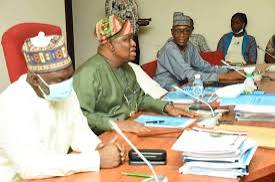
The directives were issued when the Accountant General of the Federation (AGF), Mr Shamseldeen Ogunjimi, appeared before the committee during an investigative hearing in Abuja.
READ ALSO:Reps Summon AGF, Finance Minister Over Alleged $200m Whistleblower Consultancy Fee
Chairman of the committee, Mr Bamidele Salam, said UBEC and several other MDAs had complained that funds meant for their statutory responsibilities were being deducted and utilised for other government purposes by the OAGF.
“There is an ongoing investigation involving UBEC and other agencies. During the investigation, UBEC claimed there was a shortfall in the release of its November 2025 Authority to Incur Expenditure. The commission also alleged that N16 billion and another N15 billion were deducted from its accounts, with the latter yet to be refunded.
“We are concerned about why statutory allocations to critical government institutions are being deducted. It is not only UBEC. We have similar complaints from NASENI and other agencies. What is the justification for these deductions?” he asked.
Responding, the Accountant General explained that the government occasionally borrows idle funds from some agencies to meet pressing financial obligations.
“There are instances when the government needs to access funds from some agencies to meet critical financial obligations. These are temporary borrowings, and the funds are refunded. We have been refunding the affected agencies,” he said.
He stressed that such deductions were not made arbitrarily.
“The Accountant General cannot simply withdraw funds from agencies. The directive comes from the Honourable Minister. We first assess how long the funds have remained unused. If the money has been idle for several months and the government urgently requires funding, we temporarily utilise it and refund it when the agency needs it.
“For instance, we borrowed more than N300 billion from TETFund and have fully refunded the amount. Whenever an agency requests its funds, we process and return them,” Ogunjimi explained.
However, Mr Salam questioned the justification for the deductions, arguing that the agencies required the funds to fulfil their statutory mandates.
“Which agencies have actually been refunded? UBEC is complaining, NASENI is complaining, and the National Broadcasting Commission (NBC) is also raising concerns. More than six agencies currently under investigation have alleged that the Accountant General withdraws funds from their accounts, leaving them unable to carry out their core responsibilities.
“In the case of UBEC, you will agree that the country’s security challenges, including banditry, are partly linked to the neglect of basic education, particularly in northern Nigeria. With about 13.5 million out-of-school children, UBEC needs these funds to build schools, provide infrastructure and supply instructional materials. Those responsibilities are being affected because statutory funds are being diverted,” he said.
A member of the committee, Mr Gboyega Isiaka, also expressed concern over the persistent non-remittance of revenues by government agencies.
“Considering Nigeria’s Gross Domestic Product (GDP), our revenue-to-GDP ratio remains one of the lowest in Africa at about 16 per cent. Business entities are expected to remit up to 80 per cent of their operating surplus, while others remit between 20 and 50 per cent.
“There still appears to be a significant backlog of remittances. Can you provide figures on these outstanding amounts? As a member of the government’s economic management team, how satisfied are you with the performance of agencies such as the CBN, SEC and NIMASA in terms of revenue generation and remittance? It is not enough to state percentages; we need to know the actual operating surplus being remitted relative to their asset base,” he said.
Responding, the Director of Revenue and Investment at the OAGF, Mr Makinde Mogaji, disclosed that the CBN owed the Federal Government about N5.3 trillion in unremitted operating surplus.
“As of early last year, the CBN owed the Federal Government N5.3 trillion in operating surplus. Despite efforts by the Public Accounts Committee to recover the funds, the bank has not remitted the required 70 per cent. The CBN is one of our major revenue-generating institutions. We also have records showing that the Federal Airports Authority of Nigeria (FAAN) remitted N473 billion,” he said.
On the issue of automatic deductions from MDAs, which sometimes resulted in reversals of alleged excess remittances, the Accountant General said the policy was introduced to enable the government to collect expected revenues in advance.
“That was an ingenious approach to collecting government revenue in advance. It enabled us to generate substantial revenue last year,” he said.
He added that some agencies later sought presidential intervention to reverse or reduce the deductions.
“Some agencies approached the President, arguing that the deductions were excessive. While some received full reversals, others had the amounts reduced. That has affected our ability to generate revenue at the same level as last year.
“There were also agencies such as NNPC Ltd. that refused to cooperate fully. In some cases, they were asked to leave meetings because of non-compliance. Although NNPC Ltd. has accepted some liabilities, it disputed others, and the matter is currently being handled by a post-mortem committee,” he said.
Providing further clarification, Mr Mogaji said the automatic deduction system introduced last year was functioning effectively.
“The auto-deduction mechanism was designed to recover operating surplus in advance from agencies. At the end of the financial year, the actual operating surplus is computed to determine whether an agency has been over-deducted or still owes the government. We have preliminary figures, but they should not yet be regarded as the final records,” he added.