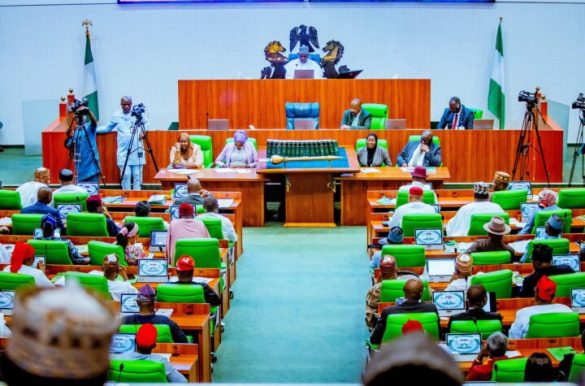
The House of Representatives has called for the need to Establish a Regulatory Framework for the Importation of Electric Vehicles (EVs), Compressed Natural Gas (CNG) Vehicles, and Related Infrastructure in Nigeria.
It urged the Nigerian Government to establish a transparent licensing and approval framework for the commercial importation of Electric Vehicles (EVs), CNG vehicles, and related clean mobility equipment.
The House also urged the National Automotive Design and Development Council (NADDC), in collaboration with the Bureau of Public Procurement (BPP), the Standards Organisation of Nigeria (SON), the Nigeria Customs Service (NCS), and other relevant agencies, to develop objective qualification criteria for import approval.
The Lawmakers suggested that provide that import approvals shall be granted to any company that satisfies prescribed eligibility requirements, including, where appropriate.
The call followed the adoption of a motion moved by Mr. Ademorin Aliu Kuye, at plenary.
While highlighting the importance of the motion, Mr. Kuye said that that ” Nigeria has adopted policies promoting the transition to Electric Vehicles (EVs), Compressed Natural Gas (CNG) vehicles, Liquefied Petroleum Gas (LPG) vehicles, and other clean transportation technologies as part of its energy transition and economic diversification agenda.”
He suggested the following :
- establishment of certified service and maintenance centres within Nigeria,
- availability of genuine spare parts and warranty support;
- employment and training of qualified Nigerian technical personnel;
- investment in EV charging infrastructure and/or CNG refueling facilities;
- compliance with Nigerian safety, environmental, and technical standards;
- submission of consumer protection and after-sales service plans.
He further urged the National Automotive Design and Development Council (NADDC) to maintain a public register of approved importers and infrastructure providers to enhance transparency and consumer confidence and ensure that the approval process remains open, competitive, transparent, and non-discriminatory so that any qualified company that meets the prescribed standards may obtain approval without undue preference;
He also further urged the Nigerian Government to align tax incentives, import duty concessions, and other fiscal benefits with compliance under this regulatory framework in order to promote
sustained investment in local infrastructure”
“Aware that the Nigerian Government has introduced fiscal incentives, including import duty and tax reliefs, to encourage investment in clean mobility technologies and improve the availability of adequate charging infrastructure, CNG refueling stations, maintenance centres, spare parts supply chains, technical expertise, and after-sales support, which are all critical to the success of this policy direction;
“Convinced that Nigeria has the opportunity to encourage local investment, technology transfer, employment generation, and domestic value addition by linking import incentives to measurable investments in infrastructure and technical capacity”. The motion said.
The House referred the motion to the Committees on Industry, Commerce, Gas Resources, Environment, and Legislative Compliance to monitor implementation and mandated them to report back to the House within four weeks for further legislative action