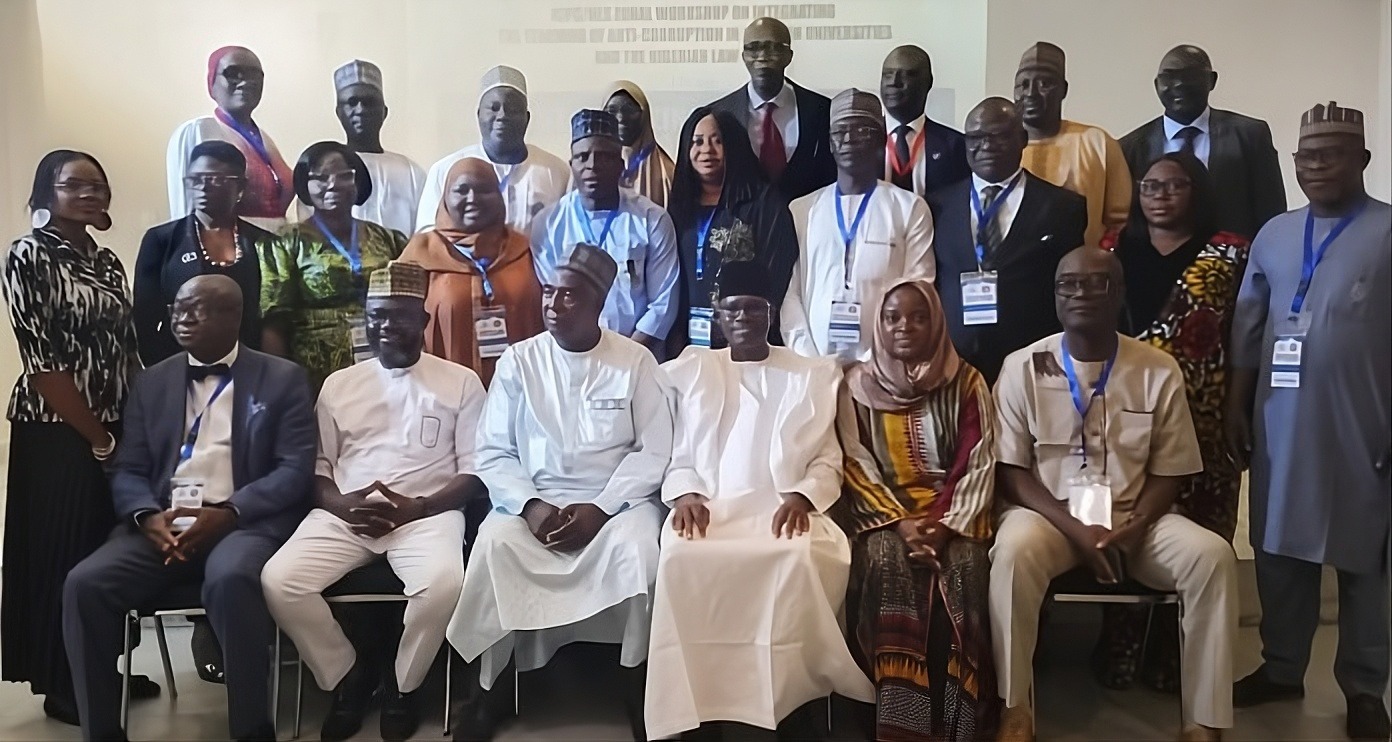
The Independent Corrupt Practices and Other Related Offences Commission (ICPC) has advocated the integration of anti-corruption studies into the Nigerian Law School curriculum as part of efforts to strengthen integrity and ethical standards within the legal profession.
The Independent Corrupt Practices and Other Related Offences Commission (ICPC) has intensified efforts to embed anti-corruption education in Nigeria’s legal training system through a curriculum development workshop in Kano State.
The anti-corruption agency convened the workshop to integrate anti-corruption studies into the Nigerian Law School curriculum as part of broader efforts to strengthen integrity within the legal profession.
READ ALSO: ICPC Seeks Stronger International Collaboration in Corruption Fight
Speaking at the workshop themed “Institutionalising Anti-Corruption Education in Nigerian Legal Training,” ICPC Chairman, Musa Aliyu, said the legal profession must take responsibility for restoring public confidence by producing lawyers who combine legal excellence with integrity.
Aliyu noted that integrity must be taught before legal practitioners enter courtrooms, urging stakeholders to prioritise character formation in legal education.
“We as lawyers need to sit down and look at what is happening in this country. We should ask ourselves whether Nigerians are happy with what they are seeing in the profession or not,” he stated.
The ICPC chairman stressed that corruption is best prevented through character development rather than prosecution after offences have been committed.
“Corruption is rarely defeated in a courtroom after the damage has been done. It is defeated much earlier in the formation of character and in the moment a young person decides what kind of professional he or she wants to be,” he argued.
Aliyu described classrooms as the most effective platform for building integrity, warning that by the time corruption cases reach the ICPC, society has already suffered significant losses.
He maintained that lawyers occupy a unique position in society because they safeguard justice and the rule of law.
“A corrupt engineer builds a weak bridge. A corrupt lawyer corrupts the very mechanism by which all other wrongs are meant to be remedied,” Aliyu warned.
The ICPC boss said curriculum reform must go beyond producing academically brilliant graduates to nurturing ethical professionals committed to truth, justice and accountability.
He acknowledged challenges such as inadequate funding, overstretched lecturers and institutional weaknesses, but insisted that the initiative must be sustained.
“A framework drafted in Kano is only ink on paper. The real test lies in what lecturers teach with conviction and what students choose to live by long after examinations are over,” the ICPC Chairman stressed.
Aliyu also urged universities and law schools to ensure that integrity is reflected not only in teaching but also in admission processes, examinations and institutional governance.
According to him, “Young people detect hypocrisy faster than we admit. If we are to teach integrity, our faculties, examination and admission processes must themselves be models of integrity.”
He pledged the commission’s continued support for the implementation of the anti-corruption curriculum, saying its success would depend largely on the commitment of legal educators.
“The honest measure of our success will never appear in court. It will appear invisibly in decisions whose names will never be known,” the ICPC Chairman explained.
Aliyu further urged law lecturers to lead by example, expressing concern over growing public dissatisfaction with the conduct of some members of the legal profession.
“The world must know that the duty of a lawyer is to be honest, to stand by the truth and defend the law. It is only through you that the future of this country will be shaped,” he emphasised.
Some participants described the workshop as impactful and expressed confidence that the proposed curriculum would provide aspiring lawyers with a stronger ethical foundation and deepen their understanding of the dangers of corruption.
The workshop forms part of the ICPC’s broader strategy to institutionalise anti-corruption education across Nigeria’s legal education system and strengthen integrity within the justice sector.