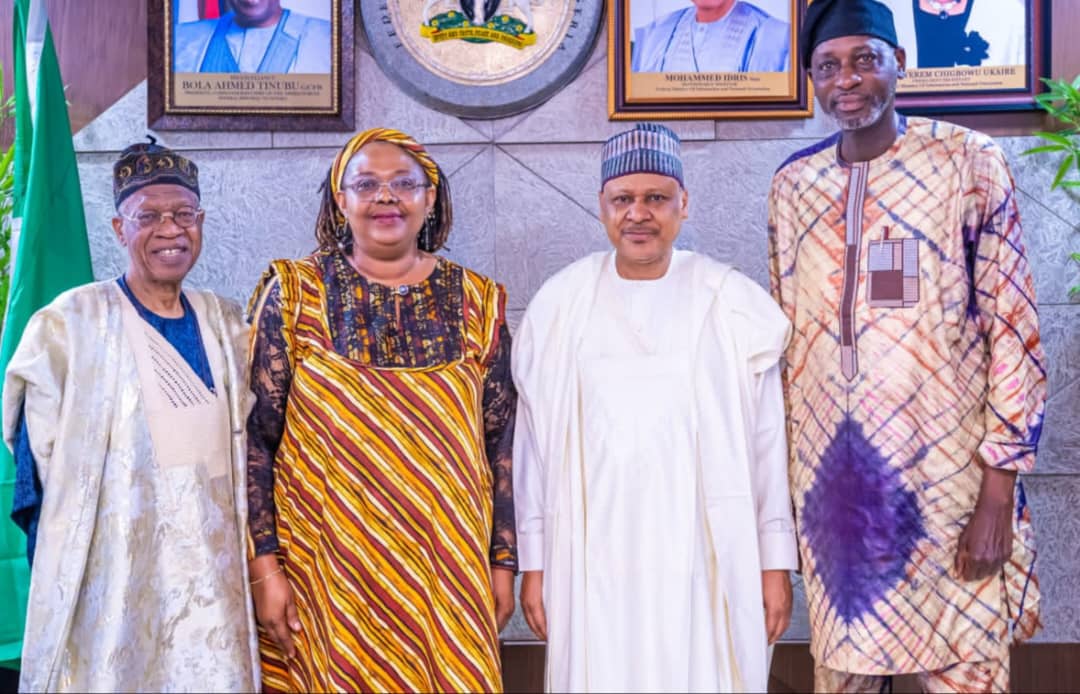
Nigeria’s Minister of Information and National Orientation, Mohammed Idris, has pledged the Nigerian government’s commitment to supporting initiatives aimed at unlocking Nigeria’s creative economy, noting that the sector holds significant potential to create jobs and drive sustainable prosperity.
Idris made the pledge in Abuja, when the Director-General, National Institute for Policy and Strategic Studies (NIPSS) Professor. Ayo Omotayo led a delegation from the institute on a courtesy visit to the ministry to seek support for a proposed National Summit and Exhibition on the Orange Economy.
The summit is being organised as part of the activities of the Senior Executive Course 48 research in examining the entrepreneurial opportunities, challenges and prospects of Nigeria’s creative economy.
The Information Minister commended NIPSS for selecting the Orange Economy as the focus of its research, describing the sector as an important opportunity for economic diversification, youth employment and sustainable prosperity.
“I want to commend NIPSS for this initiative of examining the Orange Economy and entrepreneurship for sustainable development,” Idris said.
He assured the delegation that the Ministry and its agencies would support the Institute’s research and the planned summit, stressing that effective communication is critical to bringing the opportunities in the creative economy to Nigerians and the international community.
“The ministry’s role is not merely to disseminate government information but also to collect feedback from citizens. This is essentially what this ministry is about: taking information to the public and taking it back from the public. It’s a two-way thing,” he said.
He described the NOA as a strategic platform for understanding the views of Nigerians across the country, particularly those in communities where other government institutions may have limited presence.
“The pulse of the nation can be felt when you utilise the National Orientation Agency. The agency’s extensive presence across the country made it an important source of information on the concerns and aspirations of Nigerians,” he said.
According to him, President Bola Ahmed Tinubu’s administration is committed to listening to citizens and making necessary adjustments to policies and programmes in the national interest.
“The first question the President asks whenever I sit with him is, ‘What are Nigerians saying?’” the minister said.
The minister further assured NIPSS that the ministry would designate an official to work with the institute to strengthen coordination and ensure effective collaboration as preparations for the summit progress.
Speaking earlier, the NIPSS Director-General, Professor Ayo Omotayo, said the institute chose the orange economy as the focus of the research being undertaken by participants of Senior Executive Course 48 following a charge by President Tinubu.
Noting that the objective was to examine how Nigeria could better exploit the entrepreneurial opportunities in the creative sector to achieve sustainable economic growth and contribute to the administration’s ambition of building a trillion-dollar economy.
“The charge this year by Mr President to the Senior Executive Course is to research the orange economy in Nigeria and look at its entrepreneurial aspects,” he said.
He disclosed that participants had visited institutions in Nigeria, seven states across the country and several countries abroad to study how the creative economy was being developed and utilised.
Professor Omotayo noted that the research had identified about 48 subdivisions within the orange economy, adding that the sector had significant potential to contribute to Nigeria’s economic transformation.
“We believe this particular sector can actually be one of the major sectors of the economy that will solve the problem of youth unemployment,” he said.
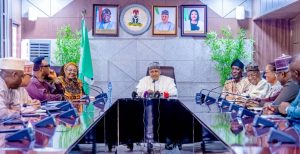
According to him, the proposed summit would provide an opportunity for stakeholders in the various segments of the creative economy to showcase their work, exchange ideas and explore opportunities for investment and job creation.
The NIPSS boss stressed that the institute was seeking collaboration with relevant ministries, departments and agencies because the task of developing the orange economy could not be achieved by one institution alone.
“We cannot do this alone,” Omotayo said.
He appealed to the Ministry of Information and National Orientation to support the summit, particularly in the area of publicity and media engagement.
Prof. Omotayo said NIPSS was seeking the Ministry’s partnership for its research and the proposed national summit, which would examine the potential of the Orange Economy to contribute to Nigeria’s economic transformation and the President’s ambition of building a trillion-dollar economy.
He said participants of Senior Executive Course 48 had undertaken research visits across Nigeria and several countries to study how creative industries are being developed and leveraged, adding that the summit would bring together government, creatives, entrepreneurs, investors and other stakeholders.
“The Orange Economy is a very huge sector. We have identified about 48 subdivisions, and we believe the summit will bring out the potentials in every sector,” he said.
The NIPSS Director-General said that the sector had significant potential to address youth unemployment and generate new opportunities through Nigeria’s growing creative and digital industries.
The Permanent Secretary of the ministry also assured the NIPSS delegation of the ministry’s readiness to collaborate with the institute.
She said the findings from the research and the proposed summit could provide useful evidence for government policy and contribute to economic development.
“We are ready to partner with you and ensure that you’re able to come out with key facts from that research, from the summit, from every engagement around it,” she said.
She stated that the ministry was interested in ensuring that Nigerians ultimately benefited from the opportunities presented by the creative economy.
Senior officials of the ministry were urged to work with the institute, including the possibility of designating a desk officer to facilitate continued collaboration on the proposed summit.