The International Labour Organisation (ILO) has commended the commitment of G7 Labour and Employment Ministers to promoting quality jobs and strengthening decent work globally.
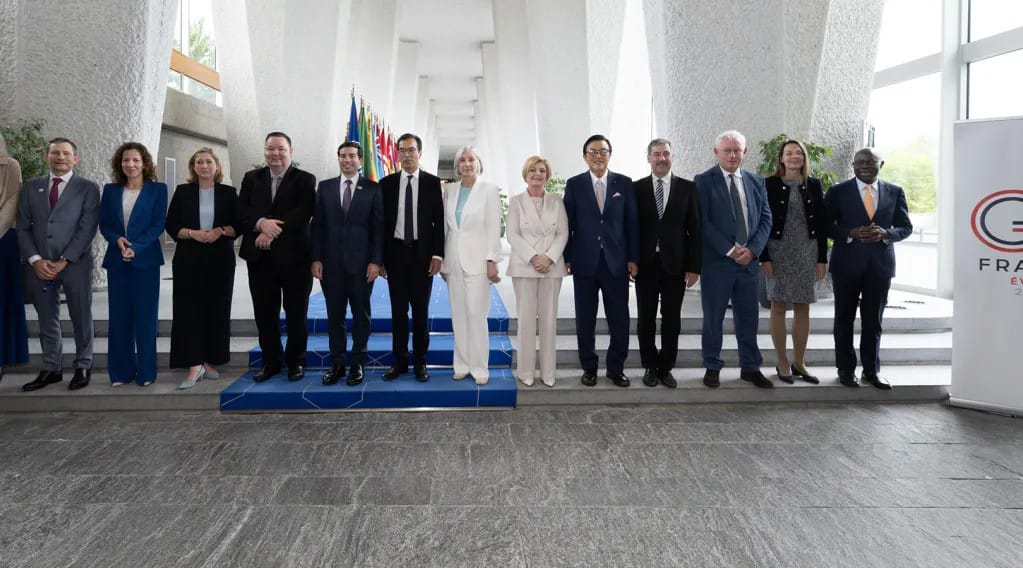
ILO Director-General, Mr Gilbert Houngbo, gave the commendation during a meeting of G7 Labour and Employment Ministers held on the sidelines of the 114th International Labour Conference (ILC) on Wednesday in Geneva, Switzerland.
The meeting was convened by France’s Minister of Labour and Solidarity and attended by Labour Ministers from G7 countries, as well as the Executive Vice-President of the European Commission.
Houngbo noted that the global labour market was facing profound uncertainties, widening imbalances and rapid technological change, requiring deliberate efforts to ensure an inclusive economic transformation.
He stressed that economic progress must be anchored in social justice and respect for workers’ rights to guarantee sustainable development and equitable growth.
“Economic transformation must go hand in hand with social justice,” he said.
Houngbo welcomed the adoption of practical initiatives aimed at strengthening decent work, including the endorsement of the G7 Toolkit for Standards-Based Criteria to Identify Risks of Forced Labour.
According to the ILO, the toolkit is designed to assist governments, businesses and other stakeholders in identifying and addressing forced labour risks in the extraction of critical minerals, which are increasingly required for emerging technologies.
“As the demand for critical minerals rises, we face the risk of an increase in forced labour and other forms of labour exploitation.
“The critical minerals that underpin the economies of the future must be grounded in decent work and respect for fundamental principles and rights at work,” Houngbo stated.
The ILO chief also commended the French Presidency for promoting fair recruitment practices for migrant workers through a dedicated toolkit aimed at preventing recruitment-related abuses.
He noted that the initiative would help governments and enterprises reduce workers’ vulnerability to exploitation while ensuring ethical and transparent recruitment processes.
Houngbo further emphasised that strengthening labour standards and protecting workers’ rights remained critical to creating a level playing field capable of sustaining long-term economic resilience worldwide.
He reaffirmed the ILO’s readiness to support G7 member countries in implementing the agreed initiatives and promoting a global labour market founded on decent work.
The ministers reaffirmed their commitment to promoting quality jobs and strengthening decent work as essential pillars of resilient economies and fair global competition.
They also agreed to deepen cooperation on skills development for artificial intelligence through the establishment of a new G7 Artificial Intelligence Training Hub.
Other priorities identified during the discussions included improving labour market participation across all age groups and advancing measures to support labour mobility and career progression.