Imo State Governor, Hope Uzodimma, has proposed the establishment of a national media centre in honour of the late Nigerian broadcasting pioneer Raymond Aleogho Dokpesi.
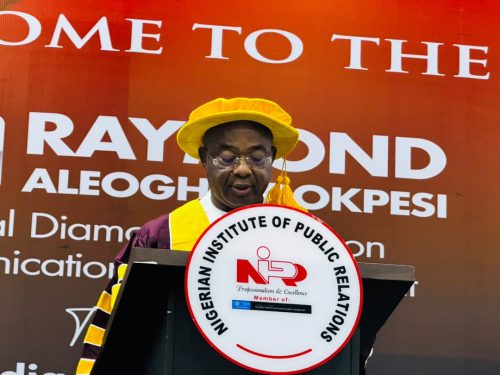
He made the proposal while delivering the third Raymond Aleogho Dokpesi Annual Diamond Lecture in Abuja, organised by DAAR Communications Plc in collaboration with the Nigerian Institute of Public Relations (NIPR).
The governor pledged to lead the campaign for the centre, which he envisioned as a national hub for media research and development journalism.
READ ALSO: Imo State Governor empowers 15,000 Youths
“I shall be prepared to lead in the campaign for the establishment of this centre,” he said.
He argued that the most meaningful tribute to Dokpesi, founder of Africa Independent Television (AIT), would extend beyond commemorative events to protecting the broadcasting freedom that helped reshape Nigeria’s media landscape.
“The best tribute we can pay to his memory is to protect that freedom and ensure that the journalism practiced within it remains worthy of public trust,” Uzodimma declared.

Assessing AIT’s contribution to democratic development, the governor said the station broadened political discourse after 1999 by providing platforms for civil society organisations, opposition groups and citizens to hold public officials accountable.
Uzodimma also credited the media with supporting economic development through job creation, advertising, technological expansion and the promotion of Nigerian culture.
He linked the country’s sustained civilian rule, the historic opposition victory of 2015 and the growth of sectors such as telecommunications, financial technology, entertainment and banking to broader institutional and economic transformation.
However, he cautioned against overlooking persistent challenges, including insecurity, inadequate infrastructure, poverty and weaknesses in human development indicators.
Describing Nigeria as a work in progress, the governor stressed that democratic gains required sustained commitment from government, the media and other stakeholders.
He noted that journalism performs a critical public service by scrutinising government expenditure and determining whether public investments deliver promised benefits.
Against the backdrop of rapidly spreading misinformation and increasingly sophisticated digital technologies, he said credible journalism had become more indispensable.
“Our democracy will be better served when the media can pursue the truth without intimidation, when government accepts the discipline of scrutiny, and when the institutions of accountability respond to what is established,” he said.

Uzodimma urged journalists to defend professional integrity while calling on government to embrace accountability, insisting that press freedom must translate into tangible democratic and developmental gains.
He said the proposed centre would help institutionalise these principles and sustain Dokpesi’s legacy in Nigeria’s broadcasting industry.