
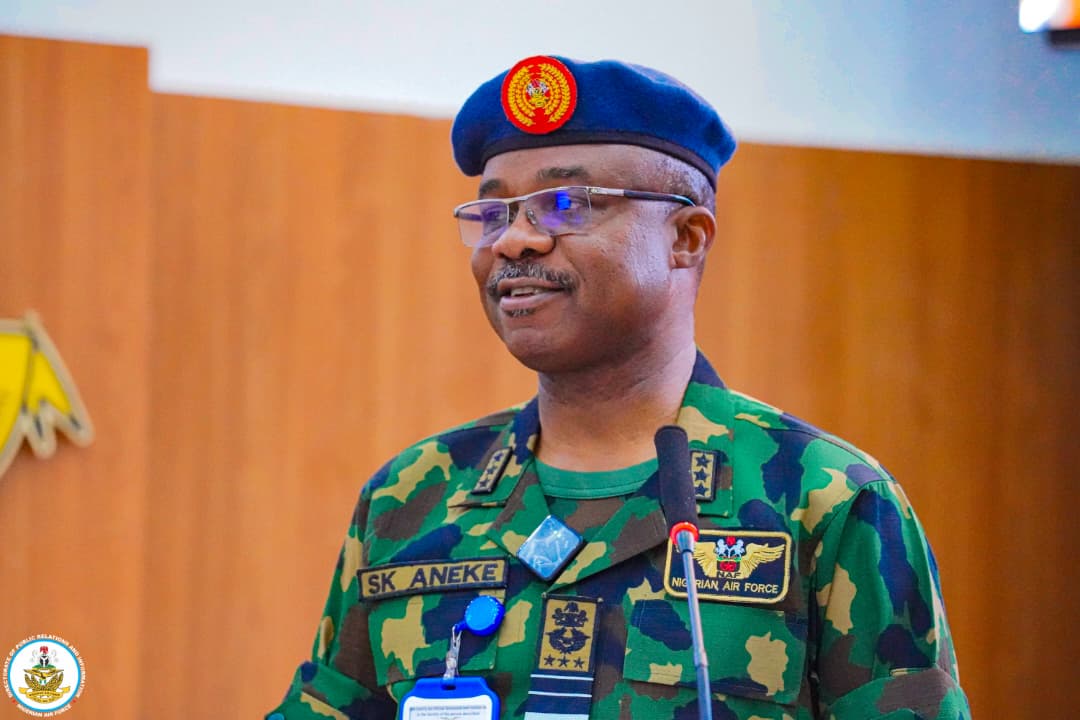
The Chief of the Air Staff (CAS), Air Marshal SK Aneke, has said Nigeria can only overcome its security threats through intelligence-led operations, stronger joint force integration and the effective deployment of air power.
He said modern security challenges require coordinated military efforts supported by timely intelligence and advanced air capabilities.
The CAS made the remarks while delivering a lecture titled “Air Power and National Security: The Nigerian Air Force in Perspective“ to participants of National Defence College (NDC) Course 34 at the National Defence College, Abuja, on Friday, 3 July 2026.
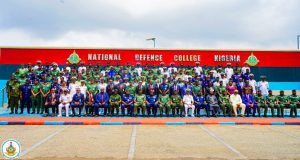
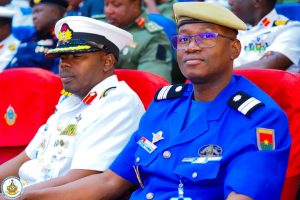
The audience included senior officers of the Nigerian Army, Nigerian Navy, Nigerian Air Force and Nigeria Police Force, as well as participants from various Ministries, Departments and Agencies (MDAs) and 20 international participants from allied countries.
Welcoming the opportunity to engage future strategic leaders from Nigeria and partner nations, Air Marshal Aneke highlighted the critical role of air power in addressing today’s increasingly complex security environment through integrated military operations and a whole-of-government approach.
He noted that Nigeria’s security landscape has evolved far beyond conventional warfare, with terrorists, bandits, separatist groups, transnational organised criminal networks and other non-state actors increasingly exploiting emerging technologies, difficult terrain and civilian populations to evade detection and undermine national security.
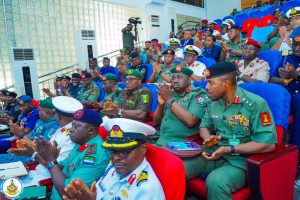
According to him, responding effectively to these highly adaptable threats requires strong inter-agency collaboration capable of integrating intelligence from air, land, maritime, cyber and human domains into a unified operational picture for timely and decisive action.
The CAS described air power as a strategic enabler of national security, providing the speed, reach, precision and flexibility needed to gather intelligence, conduct surveillance and reconnaissance, rapidly deploy forces, secure Nigeria’s borders and maritime domain, protect critical national infrastructure and support military operations while minimising civilian harm.
He stressed that the complexity of modern security challenges demands closer cooperation among the Armed Forces, intelligence agencies and other security institutions.
“No single Service can secure the nation alone,” he said, adding that “Decisive air power delivers its greatest effect in synergy with surface forces.”
He explained that sustained operational success depends on intelligence sharing, joint planning and coordinated execution across all domains.
Air Marshal Aneke also identified cyber threats, the proliferation of unmanned aerial systems, information warfare, piracy, arms trafficking and other transnational crimes as emerging challenges reshaping Nigeria’s security environment.
He warned that hostile actors are increasingly exploiting cyberspace and social media to spread disinformation, fuel social divisions and erode public confidence in state institutions, making strategic communication and cyber resilience essential to national security.
Reflecting on the evolution of the Nigerian Air Force over the past six decades, he said the Service’s operational experience in defending Nigeria’s sovereignty, supporting regional peace operations and tackling contemporary security challenges has reinforced the importance of indigenous capacity development, innovation, logistics resilience and continuous force modernisation.
He reaffirmed the Nigerian Air Force’s commitment to strengthening its capabilities through indigenous innovation, advanced intelligence systems, emerging technologies and strategic partnerships to sustain effective air power in support of national security.
The CAS added that national security extends beyond defending territorial integrity to safeguarding democratic institutions, protecting critical infrastructure, preserving economic prosperity and ensuring the safety and well-being of all Nigerians.
He urged participants, as future strategic leaders, to continue promoting jointness, innovation and inter-agency cooperation as key pillars for addressing Nigeria’s evolving security challenges.
The lecture reinforced the Nigerian Air Force’s commitment to advancing strategic thinking, strengthening joint military cooperation and leveraging air power as a force multiplier for Nigeria’s national security, regional stability and international peace support operations.

