The Institute for Peace and Conflict Resolution (IPCR) has called for increased investment in peace-building and stronger collaboration among government institutions, security agencies, the private sector, civil society, traditional and religious institutions, the media and international partners to address conflicts and strengthen social cohesion in Nigeria.
The Director-General of the Institute, Dr Joseph Ochogwu, made the call in Abuja at a media briefing to herald activities marking the 2026 International Day of Peace, observed annually on September 21.
The theme for this year’s observance is “Invest in Peace: For Everyone, Everywhere, Every Day.”
Ochogwu said the theme represented a shift from viewing peace merely as the absence of war to recognising it as a deliberate and sustained investment requiring resources, institutions and collective action.
He said Nigeria and other countries faced complex and interconnected challenges, including violent extremism, farmer-herder conflicts, banditry, communal tensions, youth restiveness, competition over resources linked to climate pressures, as well as misinformation, disinformation and malinformation.
According to him, the challenges underscored the need to treat peace infrastructure with the same seriousness accorded other critical sectors of national development.
“Without peace, we cannot have food security. Without peace, we cannot have quality education. Without peace, we cannot have good health care. And without peace, it becomes very difficult to attract investment,” he said.
The IPCR Director-General identified early-warning and early-response systems, dialogue platforms, community mediation centres, youth engagement initiatives, strengthening of traditional institutions and psychosocial support as areas requiring sustained investment.
He stressed that peace-building should not be left solely to government, urging stakeholders to deploy their constitutional, professional, moral and social responsibilities towards preventing and resolving conflicts.
Ochogwu called on federal and state governments to give greater priority to peace-building in budgetary allocations and policy design.
He also urged the National Assembly to strengthen legislation supporting social cohesion and conflict-sensitive governance, while calling on security agencies to deepen non-kinetic and community-centred approaches to conflict management.
The IPCR chief urged the private sector to recognise peace as essential to a stable business environment.
“No business thrives in chaos,” he said.
He also called on traditional and religious leaders to promote tolerance and social cohesion, while urging civil society organisations, women and youth groups to remain advocates of non-violence and inclusion.
Ochogwu said the media had an important role to play through peace journalism and conflict-sensitive reporting capable of countering hate speech, misinformation, disinformation, malinformation and divisive narratives.
He identified economic inclusion, youth development, skills acquisition and digital-economy opportunities as important components of peace-building, noting that productive opportunities could provide alternatives to crime and violent extremism.
The Director-General also stressed the importance of strengthening governance at the grassroots, saying local government institutions were closest to communities and could play a frontline role in identifying and addressing grievances.
He therefore urged state governments and other sub-national actors to strengthen the capacity of local government institutions to discharge their responsibilities effectively.
IPCR outlines peace-building strategy.
Ochogwu said the Institute’s strategic approach to peace-building was anchored on three broad areas: knowledge, people and partnership.
Under the knowledge pillar, he said IPCR was scaling up evidence-based research, early-warning analysis and publications to generate information capable of informing government policy and improving conflict prevention and resolution.
On the people pillar, he said the Institute was investing in the development of the next generation of peace-builders through training and peace-education initiatives.
He disclosed that more than 86 young Nigerians, including corps members, interns and other youth participants, had recently been trained and certified as prospective peace-builders under one of the Institute’s programmes.
He also said IPCR was working with partners, including UNESCO and the Federal Ministry of Education, to promote the mainstreaming of peace education within the education system.
In partnership, Ochogwu stressed that no individual or institution could achieve sustainable peace in isolation.
He said the Institute was strengthening its zonal and state peace-building structures while supporting community resilience initiatives through its conflict early-warning and early-response mechanisms.
IPCR targets peaceful 2027 elections.
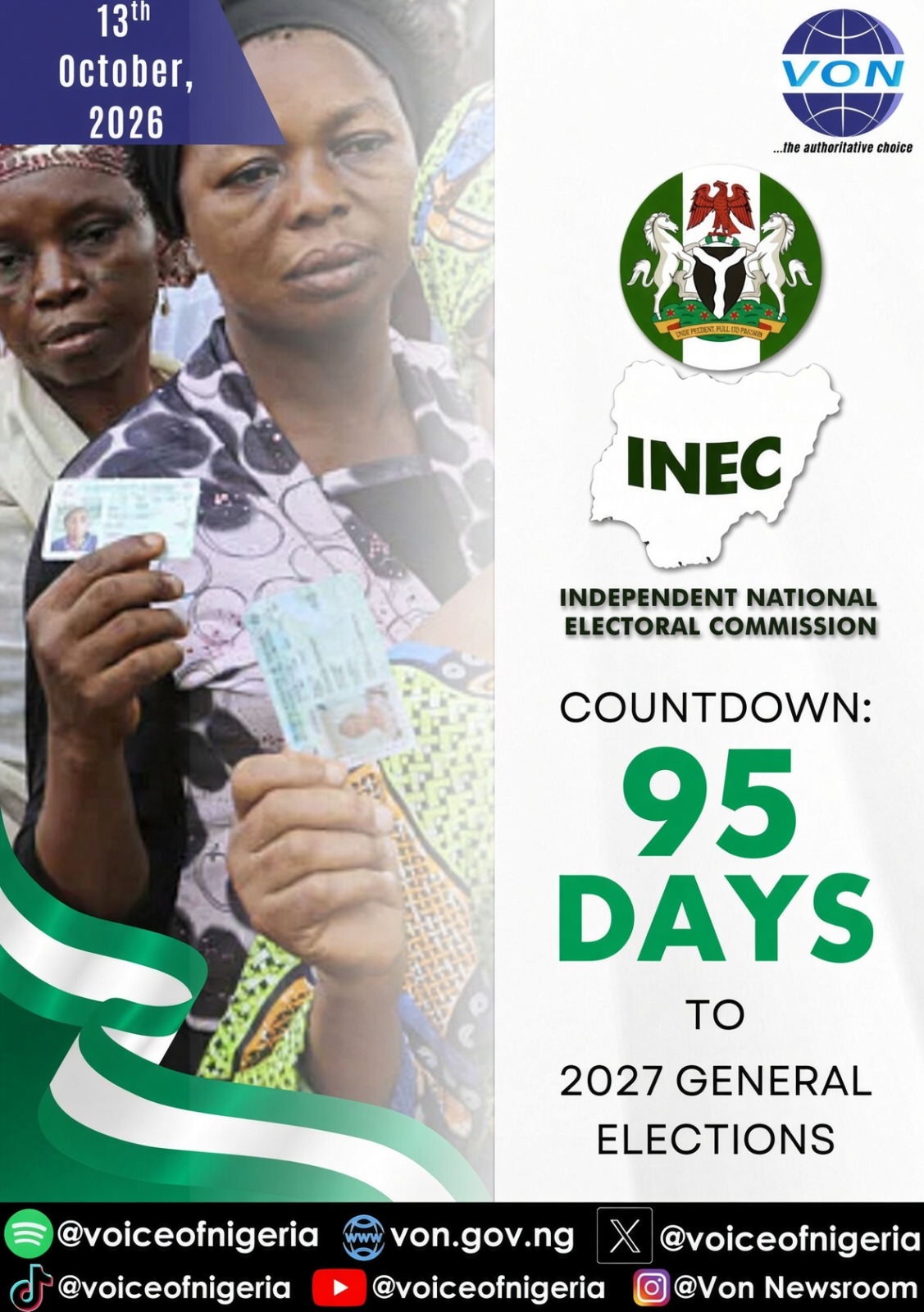
The Director-General said the Institute was implementing an electoral violence prevention programme ahead of Nigeria’s 2027 general elections.
Responding to a question from Voice of Nigeria on efforts to sensitise Nigerians towards peaceful elections, Ochogwu said IPCR had been involved in electoral peace initiatives for several election cycles.
He said the Institute planned to activate its national conflict early-warning system to monitor incidents relating to electoral and political violence, identify potential hotspots and communicate relevant information to stakeholders responsible for prevention and response.
He stressed that IPCR’s activities would complement, rather than replace, the responsibilities of security and electoral institutions.
“We identify hotspots also to work with the police, the Department of State Services. They have their own activities that they are doing, but our activities are going to complement and reinforce whatever they are doing to ensure that we’ll have a much more peaceful and better election,” he said.
Ochogwu said the Institute would also undertake sensitisation, research, monitoring, tracking and policy advisory activities before and after the elections, with particular attention to young people and political actors.
He urged political actors and relevant institutions to conduct themselves responsibly, saying peaceful and legitimate elections were important to democratic stability.
International partnerships
On international collaboration, Ochogwu said IPCR was working with international organisations and development partners on the 2026 International Day of Peace and its broader peace-building activities.
He mentioned collaboration with the United Nations system, including relevant UN entities in Nigeria, as well as the United Kingdom Foreign, Commonwealth and Development Office-supported SPRING programme.
He said the Institute was deliberately decentralising activities rather than limiting the observance to a single central event.
According to him, the approach would allow different institutions and communities to amplify peace messages and undertake activities within their respective spheres.
Activities for 2026 International Day of Peace
The Institute announced a series of activities to mark the 2026 International Day of Peace.
The programme began on September 16 with a world press briefing and the launch of the IPCR media campaign across conventional and digital platforms.
A commemorative peace prayer is scheduled for September 18 at the National Mosque in Abuja, alongside activities through participating platforms nationwide.
Another peace prayer is scheduled for September 20 at the National Christian Centre in Abuja.
On September 21, the International Day of Peace, IPCR is expected to hold a peace walk and national peace lecture at its conference hall in Abuja.
The lecture is titled: “Renewed Hope Agenda: Investing in Peace for Democratic Stability Pathways to Justice and Inclusion Ahead of Nigeria’s 2027 General Elections”.
The programme will feature a keynote address and panel discussions on peace, justice, inclusion and democratic stability.
A grand finale is scheduled for September 25, including a football match involving the IPCR team and partner organisations at the Old Parade Ground in Abuja.
Ochogwu called on Nigerians and people in the diaspora to make personal and collective investments in peace, stressing that peace-building should become a continuous way of life rather than an activity reserved for an annual commemoration.
“Together, we can build a Nigeria where peace is not an event but a way of life,” he said.