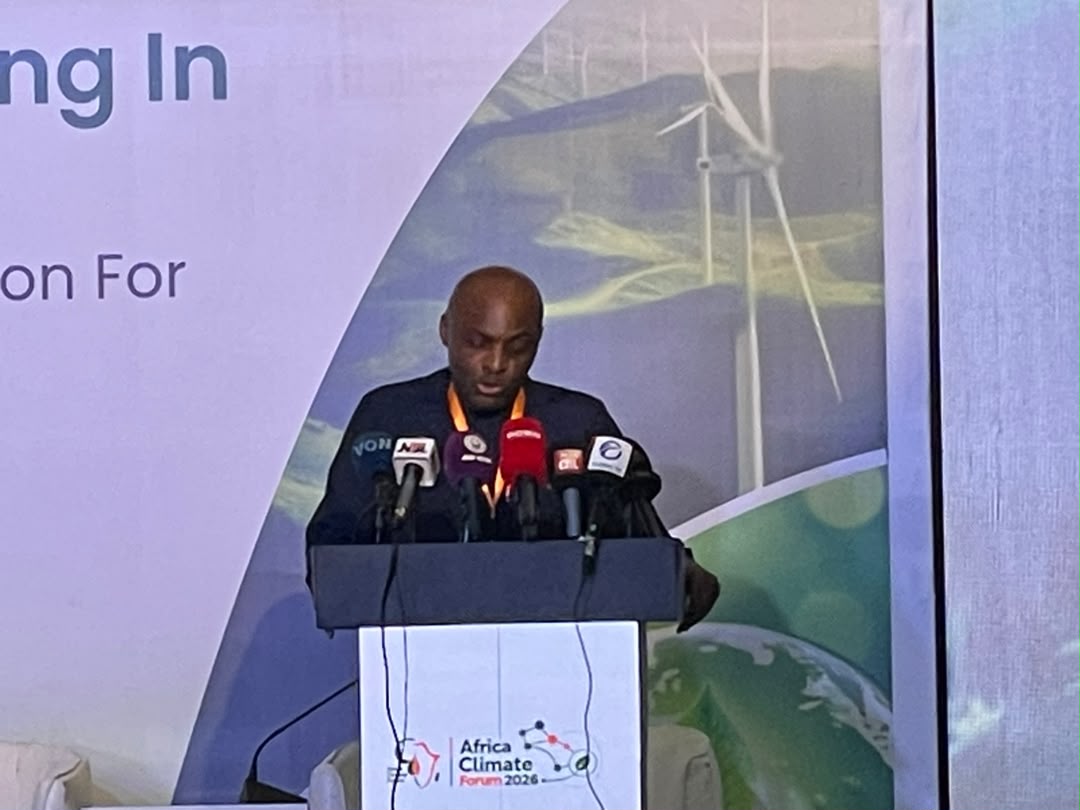
The Convener of the Africa Climate Forum, George Nwangwu, has called for stronger collaboration between governments, private-sector investors, development finance institutions and innovators to translate Africa’s climate commitments into tangible development outcomes.
Nwangwu made the call in his welcome address at the fourth edition of the Africa Climate Forum, themed “Implementing in Lockstep: Public-Private Action for Green Outcomes”, held in Abuja, Nigeria’s capital.
He said Africa must move beyond policy declarations and ambitious climate pledges to focus on implementation, investment and measurable improvements in the lives and livelihoods of its people.
“The real measure of climate ambition is not the number of commitments we make, but the outcomes we deliver,” he said.
According to him, the continent continues to face mounting climate-related challenges, including devastating floods, droughts, food insecurity and environmental degradation, while millions of people still lack access to reliable electricity and clean cooking solutions.
He argued that addressing these challenges requires coordinated action across the public and private sectors, supported by effective policies, credible regulation, appropriate financing mechanisms and commercially sustainable solutions.
Nwangwu noted that governments alone cannot provide the scale of financing required to address Africa’s climate challenges, stressing the need to mobilise private capital, encourage entrepreneurship and deploy innovative technologies.
He said development finance institutions also have a critical role to play in mobilising capital, reducing investment risks and helping climate projects attract the financing needed for implementation.
Nwangwu described the fourth edition as an important milestone in the Forum’s development, noting that the series had, for the first time, expanded beyond Nigeria to Accra, Ghana.
He said the move reflected the organisers’ ambition to build a genuinely pan-African platform capable of bringing together expertise, investment opportunities and climate solutions from across the continent.
He also disclosed that Nairobi, Kenya, was being considered as a possible destination for next year’s mini Climate Forum series.
According to him, the ambition for the next four years is to deepen partnerships, broaden participation and strengthen the Forum’s contribution to practical climate action.
He said the long-term objective was to establish a platform where ideas translate into policies, policies into investments, and investments into measurable improvements in the well-being of African communities.
“Ladies and gentlemen, we are not simply building a conference; we are building a platform for action,” he said.
The convener said the challenges confronting Africa’s climate response include high financing costs, currency risks, regulatory uncertainty, inadequate project preparation and limited access to long-term capital.
Nwangwu stressed that Africa must strengthen its participation in international climate negotiations and multilateral decision-making, including discussions involving the Group of 20 and multilateral development banks.
Nwangwu said the Africa Climate Forum’s programme is built around four complementary platforms: policy dialogue, investment facilitation, innovation and storytelling.
He explained that the plenary sessions and panel discussions are designed to bring together policymakers, investors, academics, practitioners and development partners to identify practical interventions, address institutional barriers and recommend policy reforms.
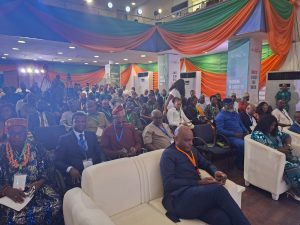
In a paper presentation, Coordinator Global Centre for Law and Economy, GCLBE Mr Benjamin Mukoro said the two-day gathering seeks to forge robust cross-sectoral and geographical partnerships to tackle the continent’s pressing environmental challenges.
“The conference builds upon previous foundations established since 2023, shifting the focus decisively toward actionable strategies that can properly power Africa’s green transition.” He said,
The Chairman Presidential Initiative on Conpressed Natural Gas and Electric Vehicles Mr Ismael Ahemd noted that moving beyond climate commitments toward coordinated and measurable action requires deliberate collaboration, innovative financing, strategic investments, and shared responsibility.
Founder RADAH Media Group, Dr Oge Modie, in her remarks, says for Africa, climate action is not simply an environmental responsibility; it is fundamentally a development question that concerns access to reliable energy, food security, resilient infrastructure, economic opportunities and the wellbeing of our communities.
“Addressing these challenges requires collective action. Governments must provide clear policy direction and an enabling environment. The private sector must bring investment, innovation and practical solutions.”
“At The Radah Media CompanyTM, where we are privileged to serve as media partners of this Forum, our work in strategic communication and stakeholder engagement reinforces an important lesson: even the most carefully designed policies require public understanding, trust and participation to succeed.” She said,
On the sidelines of the Africa Climate Forum, the Pulitzer Center held an engagement with Nigerian journalists on Climate Action and Civic Space Engagement, aimed at strengthening their capacity for investigative reporting on climate change issues.
The engagement highlighted the critical role of the media in advancing climate action, emphasising the need to give climate change stories greater prominence by placing them on the front pages of newspapers, ensuring appropriate framing, and presenting them in ways that capture public attention.