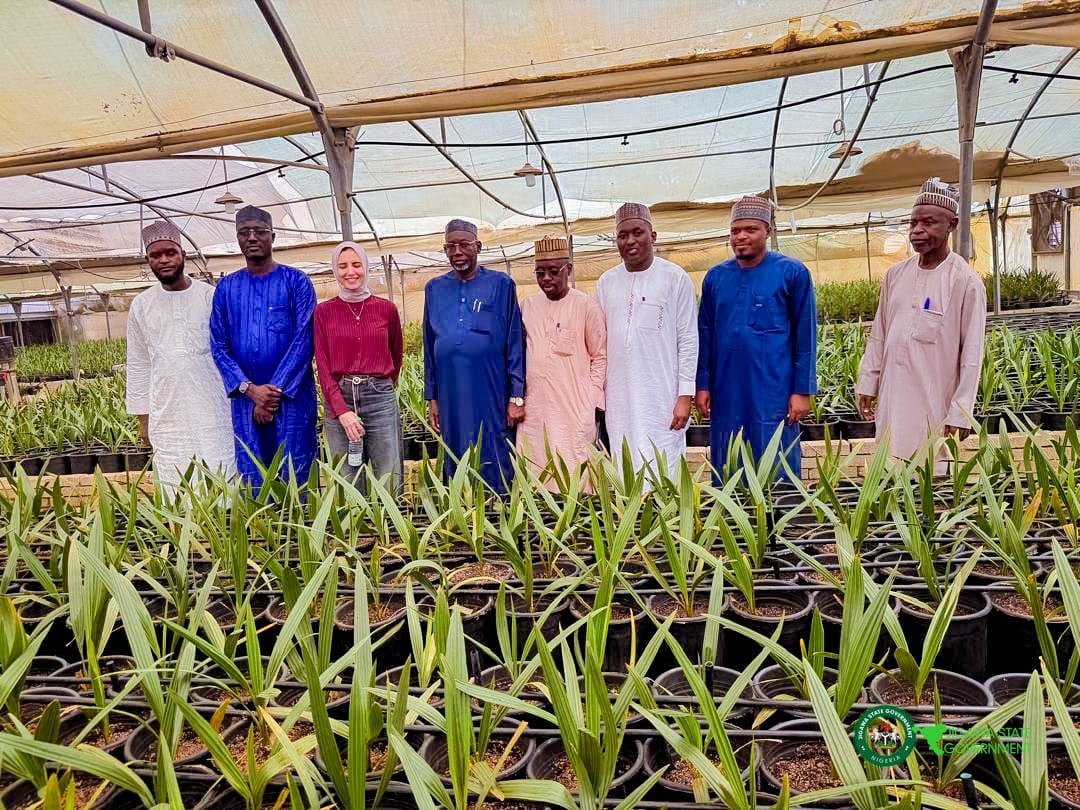
The Jigawa State Government is taking steps to introduce advanced plant tissue culture technology to boost the production of date palms and Irish potatoes and improve access to quality planting materials.
The initiative follows a technical and investment mission to Cairo, Egypt, led by Governor Umar Namadi, where the state delegation held discussions with EFC Plants, an Egyptian plant research and development company.
The proposed partnership is aimed at strengthening Jigawa’s agricultural sector through biotechnology, technology transfer, local capacity development and increased private-sector investment in key agricultural value chains.
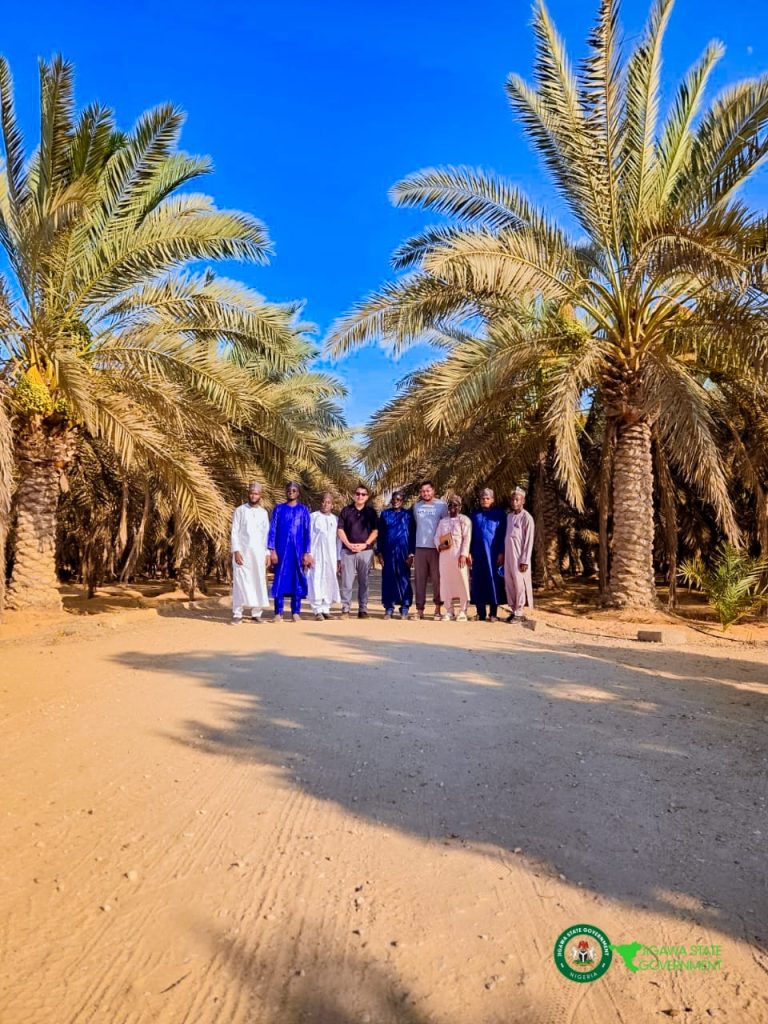
During the visit, Governor Namadi and his delegation toured EFC Plants’ biotechnology and tissue culture facilities, including climate-controlled greenhouses, a plant pathology laboratory, specialised incubation rooms, sterilisation units and cold-storage facilities capable of accommodating up to six million plantlets.
The delegation also received technical presentations on the tissue culture process, from the selection and laboratory testing of mother plants to micropropagation, rooting, acclimatisation, greenhouse management, storage and eventual commercial distribution.
READ ALSO: BOA, WACOT Distribute Farm Inputs to Jigawa Farmers
Plant Tissue Culture Technology
Under the proposed partnership, Jigawa plans to establish and commercialise plant tissue culture technology in the state, with date palm and Irish potato production as the initial focus.
The technology is expected to enable local production of certified, disease-free and high-yielding planting materials while providing opportunities for research collaboration, specialist training and technology transfer.
Governor Namadi said the state was seeking a long-term technological and investment partnership rather than simply purchasing planting materials.
He said, “Our proposed partnership with EFC Plants will go beyond the purchase of planting materials. We are seeking a comprehensive relationship that will deliver technology transfer, local capacity development, research collaboration, private investment and the commercial production of clean planting materials in Jigawa State.”
The Governor said the adoption of tissue culture and biotechnology would address some of the challenges confronting farmers in accessing quality planting materials and enhance agricultural productivity.
According to him, the initiative would also reduce dependence on imported planting materials and strengthen Jigawa’s position as a hub for biotechnology-supported agriculture.
Jigawa’s favourable dry climate, extensive irrigable land, established farming culture and access to major markets give the state strong prospects for expanding date palm production.
Similarly, the introduction of clean planting materials and modern production methods is expected to support the development of quality seed-potato production in the state.
The proposed arrangement will involve EFC Plants, relevant Jigawa State institutions, Nigerian private-sector partners and other potential investors.
The immediate priorities include conducting a detailed technical assessment and feasibility study, selecting an appropriate site, developing a bankable business and implementation plan, and negotiating the framework for the partnership.
Governor Namadi was accompanied on the Cairo mission by the Director-General of the Jigawa Research Institute, Dr. Suleiman Babura; Director-General of the Jigawa Agricultural Transformation Agency, Dr. Saifullahi Umar; and Chief Executive Officer of Natay Agro Limited, Dr. Abubakar Bamai.
A press statement by the Governor’s Chief press Secretary, Hamisu Gumel said, the state government initiative was part of its broader strategy to deploy science, technology and private investment to transform agriculture, strengthen food security and create new opportunities in commercial farming, agro-processing, employment and export.