Nigerian-built KaratuAI is using artificial intelligence to personalise learning, support African languages and turn digital information into structured education.
As artificial intelligence reshapes industries and transforms how people work, communicate and access information, education is emerging as one of the sectors where its impact could be far-reaching.
In Nigeria, KaratuAI is seeking to harness that potential by turning digital information into structured, personalised learning while giving African languages a greater role in modern education.
For its creator, Joseph Jato, the idea grew from experiences that exposed the limitations of conventional learning and training systems.
Jato says his experience as an African student, combined with his work in corporate training and growing up with two teachers as parents, showed him how difficult it could be to make learning accessible, contextual and engaging.
“As an African student, I experienced firsthand the challenges of learning advanced material through foreign languages, unfamiliar accents and contexts that didn’t always match how we think and learn,” Jato says.
Read Also: Nigerian Tech Founder Launches Platform to Support African Students Abroad
His experience in corporate training revealed another challenge: the cost and inconsistency of professional learning.
“I saw how expensive and inconsistent corporate training could be,” he says, adding that watching his teacher parents prepare lessons also exposed him to the workload educators face.
Usable Learning
Those experiences led Jato to explore how artificial intelligence could help people understand complex ideas at their own pace while also providing evidence that they had actually understood them.
“The gap in Africa isn’t always access to information — it’s access to usable learning,” Jato says.
KaratuAI is designed around that premise, transforming syllabuses, topics, training requirements and uploaded learning materials into interactive learning experiences.
Every African teacher deserves access to world-class AI; not just those who can afford it.
KaratuAI for Teachers is:
✅ Free
✅ Open source
✅ Works offline
✅ AI-powered lesson planning in minutes
Help us keep it free by sponsoring the AI infrastructure and engineering behind it pic.twitter.com/NVidP6lkIZ— Karatuai (@karatuai) July 6, 2026
According to Jato, the platform performs four key functions: structuring raw knowledge into lessons; adapting learning to a learner’s level, curriculum and pace; connecting learning to practice through quizzes, labs and guided pathways; and providing institutions with tools to review and improve learning content.
“Most digital platforms stop at information delivery,” Jato says.
“KaratuAI is designed to move from information to structured learning, practice and evidence of understanding.”
The platform allows students to upload notes, PDFs and course materials and generate structured lessons, explanations, examples and practice questions. It also includes an AI teacher designed to guide learners through their studies.
For parents, KaratuAI provides a dashboard for monitoring children’s learning, while teachers have access to a dedicated Teacher’s App.
Schools can use institutional tools to monitor learning, while universities can develop examination-preparation resources, lecture libraries and career pathways. Corporate users can also create training programmes and monitor completion.
Giving African Languages a Digital Future
One of Jato’s strongest arguments for KaratuAI is its multilingual capability.
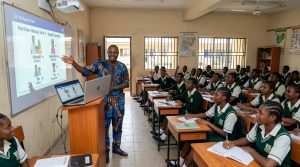
The platform supports 17 languages, including major African and Nigerian languages, allowing users to learn and receive training beyond English.
For Jato, the issue is not simply about translating educational content. He believes technology can help keep African languages relevant by expanding the contexts in which they are used.
“Languages die when they stop being used for new things,” he says. “If a language is only used for greetings, stories and cultural ceremonies, it becomes harder to pass on as a living language.”
He argues that African languages should increasingly be used to teach modern subjects and support professional activities.
Your employees completed the training.
But can they actually do the job?
Completion ≠ capability.
The future of workplace learning is active practice: realistic scenarios, real decisions, feedback & measurable improvement.
Read more 👇
https://t.co/7A03jYugAn— Karatuai (@karatuai) September 13, 2026
“A student should be able to learn mathematics in Hausa, or a corporate team should be able to complete training in Yoruba or Igbo,” Jato says.
The approach reflects a broader question facing African education: how can digital transformation expand access without reproducing the linguistic and cultural limitations of older education systems?
For Jato, artificial intelligence could help address part of that challenge, provided technology is developed alongside educators and the communities whose languages and knowledge it seeks to represent.
Human Oversight
Jato stresses that artificial intelligence alone cannot preserve African languages or solve the continent’s educational challenges.
“AI won’t save languages by itself,” he says. “But if we use it to teach the next generation in the languages they belong to, we give those languages a future, not just a past.”
He says developers need to work with educators and communities, protect dialects and cultural nuances, and maintain human review, particularly when AI is used in formal education.
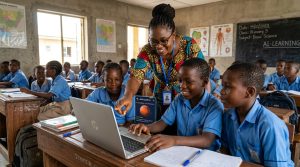
That human element is important as AI-powered learning tools become more common. Questions around accuracy, cultural context, curriculum alignment and the quality of AI-generated educational material remain central to how such technologies should be deployed.
For KaratuAI, the larger opportunity is to move beyond simply giving Africans greater access to digital information.